
Ingredients
The rice
- 400 gwhite rice
- water, to soak
- a clean bowl
- with a cover
To cook
- about 1.5 litres water
- a pinch of salt
To serve
- sugar, to taste
- evaporated milk
- or fresh milk
- a little grated nutmeg
- optional
Sometimes added
- a piece of fresh ginger
- grated
- a stick of cinnamon
Directions
- Use clean bowls and clean water. Understanding why fermentation helps is worth explaining. Discard anything that smells wrong. Use freshly boiled or safe water.
- Wash every vessel thoroughly first. Cook it properly right through. It should smell sour and clean. Discard it if it smells putrid at all. Discard it if mould has grown on it. Discard it if it smells of anything else. It is drunk hot and quite thin.
- Warm weather speeds it considerably. Taste it and judge for yourself. Rinse the rice thoroughly first. Rinse it in several changes of water. Use clean safe water throughout.
- Put the rice into a very clean bowl. Cover it well with clean water. Cover it by several centimetres. It must stay submerged throughout. Cover the bowl over with a cloth. The cloth keeps insects and dust out. Leave it somewhere at room temperature. It also keeps the smell cleaner.
- Discard the whole batch if so. Judging it takes a taste and a smell. Taste one grain after two full days. It should taste distinctly sour. Leave it longer for more sourness. Rinse it well before you taste it. Drain the rice and rinse it well.
- Rinse it in clean water thoroughly. Drain it well before grinding. Blend the rice with a little water. Add just enough water to blend it. Too much makes it hard to strain.
- Blend it into a smooth thin paste. Give it a good two full minutes. Use a cloth for the smoothest result. Blend them again if there is much. Bring the water to a boil in a pot. Boil the water before the paste goes in. Adding paste to cold water gives lumps.
- Pour the paste into the boiling water. Stir it constantly as it goes in. Pour it in a thin steady stream. Whisk it constantly right through. Take a full minute over the pour. Cook it for about fifteen minutes. Fifteen minutes cooks that out entirely.
- Stir it constantly right through. Do not stop the stirring at all. Add hot water to thin it as needed. It should stay thin enough to drink. Make it thinner than seems right. Add a pinch of salt to the pot. Salt sharpens the sour flavour. A single pinch is quite enough.
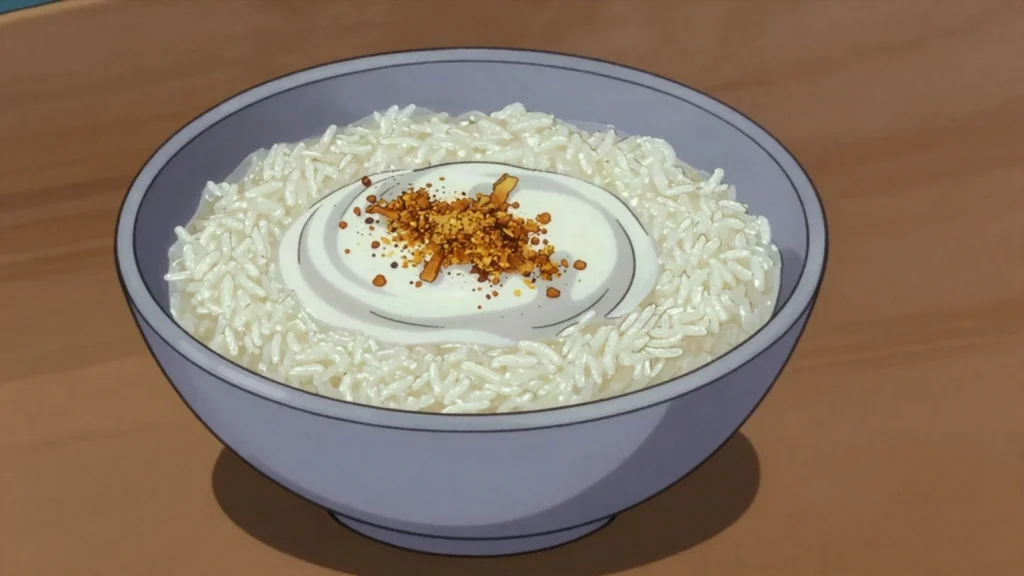
- Pour it out into cups or bowls. It is thin enough entirely for that. Stir the sugar in to your own taste. Add evaporated or else fresh milk. Grate a little nutmeg over it. Grate it fresh if you possibly can. It is drunk hot straight from a cup.
Technique
- The souring is deliberate fermentation by wild organisms, and the acidity it produces genuinely discourages harmful bacteria — but that effect is real rather than absolute, so clean handling still matters entirely. Use clean vessels and clean safe water, change the soaking water daily, keep the rice submerged since exposed grains grow mould, and cover the bowl with a loose cloth that keeps dust out while allowing air exchange.
- It should smell increasingly sour and clean, in a yoghurt-like way, as it ferments. A putrid or foul smell is a different thing entirely — discard the whole batch if it smells wrong or grows mould, and when in doubt throw it away. This is given to children and the sick, the most vulnerable people, which makes careful handling more important rather than less.
- Pour the paste into boiling water rather than cold, in a thin steady stream while whisking constantly, since adding it fast or to cold water gives immediate lumps. Then stir without stopping for fifteen minutes, scraping the base, since it catches and burns readily and a burnt patch taints the whole pot.
Substitutions
- Grated ginger or a cinnamon stick are common additions during cooking, and fresh nutmeg grated over at the table suits the sour milk flavour.
- Evaporated milk is the common choice stirred in at the table, though fresh milk works; the milk softens the sourness and enriches it considerably.
Variations
- Two days of soaking gives a mild sourness and three a stronger one, with warm weather speeding it considerably — taste a rinsed grain and judge for yourself.
- Changing the soaking water daily does not stop the fermentation, since the organisms live on the grains themselves and only the accumulated waste is removed.
- Cook it thinner than seems right, since it thickens further as it cools — it should pour easily from a ladle and is closer to a thick drink than a spoonable porridge, which is characteristic. Fermented cereal gruels are widespread across West Africa, with ogi and koko among the related preparations.
History
Rice is soaked until it sours, ground and cooked thin; it is sold at dawn by street vendors and given to children and the sick.
Frequently asked questions
What is Rice pap?
Rice pap is a breakfast from Sierra Leone: thin sour porridge of fermented rice, drunk hot with sugar and milk. Rice is soaked until it sours, ground and cooked thin; it is sold at dawn by street vendors and given to children and the sick.
How long does Rice pap take to make?
Rice pap takes 20 minutes plus fermenting of preparation and 20 minutes of cooking. The recipe makes serves 6. It is rated medium to make.
What can I substitute in Rice pap?
Yes, within limits. Grated ginger or a cinnamon stick are common additions during cooking, and fresh nutmeg grated over at the table suits the sour milk flavour. Evaporated milk is the common choice stirred in at the table, though fresh milk works; the milk softens the sourness and enriches it considerably.
What is the most important thing to get right in Rice pap?
Put the rice into a very clean bowl. Cover it well with clean water. Cover it by several centimetres. It must stay submerged throughout. Cover the bowl over with a cloth. The cloth keeps insects and dust out. Leave it somewhere at room temperature. It also keeps the smell cleaner.