
Ingredients
Plantain
- 6green plantains
- a little oil, for your hands
Fish
- 400 gsalted fish, soaked
- or 500 g fresh reef fish
- juice of 1 lime
The pot
- 2onions, sliced
- 5garlic cloves, crushed
- 3cm ginger, sliced
- 2chillies, chopped
- 3 sprigsthyme
- 2tomatoes, chopped, optional
- 3 tablespoonsoil
- 500 mlcoconut milk
- about 300 ml water
- salt and black pepper
To serve
- plain rice, optional
- chatini
- lime wedges
Directions
- Rinse the surface salt off under cold water. Cover it with cold water in a bowl. Give it at least a full eight hours. Taste a small piece to check the salt. It should be seasoned rather than harsh. Cut the ends off with a knife first. Score the skin lengthways in three places.
- Cut through the skin but not the flesh. Rub your hands with oil first if you can. Cut the peeled plantains into thick chunks. Aim for about three centimetres.
- Keep them in water until you cook them. That stops them browning at the cuts. Heat the oil in a wide heavy pan. Add the sliced onions to the hot oil.
- Cook them for a good eight minutes. Add the garlic, ginger and chillies. Cook them for a good two minutes. Add the thyme sprigs to the pan. Add the chopped tomatoes if using them. Cook them down for about five minutes.
- Add the drained plantain chunks. Stir them through the onion base. Pour in the coconut milk and the water. Season it with salt and black pepper. Bring it up to a gentle simmer. Cooking it takes about half an hour. Cover it and simmer very gently. Give the plantain about twenty minutes.
- Stir it very gently once or twice. It should go in with slight resistance. Flake the soaked salt fish, checking for bones. Or cut fresh fish into thick pieces. Add the fish into the simmering pot. Do not stir the pot hard after this. Cover it and simmer very gently. Give salt fish about ten minutes.
- Taste it and adjust the salt carefully. Salt fish has already salted it considerably. Squeeze in lime juice if it tastes flat. Serving it is always done piping hot. Spoon it out into deep warm bowls. Serve chatini alongside it as well. It keeps two days refrigerated.
Technique
- Banann is the Creole word covering plantain as well as sweet banana, and katkat relates to cutting into pieces, so the name describes the cut-up plantain.
- Green cooking plantain is essential, since it is starchy and behaves like a potato, while ripe yellow plantain turns sweet and soft and makes a different dish entirely.
- Salted fish keeps without refrigeration, which mattered before electricity was general, and gives a deeper flavour than fresh; it must be soaked in several changes of water for at least eight hours.
Substitutions
- Fresh reef fish is used as often as salted fish now.
- Green banana can replace plantain, though it is softer.
Variations
- Some households add tomato to the pot and others keep it plain.
- It is eaten alone as a complete meal or with rice alongside.
- Chatini, the Seychellois chutney, is served with it.
History
A Creole household dish built on the two things every Seychellois yard has: banana trees and the day’s reef catch.
Frequently asked questions
What is Katkat banann?
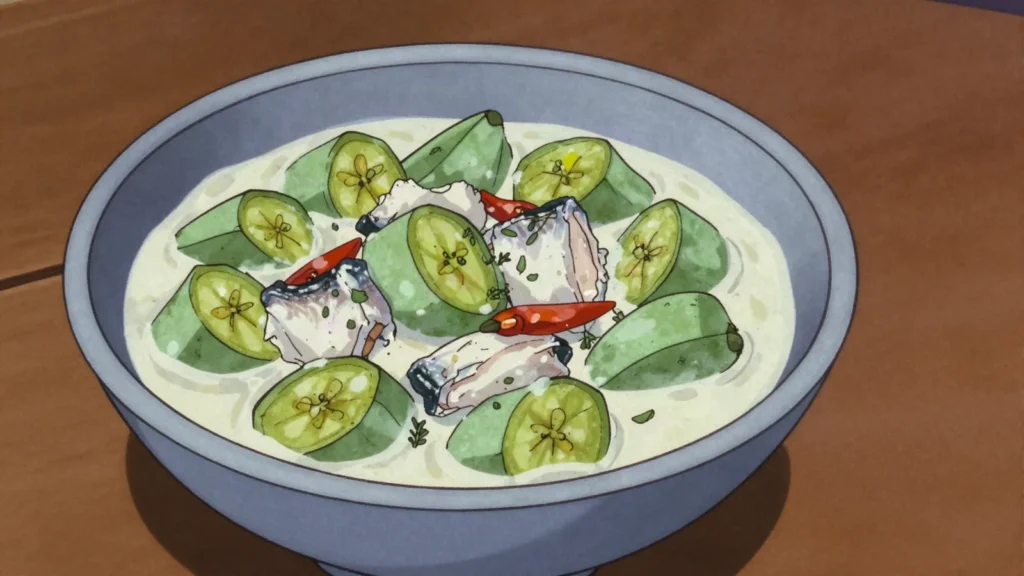
Katkat banann is a main from Seychelles: green plantain simmered in coconut milk with salted or fresh fish. A Creole household dish built on the two things every Seychellois yard has: banana trees and the day’s reef catch.
How long does Katkat banann take to make?
Katkat banann takes 25 minutes of preparation and 35 minutes of cooking. The recipe makes serves 4. It is rated easy to make.
What can I substitute in Katkat banann?
Yes, within limits. Fresh reef fish is used as often as salted fish now. Green banana can replace plantain, though it is softer.
What is the most important thing to get right in Katkat banann?
Rinse the surface salt off under cold water. Cover it with cold water in a bowl. Give it at least a full eight hours. Taste a small piece to check the salt. It should be seasoned rather than harsh. Cut the ends off with a knife first. Score the skin lengthways in three places.