
Ingredients
Chicken
- 1whole chicken, spatchcocked, or 8 thighs
Marinade
- 1 headgarlic
- 20white peppercorns
- 1large bunch coriander with roots
- 2 tbspfish sauce
- 2 tbspoyster sauce
- 2 tbsppalm sugar
- 1 tbspsoy sauce
- 1 tspturmeric
- 150 mlcoconut milk
Jaew
- 3 tbsptoasted rice powder
- 3 tbspdried chilli flakes
- 3 tbspfish sauce
- 3 tbsplime juice
- 1 tbsppalm sugar
- 3spring onions
- 1 handfulcoriander
To serve
- sticky rice
- som tam
Directions
- Pound the garlic, white peppercorns and coriander root together in a mortar into a rough paste.
- The coriander root is the point. It carries a deep, earthy flavour the leaves do not have, and this trio of root, garlic and white pepper is the foundation of most Thai marinades.
- White peppercorns rather than black, which is what Thai cooking uses here and tastes noticeably different.
- Mix the paste with the fish sauce, oyster sauce, palm sugar, soy, turmeric and coconut milk.
- Cut slashes into the thickest parts of the chicken, right down to the bone.
- Rub the marinade into every slash and leave it overnight.
- Slash the meat and marinate it overnight. A surface rub on a whole bird seasons almost nothing and the slashes also help it cook evenly.
- Make the jaew by toasting raw sticky rice in a dry pan until deep brown, then grinding it to a coarse powder.
- Toast the rice until it is genuinely brown, not blond. That nutty toasted rice powder is what makes jaew taste of Isan.
- Mix the rice powder with the chilli, fish sauce, lime, sugar and herbs, and taste for the balance of sour, salty and hot.
- Build a charcoal fire and let it burn down, then push the coals to one side.
- Cook the chicken on the cooler side, skin up, for 30 minutes, turning occasionally and basting with the leftover marinade.
- Indirect heat first. The marinade is heavy with sugar and coconut milk, and over direct flame it burns black long before the bird is cooked.
- Move it over the coals for the last 5 to 10 minutes to blister and char the skin.
- Rest it 10 minutes, then chop it through the bone into pieces with a cleaver.
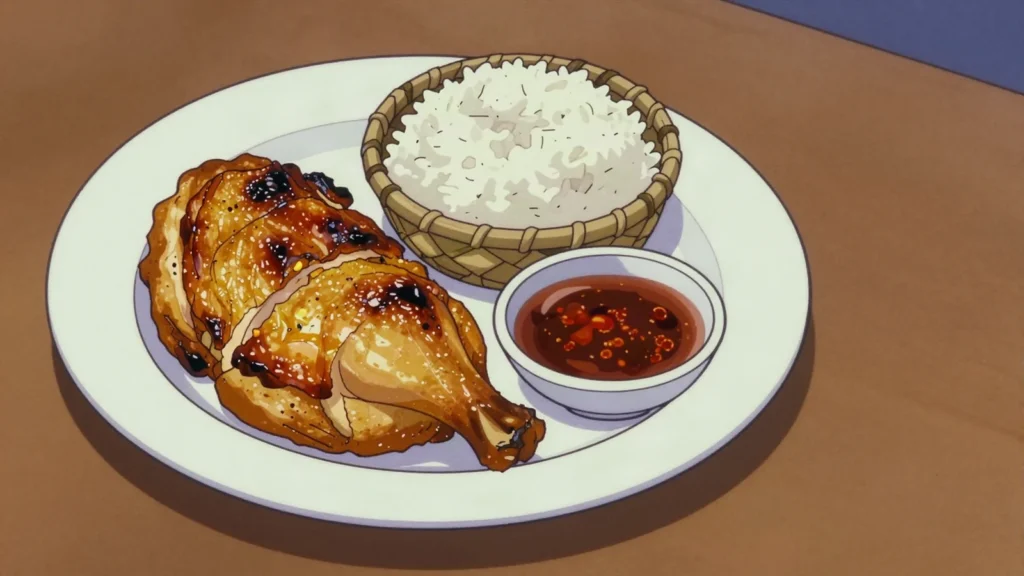
- Serve with sticky rice and jaew, and som tam alongside.
- It is Isan food, from Thailand’s northeast, and the trio of grilled chicken, green papaya salad and sticky rice is eaten together as a matter of course.
Technique
- It is traditionally flattened between split bamboo and grilled slowly over low coals for the better part of an hour.
- Coriander root is sold with the bunch in Asian shops and is worth seeking out; the lower stems are the nearest substitute.
- Eaten with the hands, with a ball of sticky rice used to pick up the sauce.
Substitutions
- Chicken thighs, which are more forgiving and quicker.
- The lower stems of coriander in place of the roots.
Variations
- Grilled over lemongrass stalks laid on the coals.
- With more turmeric, which gives a deeper yellow.
- Oven-roasted at a low heat then finished under a hot grill.
History
Grilled chicken, marinated in a blend of garlic, coriander root, white pepper and fish sauce, documented across Thailand, particularly associated with the Isan region in the country’s northeast, an area whose cuisine reflects significant cultural and culinary ties to neighboring Laos. Its marinade, built around coriander root rather than the leaf more commonly used elsewhere, reflects specific Isan and Lao culinary preference, and kai yang is traditionally served alongside sticky rice and a spicy dipping sauce as part of a broader Isan meal. Kai yang remains one of the most iconic dishes of Isan cuisine, now widely eaten and beloved across Thailand as a whole.
Frequently asked questions
What is Kai Yang?
Kai Yang is a street food from Thailand: isan grilled chicken with sticky rice and jaew dipping sauce. Grilled chicken, marinated in a blend of garlic, coriander root, white pepper and fish sauce, documented across Thailand, particularly associated with the Isan region in the country’s northeast, an area whose cuisine reflects significant cultural and culinary ties to neighboring Laos. Its marinade, built around coriander root rather than the leaf more commonly used elsewhere, reflects specific Isan and Lao culinary preference, and kai yang is traditionally served alongside sticky rice and a spicy dipping sauce as part of a broader Isan meal. Kai yang remains one of the most iconic dishes of Isan cuisine, now widely eaten and beloved across Thailand as a whole.
How long does Kai Yang take to make?
Kai Yang takes 20 min plus overnight marinating of preparation and 40 min of cooking. The recipe makes 4 servings. It is rated medium to make.
What can I substitute in Kai Yang?
Yes, within limits. Chicken thighs, which are more forgiving and quicker. The lower stems of coriander in place of the roots.
What is the most important thing to get right in Kai Yang?
The coriander root is the point. It carries a deep, earthy flavour the leaves do not have, and this trio of root, garlic and white pepper is the foundation of most Thai marinades.