
Ingredients
Buttermilk brine
- 1.6 kgchicken, cut into 8 pieces on the bone, skin on
- 750 mlbuttermilk
- 2 tbspfine salt
- 1 tbspcaster sugar
- 1 tbsphot sauce (Louisiana style)
- 1 tbspsweet paprika
- 2 tspgarlic powder
Seasoned flour
- 400 gplain flour
- 50 gcornflour
- 1 tbspfine salt
- 2 tspfreshly ground black pepper
- 2 tspsweet paprika
- 1 tspgarlic powder
- 1 tsponion powder
- 1 tspcayenne pepper
- 1 tspdried thyme
- ½ tspcelery salt
To fry
- 1.5 litresgroundnut oil, or 500 g lard plus oil, for a cast-iron frying pan
- 2 tbspbacon fat, optional but traditional in the South
Directions
- Whisk the buttermilk with the salt, sugar, hot sauce, paprika and garlic powder, submerge the chicken pieces, cover and refrigerate 12–24 hours. The acid and salt season deep and tenderise the muscle.
- Mix the seasoned flour in a wide tray. Spoon in 3 tbsp of the buttermilk brine and rub it through with your fingers to make shaggy clumps, which fry into the craggy crust.
- Lift each piece from the brine, letting the excess run off but leaving it wet, and press it hard into the flour, turning and pressing again so the coating packs into every crevice.
- Rest the coated pieces on a rack for 20 minutes until the flour looks damp and pasted on rather than dusty. This step is what stops the crust falling off in the pan.
- Heat 3 cm of fat in a heavy cast-iron frying pan to 165°C (325°F). Southern frying is shallow, in a frying pan, not deep-fat.
- Lay in the dark meat first, skin down, without crowding, and fry 10–12 minutes; keep the fat between 150 and 165°C (325°F), adjusting the heat constantly.
- Turn once, cover the pan for 5 minutes to steam the joint through, then uncover for the last few minutes to re-crisp. Breasts need about 15 minutes total, thighs and drumsticks 18–20.
- It is done at 74°C (165°F) at the bone, with the crust deep mahogany and the juices running clear. Drain on a rack and salt lightly while hot.
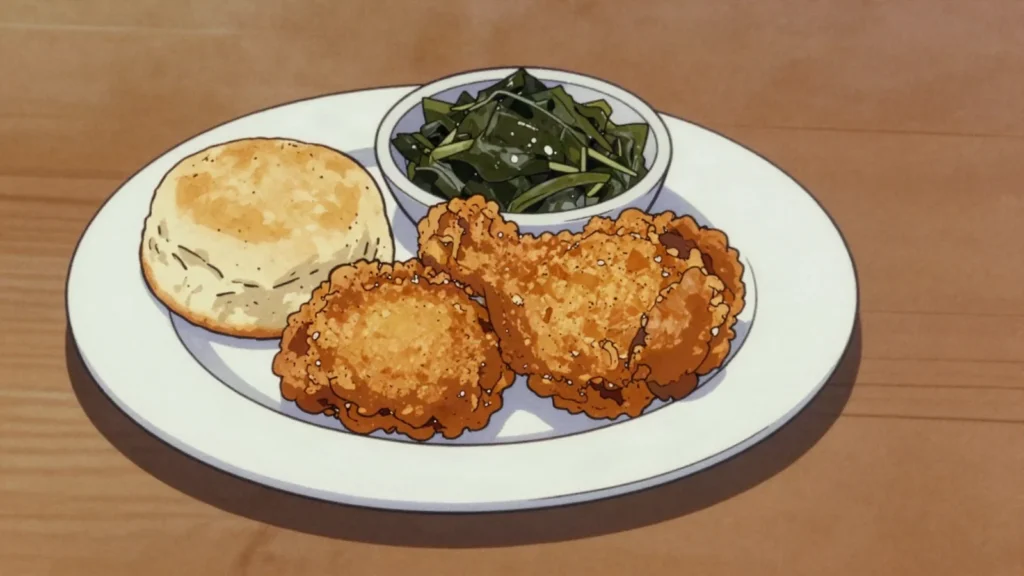
- Rest 10 minutes before serving, with hot sauce, biscuits, collard greens or a pickle spear.
Technique
- Fry below 170°C (350°F). Hot fat browns the crust long before the bone-in meat is cooked, which is the single most common failure.
- The buttermilk soak is not just flavour. Its lactic acid works slowly and will not turn the surface mushy the way a lemon or vinegar marinade does.
- Never drain fried chicken on paper towel: trapped steam turns the underside soggy within a minute. A wire rack is essential.
Substitutions
- No buttermilk? Use 750 ml whole milk soured with 2 tbsp lemon juice, left 10 minutes, though the texture is slightly less tender.
- Half lard and half groundnut oil gives the classic Southern flavour; all vegetable oil is the neutral modern default.
Variations
- Nashville hot chicken, brushed after frying with a paste of cayenne, brown sugar and frying fat, served on white bread with pickles.
- Maryland fried chicken, finished in cream gravy in the pan.
- Korean-American double-fried chicken, thinly battered and fried twice for a glassy shell.
History
Chicken pieces, coated in seasoned flour or batter and deep-fried until crisp, documented across the American South with a genuinely layered history combining West African, Scottish and enslaved African American culinary tradition, since frying chicken in fat was a technique long used in Scotland, while African and African American cooks, many enslaved on Southern plantations, developed the specific seasoning, breading technique and cultural significance that shaped fried chicken into its recognizably American form. Its development within African American communities specifically, who were often permitted to raise chickens when other livestock was restricted under slavery, gave the dish particular cultural and economic significance within Black Southern culinary tradition that continued long after emancipation. Fried chicken remains one of the most iconic dishes associated with Southern and broader American cuisine.
Frequently asked questions
What is Fried chicken?
Fried chicken is a main from United States: buttermilk-brined chicken fried crisp; Southern soul food icon. Chicken pieces, coated in seasoned flour or batter and deep-fried until crisp, documented across the American South with a genuinely layered history combining West African, Scottish and enslaved African American culinary tradition, since frying chicken in fat was a technique long used in Scotland, while African and African American cooks, many enslaved on Southern plantations, developed the specific seasoning, breading technique and cultural significance that shaped fried chicken into its recognizably American form. Its development within African American communities specifically, who were often permitted to raise chickens when other livestock was restricted under slavery, gave the dish particular cultural and economic significance within Black Southern culinary tradition that continued long after emancipation. Fried chicken remains one of the most iconic dishes associated with Southern and broader American cuisine.
How long does Fried chicken take to make?
Fried chicken takes 30 min of preparation and 12 hr brining, 30 min frying of cooking. The recipe makes 4 servings. It is rated medium to make.
What can I substitute in Fried chicken?
Yes, within limits. No buttermilk? Use 750 ml whole milk soured with 2 tbsp lemon juice, left 10 minutes, though the texture is slightly less tender. Half lard and half groundnut oil gives the classic Southern flavour; all vegetable oil is the neutral modern default.
What is the most important thing to get right in Fried chicken?
Rest the coated pieces on a rack for 20 minutes until the flour looks damp and pasted on rather than dusty. This step is what stops the crust falling off in the pan.