
Ingredients
Meat and fat
- 2.5 kglamb shoulder and leg, boned and cut into 4 cm cubes
- 800 glamb tail fat or hard back fat, diced small
- 35 gfine salt (about 18 to 20 g per kilo of finished meat)
- 1 tspblack pepper
- 1bay leaf, optional
- 1 tspdried thyme or savory, optional
Storage
- sterilised wide-mouth glass jars or a glazed clay pot
- enough rendered fat to cover the meat by 2 cm
To serve later
- 3onions, sliced
- 6eggs, for the classic ghavurma with eggs
- flatbread or lavash
Directions
- Lift out the crisp pieces and keep them. Raise the heat to medium-high and brown the meat in the hot fat in batches, so it sears rather than stews, about 8 minutes a batch.
- Return all the meat to the pot, season with the salt and pepper and the herbs, cover, and cook on the lowest heat for 2 to 2 hours 30 minutes, stirring now and then. The meat releases its own juices, which must all evaporate before the meat can fry properly in the fat.
- Salt is the preservative here as much as the fat, so taste and correct now: the meat should taste slightly saltier than you would want at the table.
- Pack the hot meat tightly into sterilised jars or a scalded clay pot, pressing out air pockets with a spoon, and leave 3 cm of headspace.
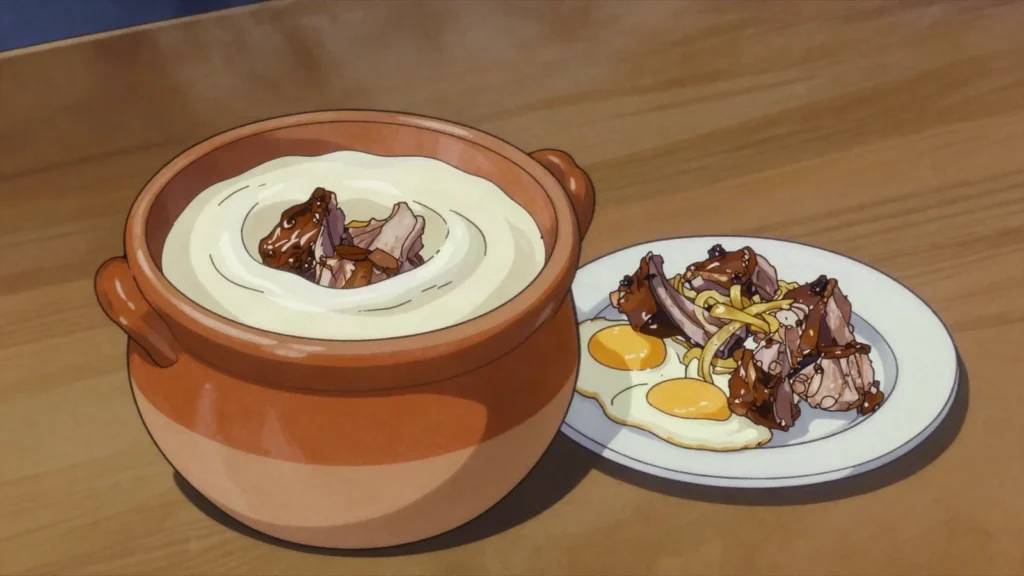
- Strain the hot rendered fat over the meat so it is covered by at least 2 cm with no meat breaking the surface, then let it set solid before sealing. To eat, spoon out a portion with some of its fat, fry it with sliced onions until they soften, break in eggs and cook until just set, and serve straight from the pan with lavash.
Technique
- Ghavurma is a winter preserve from the era before refrigeration: meat cooked in its own fat and sealed under a fat cap in a clay pot, kept in a cold storeroom through the months when there was nothing to slaughter. The technique is shared across the Caucasus and Anatolia under related names.
- The fat seal is a barrier to air and to mould, not sterilisation. Anaerobic conditions at room temperature are exactly the environment Clostridium botulinum likes, so a traditional cellar-cool ghavurma is safe only when kept genuinely cold. At home, keep it refrigerated below 4°C (40°F) for up to a month, or freeze it.
- Every piece of meat must be under the fat. One exposed cube will go rancid and taint the pot.
- Do not cut the fat quantity. It seems extreme, but the fat is the preserving medium and it is what makes the meat tender rather than dry.
Substitutions
- No tail fat: use hard back fat or a mixture of back fat and clarified butter, though tail fat is what gives the dish its particular sweetness.
- The same method works with beef, which is common in city households.
Variations
- Ghavurma with eggs and onion is the everyday breakfast use; ghavurma stirred through pilaf or into a bean stew is the winter dinner use.
- Some Syunik households add dried barberries or a spoon of grape molasses to the pot at the end of cooking.
History
Highland preserving method: autumn meat is fried, packed into clay pots and sealed with fat against the mountain winter.
Frequently asked questions
What is Ghavurma?
Ghavurma is a charcuterie & cured from Armenia: lamb fried and preserved under its own fat for the winter. Highland preserving method: autumn meat is fried, packed into clay pots and sealed with fat against the mountain winter.
How long does Ghavurma take to make?
Ghavurma takes 40 min of preparation and 3 hr of cooking. The recipe makes about 1.5 kg of preserved meat, 6 to 8 meals. It is rated medium to make.
What can I substitute in Ghavurma?
Yes, within limits. No tail fat: use hard back fat or a mixture of back fat and clarified butter, though tail fat is what gives the dish its particular sweetness. The same method works with beef, which is common in city households.
What is the most important thing to get right in Ghavurma?
Lift out the crisp pieces and keep them. Raise the heat to medium-high and brown the meat in the hot fat in batches, so it sears rather than stews, about 8 minutes a batch.