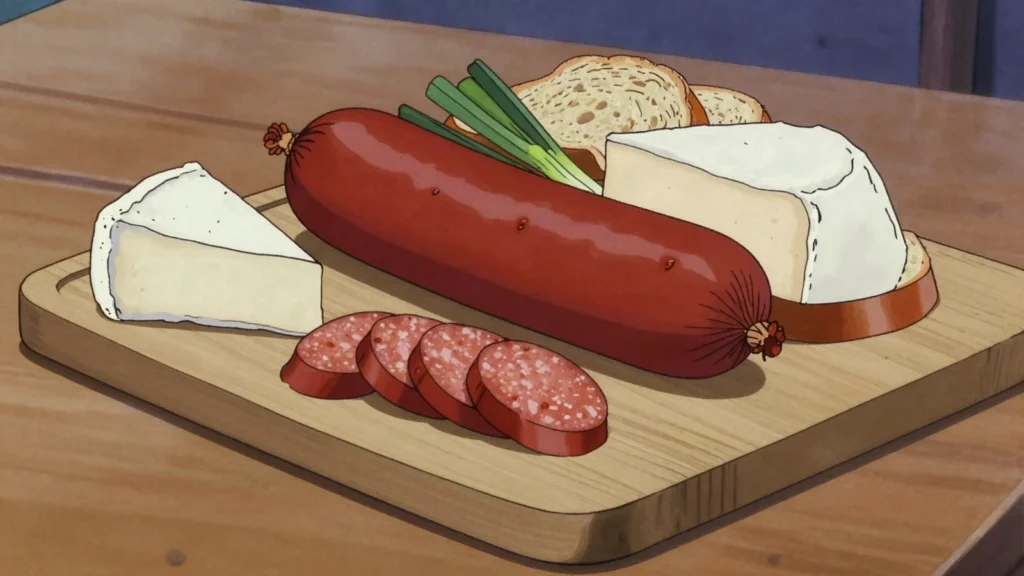

A spicy paprika-cured Slavonian sausage stuffed into the pig’s caecum and matured for months. Slavonski kulen holds a protected designation of origin, and the meat is cut only from pigs raised in the region.
It is raw pork cured for months where safety depends on nitrite level, pH and water activity hitting measured targets, and the loft’s temperature and humidity are the equipment.
What goes into it
- pork shoulder and neck
- pork fat
- salt
- sweet and hot Slavonian paprika
- garlic
- the pig’s caecum as casing
How it is made
Coarsely chopped pork is mixed with salt, garlic and a great deal of paprika, then packed hard into the caecum, tied and hung to smoke gently over beech for weeks. It then dries in a cold, airy loft for months, losing around half its weight, while a white mould develops over the surface.
How long it takes: six months to a year
How it is eaten
Sliced thin with cheese, bread and a glass of Graševina, or as part of a meze board.
History
A spiced, cured sausage made from pork, packed into a large casing and dried and smoked over an extended period, most strongly associated with the Slavonia region of eastern Croatia, where its production is treated as a significant seasonal and cultural event, traditionally timed to the colder months following the autumn pig slaughter, when temperatures allow for proper slow curing and drying without spoilage. Its distinctive deep red colour and characteristic flavour come from a generous use of paprika in the spice mixture, a New World chili pepper that reached the Balkans through Ottoman-era trade routes beginning in the 1500s and 1600s. Kulen has received European Union protected geographical status recognizing its specific Slavonian origin and traditional production method, distinguishing genuine regional kulen from similar sausages made elsewhere.
Frequently asked questions
What is Kulen?
Kulen is a charcuterie & cured from Croatia: spicy paprika-cured Slavonian sausage. A spiced, cured sausage made from pork, packed into a large casing and dried and smoked over an extended period, most strongly associated with the Slavonia region of eastern Croatia, where its production is treated as a significant seasonal and cultural event, traditionally timed to the colder months following the autumn pig slaughter, when temperatures allow for proper slow curing and drying without spoilage. Its distinctive deep red colour and characteristic flavour come from a generous use of paprika in the spice mixture, a New World chili pepper that reached the Balkans through Ottoman-era trade routes beginning in the 1500s and 1600s. Kulen has received European Union protected geographical status recognizing its specific Slavonian origin and traditional production method, distinguishing genuine regional kulen from similar sausages made elsewhere.
How is Kulen made?
Coarsely chopped pork is mixed with salt, garlic and a great deal of paprika, then packed hard into the caecum, tied and hung to smoke gently over beech for weeks. It then dries in a cold, airy loft for months, losing around half its weight, while a white mould develops over the surface. It takes six months to a year.
Can I make Kulen at home?
No, and the atlas gives no method for it. It is raw pork cured for months where safety depends on nitrite level, pH and water activity hitting measured targets, and the loft’s temperature and humidity are the equipment.
What goes into Kulen?
Pork shoulder and neck, pork fat, salt, sweet and hot Slavonian paprika, garlic, the pig’s caecum as casing.
How is Kulen eaten?
Sliced thin with cheese, bread and a glass of Graševina, or as part of a meze board.