
Ingredients
Beans
- 500 gdried red kidney or catarino beans, soaked overnight in plenty of cold water
- 1.5 litreswater
- 2bay leaves
- 1onion, halved
Stew
- 150 mlred palm oil
- 2onions, finely chopped
- 5garlic cloves, chopped
- 3tomatoes, chopped
- 2 tbsptomato paste
- 300 gsmoked dried fish, such as smoked mackerel or dried bream, broken into large flakes and bones removed
- 2jindungo chillies, whole
- 1.5 tspfine salt
- 1 bunchcoriander, chopped
To serve
- 600 gfunge de bombo
- 2ripe plantains, sliced and fried in palm oil
- gindungo sauce
Directions
- Drain the soaked beans, cover with the fresh water, add the bay and halved onion, and bring to a hard boil for 10 minutes.
- Reduce to a simmer and cook 60–90 minutes, topping up with hot water as needed, until the beans crush easily against the roof of your mouth but still hold their shape. Do not salt them yet, which toughens the skins.
- Meanwhile heat the palm oil gently in a wide pan until it turns from solid orange to clear red, about 90°C (195°F). Do not let it smoke; overheated palm oil loses its colour and turns acrid.
- Fry the chopped onions in the oil over medium heat for 10 minutes until soft and deep gold.
- Add the garlic, then the tomato paste, and cook 3 minutes until the paste darkens and the oil separates and floats red on the surface.
- Stir in the chopped tomatoes and cook 10 minutes to a thick base.
- Lift the beans out with a slotted spoon into the pan along with 400 ml of their cooking liquor, and add the salt and the whole chillies.
- Fold in the smoked flakes gently so they stay in pieces, and simmer uncovered 20–25 minutes, until the sauce is thick and slicked with red oil and the beans have taken on its colour.
- Taste and season. Scatter the coriander and rest 5 minutes.
- Serve with funge, fried plantain and gindungo on the side.
Technique
- Unrefined red palm oil, dende, is the point of the dish and cannot be swapped for refined palm oil or any other fat: it carries the colour, the faint violet-earthy flavour and the body of the sauce.
- Heat the oil gently before anything goes in. Palm oil that has been taken past smoking point is bitter, pale and the whole pot tastes of it.
- Salt the beans only once they are soft. Salt added at the start hardens the skins and they can stay chalky no matter how long they cook.
Substitutions
- No smoked dried fish: smoked mackerel fillets added in the last 10 minutes give a close result, though the texture is softer.
- Catarino beans are the Angolan choice; red kidney, borlotti or pinto all work. Tinned beans can be used, in which case start at step three and simmer only 15 minutes.
Variations
- Feijao de oleo de palma as one component of a mufete, the Luanda weekend grill.
- Made with fresh prawns instead of smoked fish, folded in for the last 5 minutes.
- A version with pounded okra stirred through for body.
History
Red palm oil, pressed from oil palms along the coast and in Cabinda, gives the stew its colour and is central to Angolan cooking.
Frequently asked questions
What is Feijão de óleo de palma?
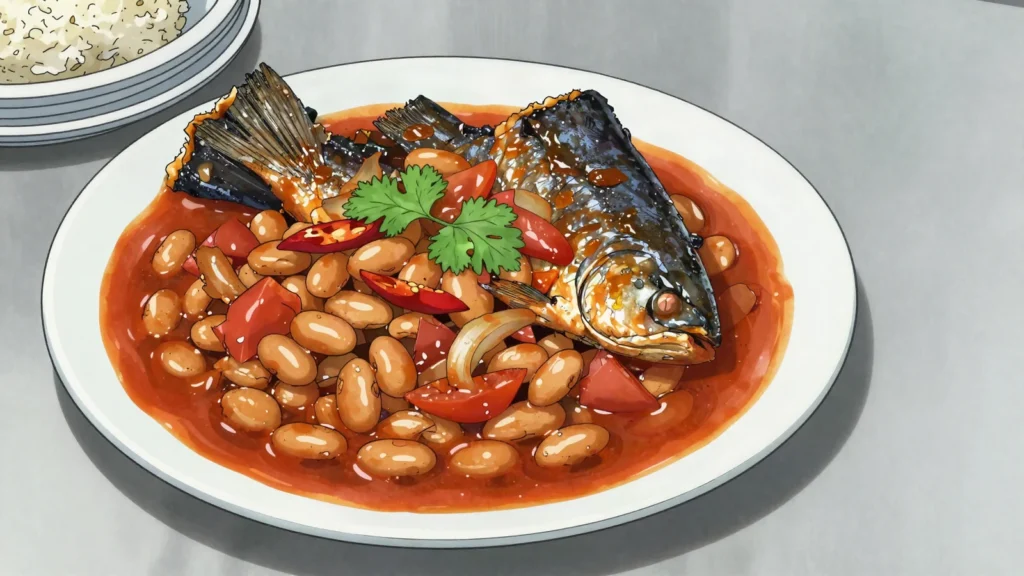
Feijão de óleo de palma is a main from Angola: beans stewed in red palm oil with smoked fish, served with funge. Red palm oil, pressed from oil palms along the coast and in Cabinda, gives the stew its colour and is central to Angolan cooking.
How long does Feijão de óleo de palma take to make?
Feijão de óleo de palma takes 25 min of preparation and 2 hr, plus overnight soaking of cooking. The recipe makes 6 servings. It is rated easy to make.
What can I substitute in Feijão de óleo de palma?
Yes, within limits. No smoked dried fish: smoked mackerel fillets added in the last 10 minutes give a close result, though the texture is softer. Catarino beans are the Angolan choice; red kidney, borlotti or pinto all work. Tinned beans can be used, in which case start at step three and simmer only 15 minutes.
What is the most important thing to get right in Feijão de óleo de palma?
Reduce to a simmer and cook 60–90 minutes, topping up with hot water as needed, until the beans crush easily against the roof of your mouth but still hold their shape. Do not salt them yet, which toughens the skins.