
Ingredients
The okra
- 600 gfresh okra
- young and small
- trimmed and sliced
- or 500 g frozen sliced okra
The fish
- 600 gfresh fish
- tilapia, catfish or similar
- cut into steaks or large pieces
- or 200 g smoked fish
- or a mixture of both
The base
- 4 tablespoonsred palm oil
- or vegetable oil
- 2large onions, chopped
- 4tomatoes, chopped
- or 1 tin chopped tomatoes
- 2 tablespoonstomato purée
- 4 clovesgarlic, crushed
- a thumb of ginger, grated
- 2hot chillies
- or to taste
- 1stock cube, optional
- about 800 ml water or stock
- salt and black pepper
Sometimes added
- 1 tablespoondried crayfish powder
- or ground dried prawns
- a handful of spinach or cassava leaf
- a squeeze of lemon
To serve
- fufu, pounded cassava
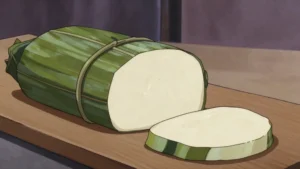
- or chikwangue, the cassava loaf
- or rice
- or plantain
Directions
- Wash it and dry it thoroughly. Trim off the stem end. Do not cut into the pod itself when trimming. Cut just below the cap. Slice the pods into rounds. Thin slices release more mucilage. Soak it in hot water for twenty minutes. Pick out the bones carefully.
- Flake the flesh and add it to the pot. African fish stews often keep the bones in. Warm it gently to melt it. Do not heat it until it smokes.
- Heat the palm oil in a large pot. Add the chopped onions. Cook them for about ten minutes until soft. Add the garlic, ginger and chillies. Cook them for two minutes. Add the tomato purée and cook it two minutes. Add the chopped tomatoes.
- Cook them down for about ten minutes. They should collapse into a thick base. Add the water or stock. Add the stock cube if you are using one. Add the crayfish powder if you have it. Bring it to a simmer. Season it lightly with salt. Add the smoked fish now if using it. Simmer it for fifteen minutes. Hold back fresh fish for later. Fresh fish needs only a few minutes.
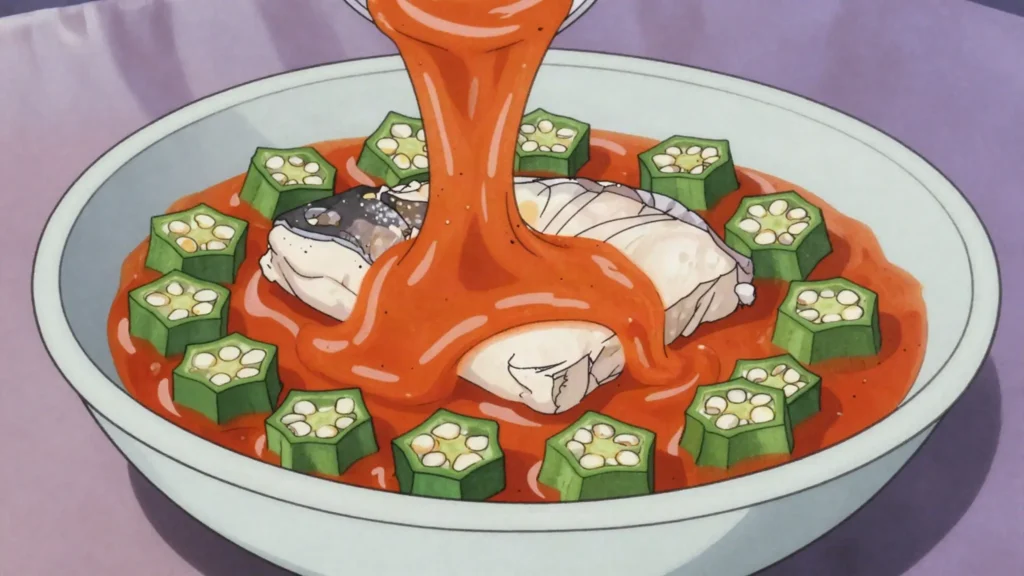
- Add the sliced okra to the simmering sauce. Do not overcook it. Stir it gently and not constantly. Simmer them gently for eight minutes. Do not boil hard or they break up. Shake the pot instead if needed. The flesh should be opaque throughout.
- Add spinach or cassava leaf in the last five minutes. Cassava leaf must be well cooked, which is separate. Add water if it is too thick. Simmer it uncovered a little longer if too thin. Season with salt and black pepper. Taste it and adjust the chilli. Serve it hot in a wide bowl.
- Serve fufu alongside, which is the classic partner. Take a piece of fufu with the right hand. Roll it into a ball with your fingers. Press a dent into it with your thumb. Use that dent to scoop up the sauce. It keeps two days refrigerated. Add fresh fish when you reheat it.
Technique
- The slipperiness is the point. Okra mucilage thickens the sauce and helps it coat fufu, which is swallowed rather than chewed — so the texture is functional as well as liked. There is no way to make dongo-dongo while removing it, and if you dislike that texture this is not the dish.
- Do not overcook the okra. Fifteen to twenty minutes is enough; beyond that it turns grey-brown, breaks down and — surprisingly — the sauce can thin, because long cooking breaks the mucilage down too.
- Slice the okra thinly. Thin slices release far more mucilage than thick ones, and blending or grating a portion thickens the sauce further.
- Go easy on acid. Lemon or vinegar reduces the mucilage, which is why they are added to okra elsewhere. Here you want it, so a small squeeze at the end at most.
- Wait for the oil to separate and rise from the tomato and onion base before adding liquid. That is the standard indicator in this cooking and a base that has not reached it tastes raw.
- Add fresh fish only in the last eight minutes and stop stirring once it is in — shake the pot instead. Smoked fish goes in earlier and benefits from it.
- Soak smoked fish in hot water for twenty minutes to soften it and draw out excess salt, then pick the bones out carefully. Smoked fish is often full of small ones.
- African fish stews frequently keep the bones in and diners pick them out as they eat. Warn anyone unused to it, and bone the fish properly for small children.
- Choose small young okra, about finger length. Snap the tip: it should break crisply, and a pod that bends is old and woody. Frozen sliced okra is genuinely good here and goes in from frozen.
- Do not heat palm oil until it smokes, whatever a recipe says about bleaching it. Overheating any oil produces harmful compounds and fills the kitchen with acrid smoke.
- Red palm oil is unrefined and deep orange-red, a different product from refined palm oil, and it gives the sauce as much of its colour as the tomato does. Industrial palm oil has driven serious deforestation, largely through Southeast Asian plantations; small-scale Central African production is a different matter.
- This contains fish and often dried crustaceans, both common and potentially severe allergens. Say so plainly.
Substitutions
- Frozen sliced okra replaces fresh entirely and needs no thawing.
- Tilapia, catfish, mackerel or any firm fish serves; smoked fish can replace or join it.
- Vegetable oil replaces red palm oil, at the cost of the colour and much of the character.
- Crayfish powder or ground dried prawns add depth and are optional.
- Spinach replaces cassava leaf, which needs separate long cooking and is best bought pre-prepared.
- Rice or boiled plantain replace fufu where cassava dough is impractical.
Variations
- Okra soup in Nigeria and Ghana is the same principle with different seasonings.
- Soupou kandia in Senegal cooks okra with palm oil and smoked fish.
- Ngombo and gumbo derive from the same word for okra and the same tradition.
- Pondu, cassava leaf cooked with palm oil, is the other great Congolese sauce.
- A meat version with beef or goat replaces the fish in some households.
- Liboke is the Congolese method of cooking fish in a leaf parcel, a quite different treatment.
History
Okra cooked to a deliberate slipperiness, eaten with fufu; okra is an African crop domesticated long before European contact.
Frequently asked questions
What is Dongo-dongo?
Dongo-dongo is a soup & stew from DR Congo: silky okra sauce with fish. Okra cooked to a deliberate slipperiness, eaten with fufu; okra is an African crop domesticated long before European contact.
How long does Dongo-dongo take to make?
Dongo-dongo takes 20 minutes of preparation and 45 minutes of cooking. The recipe makes serves 6. It is rated easy to make.
What can I substitute in Dongo-dongo?
Yes, within limits. Frozen sliced okra replaces fresh entirely and needs no thawing. Tilapia, catfish, mackerel or any firm fish serves; smoked fish can replace or join it. Vegetable oil replaces red palm oil, at the cost of the colour and much of the character. Crayfish powder or ground dried prawns add depth and are optional. Spinach replaces cassava leaf, which needs separate long cooking and is best bought pre-prepared. Rice or boiled plantain replace fufu where cassava dough is impractical.
What is the most important thing to get right in Dongo-dongo?
Wash it and dry it thoroughly. Trim off the stem end. Do not cut into the pod itself when trimming. Cut just below the cap. Slice the pods into rounds. Thin slices release more mucilage. Soak it in hot water for twenty minutes. Pick out the bones carefully.