
Ingredients
Meats
- 500 gpork ribs, cut into single ribs
- 400 gbeef shin, in large pieces
- 200 gtasajo (salt-dried beef), soaked overnight and drained
- 1chicken, jointed, or 800 g chicken thighs
Sofrito
- 3 tbsplard or oil
- 2onions, chopped
- 1green pepper, chopped
- 6garlic cloves, crushed
- 1 tspground cumin
- 1 tspdried oregano
- 3tomatoes, grated
Viandas
- 500 gcassava, peeled and cut into chunks, woody core removed
- 500 gmalanga, peeled and cut into chunks
- 400 gboniato or sweet potato, in chunks
- 2green plantains, in thick slices
- 2ripe plantains, in thick slices
- 2corn cobs, cut into rounds
To finish
- juice of 1 lime
- salt and pepper
Directions
- Put the soaked tasajo, the beef shin and the pork ribs in a very large pot with 4 litres of cold water. Bring to a simmer, skim the grey foam off carefully, and cook uncovered for 1 hour. The salt beef seasons the whole broth, so do not salt it yet.
- Add the chicken and simmer for another 30 minutes, until every meat is tender enough to pull from the bone. Lift the meats out, let them cool a little, and tear them into rough pieces, discarding bone and gristle. Keep the broth.
- Make the sofrito while that happens. Heat the lard and cook the onion and pepper gently until soft and sweet, about 12 minutes. Add the garlic, cumin and oregano and fry for a minute, then the grated tomato, and cook it down until it darkens and no longer smells raw.
- Stir the sofrito into the broth. Add the corn and the green plantain first, then after 10 minutes the cassava and malanga, then after another 10 the boniato and ripe plantain. The order matters: they soften at very different speeds and everything added at once gives you mush and raw pieces in the same bowl.
- Simmer until the viandas are tender and some of the starchier ones have begun to break down and thicken the broth, about 25 minutes. Return the torn meat.
- Taste and salt now, not before, because the tasajo has been salting it all along. Finish with lime juice and plenty of black pepper, and let it sit off the heat for 15 minutes before serving.
Technique
- Ajiaco is meant to thicken itself. If the broth is still thin, crush a few pieces of cassava or malanga against the side of the pot and stir them in.
- Soaking the tasajo is not optional — unsoaked it will make the whole pot inedibly salty. Change the water once during the overnight soak.
- Fernando Ortiz used this pot in 1940 as a figure for Cuban culture: many things put in at different moments and simmered into one thing.
Substitutions
- If tasajo is unavailable, use 150 g of any dry-cured salt beef, or leave it out and salt the broth from the start.
- Yuca, taro and yam substitute freely for each other among the viandas.
Variations
- Country versions add pumpkin (calabaza) and chayote. Cuban ajiaco is unrelated to the Colombian chicken and potato soup of the same name.
History
A stew of many meats and tubers that Fernando Ortiz used in 1940 as a metaphor for Cuban culture simmering African, Spanish and Indigenous elements.
Frequently asked questions
What is Ajiaco?
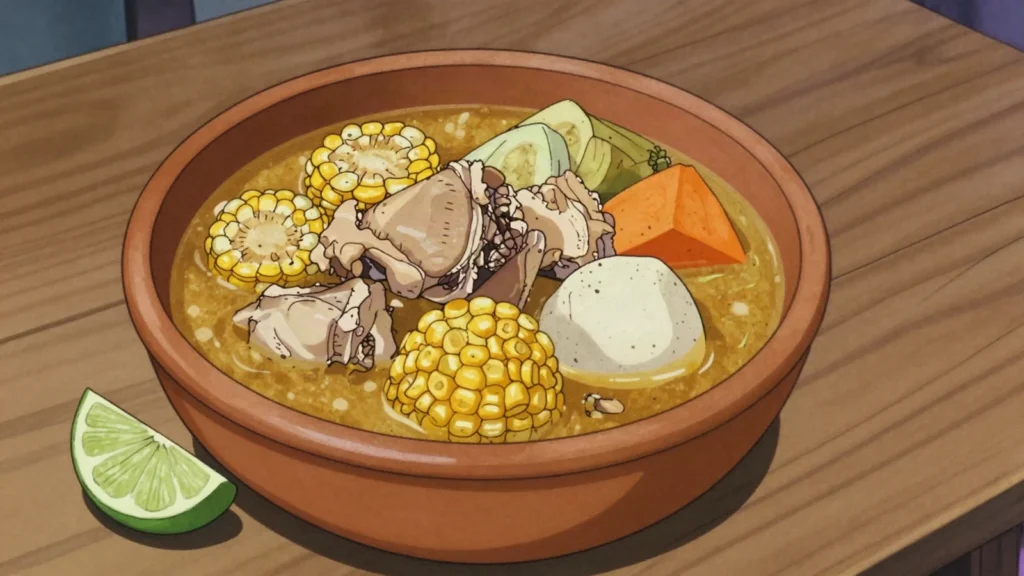
Ajiaco is a soup & stew from Cuba: country stew of assorted meats and root vegetables. A stew of many meats and tubers that Fernando Ortiz used in 1940 as a metaphor for Cuban culture simmering African, Spanish and Indigenous elements.
How long does Ajiaco take to make?
Ajiaco takes 40 min of preparation and 2 hr 30 min of cooking. The recipe makes serves 8. It is rated medium to make.
What can I substitute in Ajiaco?
Yes, within limits. If tasajo is unavailable, use 150 g of any dry-cured salt beef, or leave it out and salt the broth from the start. Yuca, taro and yam substitute freely for each other among the viandas.
What is the most important thing to get right in Ajiaco?
Put the soaked tasajo, the beef shin and the pork ribs in a very large pot with 4 litres of cold water. Bring to a simmer, skim the grey foam off carefully, and cook uncovered for 1 hour. The salt beef seasons the whole broth, so do not salt it yet.