
Ingredients
The bread
- 1Cuban roll
- or any soft white bread
- split, or 2 slices
The filling
- a thick slab of guava paste
- about 1 cm thick
- a thick slab of white cheese
- queso blanco or a mild firm cheese
Sometimes
- the bread lightly toasted
- or the whole thing pressed
- in a sandwich press
To serve
- with strong coffee
- in the afternoon
Directions
- Salt cuts through sweetness sharply. A mild firm white cheese is wanted.
- Use a plain soft white bread roll. Any soft white bread works though. Cut a thick slab from the guava block. About one centimetre is right.
- Cut a slab of cheese the same size. The two slabs should match in size.
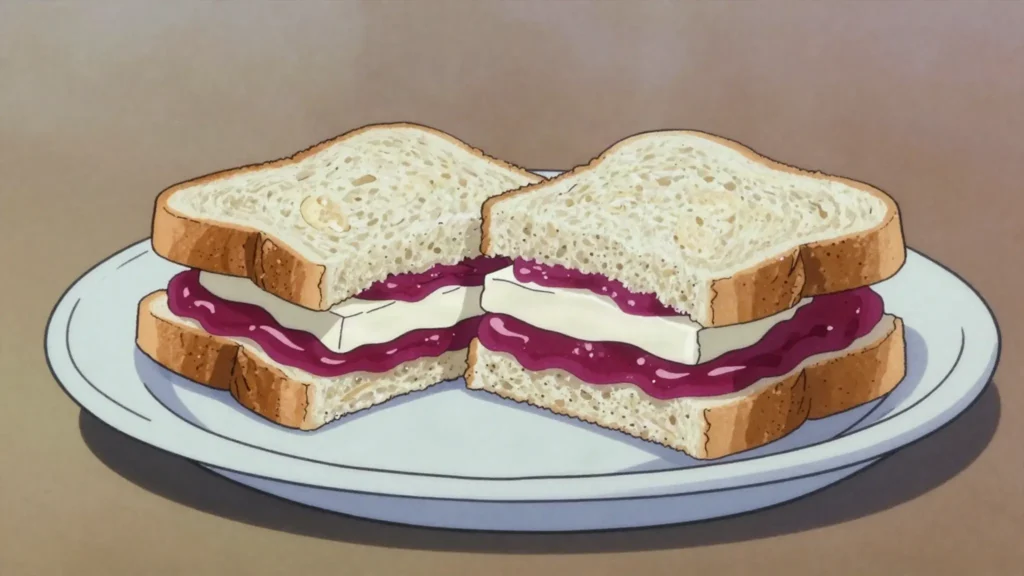
- Cut them to the same thickness. Cut them both to fit the bread. Lay the guava slab on the bread. Lay the cheese slab on top of it.
- Toast the bread lightly first. The soft filling against crisp bread. Press the whole sandwich in a press. Melted guava paste goes runny and hot.
- Let a pressed one cool a moment. Hot sugar burns are genuinely nasty.
- Cut it in half if you like to. Serve strong coffee alongside. The components keep separately.
Technique
- The pairing works because the paste is intensely sweet and the cheese mild and salty, and salt cuts sweetness sharply — the two balance each other exactly. Use a mild firm white cheese that slices rather than crumbles and is salty rather than tangy; strong or aged cheeses fight the guava rather than balancing it.
- Keep the two slabs roughly equal and about a centimetre thick each: too much guava is cloying, too much cheese is bland, and thin slices of paste disappear entirely. Wet the knife to cut the sticky paste cleanly and wipe it between cuts.
- A pressed sandwich needs a moment before biting: melted guava paste is almost entirely sugar, holds heat far longer than you expect and stays hot well after the bread cools, and hot sugar burns are genuinely nasty.
Substitutions
- A mild firm feta works if rinsed, as does any young mild cheese; queso blanco is the standard.
- Any soft white bread stands in for a Cuban roll — the bread should not compete with the filling, so avoid strongly flavoured or very chewy loaves.
Variations
- Guava paste is cooked-down guava and sugar set into a firm block that keeps for months in a hot climate, where fresh guava spoils very quickly — a practical preservation.
- The same pairing has many names across Latin America; in Brazil it is Romeu e Julieta, named for the inseparable pair.
- Toasting the bread first gives a better contrast of soft filling against crisp bread; some prefer it plain and both are standard.
History
A Cuban afternoon snack of cheap sweetness, the classic pairing of guava and fresh cheese in portable form.
Frequently asked questions
What is Pan con timba?
Pan con timba is a snack from Cuba: slab of guava paste and white cheese between pieces of bread. A Cuban afternoon snack of cheap sweetness, the classic pairing of guava and fresh cheese in portable form.
How long does Pan con timba take to make?
Pan con timba takes 5 minutes of preparation and no cooking at all. The recipe makes serves 1. It is rated easy to make.
What can I substitute in Pan con timba?
Yes, within limits. A mild firm feta works if rinsed, as does any young mild cheese; queso blanco is the standard. Any soft white bread stands in for a Cuban roll — the bread should not compete with the filling, so avoid strongly flavoured or very chewy loaves.
What is the most important thing to get right in Pan con timba?
Toast the bread lightly first. The soft filling against crisp bread. Press the whole sandwich in a press. Melted guava paste goes runny and hot.