
Ingredients
Prawns
- 800 glarge prawns, preferably head-on
- 1 tspturmeric
- 1 tspsalt
Coconut
- 500 mlthick coconut milk
- 200 mlthin coconut milk or water
Base
- 2onions, blended to a paste
- 1 tbspginger paste
- 1 tspgarlic paste
- 4green chillies, slit
Spices
- 1 tspturmeric
- 1 tspred chilli powder
- 1 tspgaram masala
- 2bay leaves
- 2cardamom pods
- 1small cinnamon stick
- 3cloves
To cook
- 4 tbspmustard oil
- 1 tspsugar
- salt
To serve
- plain steamed rice
Directions
- Use the largest prawns you can find, and keep the heads on if possible. Rub the prawns with turmeric and salt and leave them fifteen minutes. Heat the mustard oil until it just smokes, then let it cool slightly. Mustard oil must be taken to smoking point first to drive off its raw pungency, which is essential across Bengali cooking.
- Fry the prawns for barely a minute on each side, until they just turn colour. Take them out while they are still underdone, since they finish in the sauce and overcooked prawns are rubbery.
- Set them aside on a plate and keep any juices. Add the whole spices to the same oil and let them sizzle for thirty seconds until fragrant. Cook it for ten to fifteen minutes until it loses its raw smell and the oil separates from the paste.
- Add the ginger and garlic pastes and cook a further two minutes. Adding a splash of water with ground spices stops them burning, since they scorch in seconds in hot oil alone.
- Cook until the oil separates again. Add the thin coconut milk first and bring it to a gentle simmer. Never let coconut milk boil hard, since it splits into oil and curds and cannot be brought back.
- Simmer it gently for five minutes to let the flavours combine. Now add the thick coconut milk and the slit green chillies. Add the sugar, which is characteristic of Bengali cooking and rounds the whole dish rather than sweetening it. Now return the prawns and simmer for three to four minutes only.
- Take the pan off the heat as soon as they are done. Adding garam masala at the end rather than during cooking keeps its aroma, which is why Bengali cooks hold it back. Let it rest, covered, for ten minutes before serving. Serve it with plain steamed rice and nothing else, since the sauce is rich and the rice is there to carry it.
Technique
- The name’s origin is genuinely uncertain, between cream and Malaya.
- Head-on prawns give a noticeably richer sauce.
- Garam masala goes in off the heat to keep its aroma.
Substitutions
- Any large prawn, though head-on is better.
- Tinned coconut milk, using the thick part from the top.
Variations
- Made with more chilli, for a hotter version.
- With a little mustard paste, in the Bengali style.
- Made with fish instead of prawns.
Frequently asked questions
What is Chingri Malai Curry?
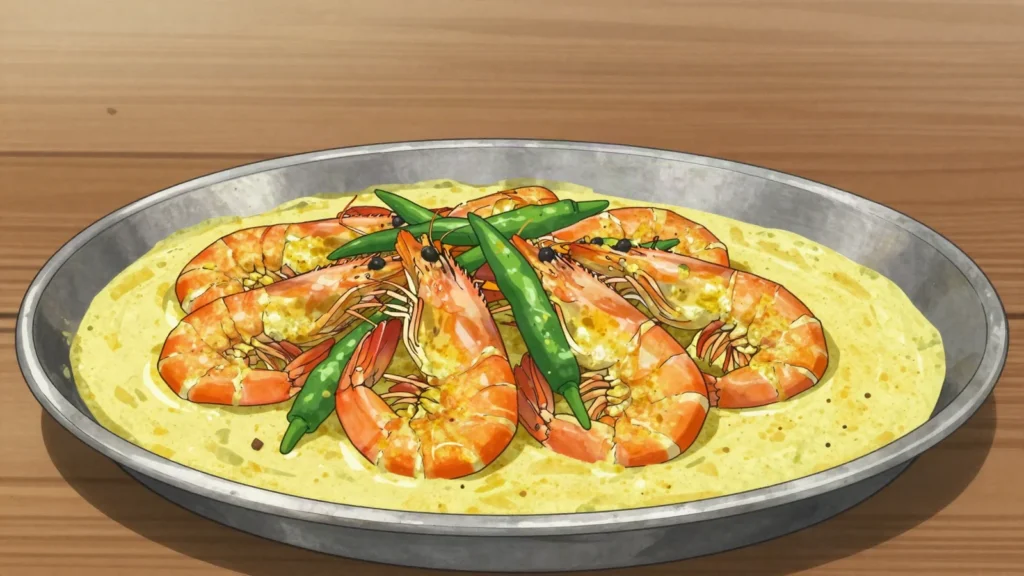
Chingri Malai Curry is a main from Bangladesh: prawns simmered in thick coconut milk with green chilli and turmeric.
How long does Chingri Malai Curry take to make?
Chingri Malai Curry takes 20 min of preparation and 30 min of cooking. The recipe makes 4 servings. It is rated medium to make.
What can I substitute in Chingri Malai Curry?
Yes, within limits. Any large prawn, though head-on is better. Tinned coconut milk, using the thick part from the top.
What is the most important thing to get right in Chingri Malai Curry?
Use the largest prawns you can find, and keep the heads on if possible. Rub the prawns with turmeric and salt and leave them fifteen minutes. Heat the mustard oil until it just smokes, then let it cool slightly. Mustard oil must be taken to smoking point first to drive off its raw pungency, which is essential across Bengali cooking.