
Ingredients
Salad
- 500 gripe tomatoes, at room temperature
- 300 gmozzarella di bufala
- 1large bunch basil
- 4 tbspextra virgin olive oil
- flaky salt
- black pepper
To serve
- good bread
Directions
- Take the mozzarella out of the refrigerator at least 30 minutes ahead and leave it sitting in its own liquid until the moment you slice it. Cold mozzarella is squeaky and tastes of very little, and a dish of four ingredients has nowhere to hide a poor one.
- Use the tomatoes at room temperature too. Refrigeration destroys the aroma compounds in a tomato and they do not come back on the counter afterwards.
- Slice the tomatoes about 1 cm thick, lay them on a plate, salt them and leave them for 5 minutes to draw out a little juice.
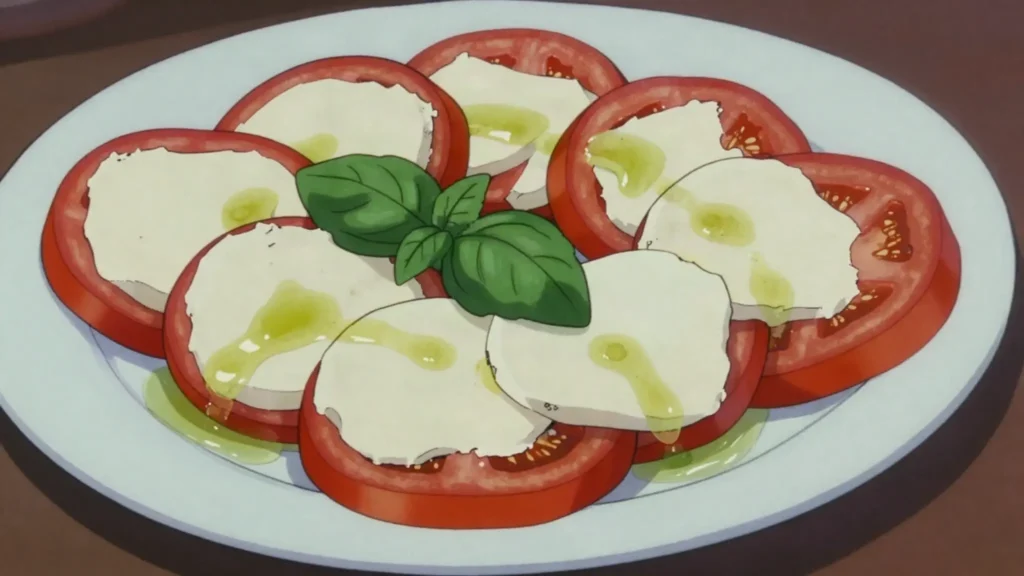
- Tear or slice the mozzarella and arrange it among the tomato slices, alternating them.
- Tear the basil leaves rather than cutting them. A knife bruises the cut edges and they blacken within minutes.
- Pour the olive oil over generously and grind black pepper across the top.
- Serve immediately, at room temperature, with bread to mop up what collects on the plate.
- There is no balsamic vinegar in a caprese. It comes from Capri, where the white, red and green were read as the Italian flag, and the acidity is meant to come from the tomato alone.
Technique
- Four ingredients means all four have to be good. This is a dish for August tomatoes and nothing else.
- Assemble it at the last minute. Salted tomato weeps steadily and the plate turns watery within twenty minutes.
- Buffalo mozzarella and fior di latte are different cheeses. The buffalo one is softer, tangier and much wetter.
Substitutions
- Fior di latte, which is firmer and milder, if buffalo mozzarella is unavailable.
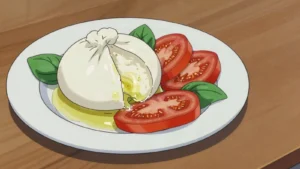
- Burrata, which makes a richer and frankly different dish.
Variations
- With a few salted anchovies laid over.
- With ripe peaches in place of some of the tomato in high summer.
- Threaded onto skewers as a caprese spiedino.
History
A simple salad combining sliced fresh mozzarella, tomato and basil leaf, dressed with olive oil, documented across Italy, specifically associated with the island of Capri, where the dish is generally understood to have developed during the early 1900s as a simple, elegant way to showcase the region’s fresh dairy and produce. Its three core colours, red tomato, white mozzarella and green basil, are widely noted to echo the colours of the Italian flag, though whether this was an intentional design choice at the dish’s creation or simply a coincidental and later-noted resemblance remains genuinely unclear. Caprese salad remains one of Italy’s most internationally recognized and widely replicated simple dishes.
Frequently asked questions
What is Caprese salad?
Caprese salad is a salad & side from Italy: mozzarella, tomato and basil with olive oil. A simple salad combining sliced fresh mozzarella, tomato and basil leaf, dressed with olive oil, documented across Italy, specifically associated with the island of Capri, where the dish is generally understood to have developed during the early 1900s as a simple, elegant way to showcase the region’s fresh dairy and produce. Its three core colours, red tomato, white mozzarella and green basil, are widely noted to echo the colours of the Italian flag, though whether this was an intentional design choice at the dish’s creation or simply a coincidental and later-noted resemblance remains genuinely unclear. Caprese salad remains one of Italy’s most internationally recognized and widely replicated simple dishes.
How long does Caprese salad take to make?
Caprese salad takes 10 min of preparation and no cooking at all. The recipe makes 4 servings. It is rated easy to make.
What can I substitute in Caprese salad?
Yes, within limits. Fior di latte, which is firmer and milder, if buffalo mozzarella is unavailable. Burrata, which makes a richer and frankly different dish.
What is the most important thing to get right in Caprese salad?
Use the tomatoes at room temperature too. Refrigeration destroys the aroma compounds in a tomato and they do not come back on the counter afterwards.