
Ingredients
Cacah binjai or asam
- the sour tamarind dip
- 3 tablespoonstamarind pulp
- soaked in 100 ml warm water
- 2hot chillies, pounded
- 2 clovesgarlic
- 1 teaspoonbelacan
- the fermented shrimp paste, toasted
- 1 teaspoonsugar
- salt, to taste
Cacah tempoyak
- the fermented durian dip
- 3 tablespoonstempoyak
- fermented durian
- 2chillies, chopped
- 2shallots, sliced
- juice of half a lime
- salt, to taste
- a little water to loosen
Cacah cencalu
- the fermented shrimp dip
- 3 tablespoonscencalu
- fermented small shrimp
- 2chillies, chopped
- 2shallots, sliced
- juice of 1 lime
- a pinch of sugar
The fish sauce dip
- the standard everyday one
- 300 gfish, filleted
- mackerel or similar
- 2 tablespoonstamarind water
- 2chillies
- 3shallots
- 2 clovesgarlic
- 1 teaspoonbelacan
- salt and sugar, to taste
- 300 mlwater
To serve
- ambuyat, the sago starch
- a chandas, the bamboo fork
- grilled or fried fish
- vegetables and salads
Directions
- Wrap a small piece in foil. Toast it in a dry pan for two minutes a side. It fills a house and it lingers for hours. Soak the tamarind pulp in warm water. Work it with your fingers after twenty minutes.
- Squeeze the pulp off the seeds. Strain it through a sieve. Press hard to get all the liquid. Pound the chillies and garlic in a mortar. Add the toasted belacan and pound it in. Stir the pounded paste into the tamarind water. Add sugar and salt. Taste it and adjust it carefully. It should be sharply sour first.
- Put the tempoyak in a bowl. Add the chopped chillies and sliced shallots. Add lime juice and salt. It should be a thick pourable sauce.
- Taste and adjust. Some cooks warm it briefly in a pan. Mix the cencalu with chopped chilli and shallot. Add lime juice and a pinch of sugar. It needs no cooking at all. Keep opened jars refrigerated. Use a clean spoon each time.
- Discard anything that smells wrong or looks mouldy. It is a thin sour fish gravy. Pound the chillies, shallots, garlic and belacan. Work them to a paste in a mortar. Put the paste in a pot with the water.
- Add the tamarind water. Bring it to a simmer. Simmer it for five minutes. Cut it into pieces and add it. Simmer it gently for eight minutes. Do not boil it hard or the fish breaks up. Season with salt and a little sugar.
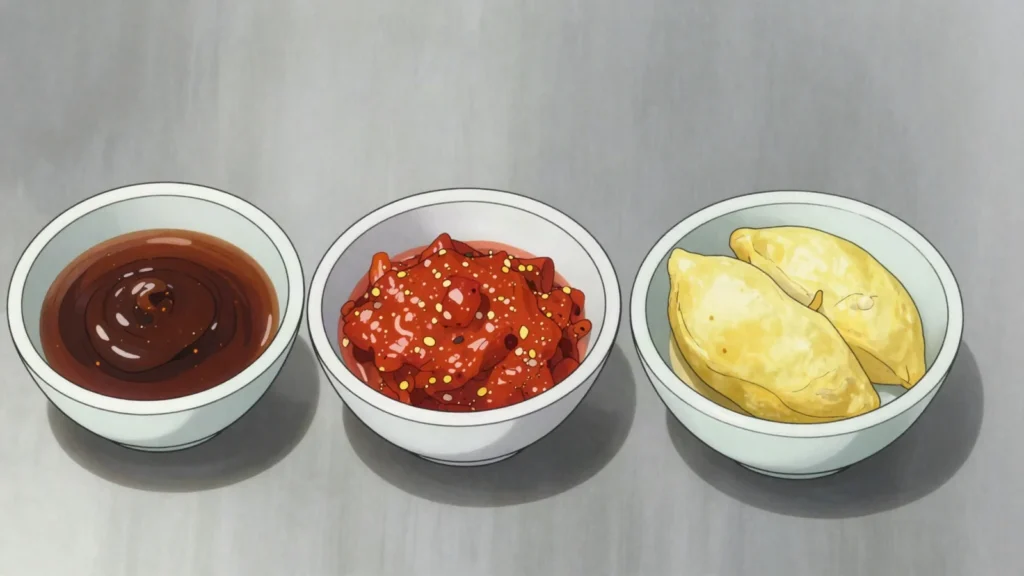
- Taste it and push the sourness. It should be aggressively sour. Put out several small bowls. Set the ambuyat in the middle of the table. The tamarind cacah keeps a week refrigerated.
Technique
- Make the cacah aggressively sour and salty. Ambuyat has almost no flavour of its own — it carries flavour rather than providing it — so the dips are the entire taste of the meal, and a mild cacah has failed at its job.
- Toast the belacan before using it: wrap a small piece in foil and toast it two minutes a side in a dry pan. It becomes nutty rather than raw and harsh, and the difference is large. Open the windows first — the smell fills a house and lingers for hours.
- Pound the aromatics in a mortar rather than blending them. The texture is genuinely better and it is what the sauces are built on.
- Work the tamarind pulp with your fingers after soaking and press it hard through a sieve. A spoon leaves most of the flavour behind on the seeds.
- Do not boil the fish cacah hard. A gentle eight-minute simmer keeps the fish in pieces; a hard boil breaks it up into the sauce.
- Ambuyat is eaten with a chandas, a two-pronged bamboo fork, twisted to gather a portion, dipped, and swallowed without chewing. That is the practice, and it surprises people the first time.
- Buy fermented shrimp and fish products from a reputable source, keep opened jars refrigerated, use a clean spoon and discard anything that smells wrong or shows mould. Fermented does not mean immune to spoilage.
- Tempoyak is fermented durian — sour, creamy and stronger than fresh durian, which is itself banned on public transport in several cities. Many people love it and many cannot approach it; the atlas records that without taking a side.
- Put out two or three different cacah at once. That variety is how the meal is served and it is part of the point.
- These sauces contain shrimp and fish products and tempoyak contains durian. Fish and shellfish allergies can be severe, so say plainly what is in each bowl.
- Sago comes from the trunk of a palm, felled whole to harvest it, and it grows in swampy ground where rice will not. Ambuyat is eaten across northern Borneo, called linut in parts of Sarawak and papeda in eastern Indonesia and Papua.
Substitutions
- Tamarind paste from a jar replaces the block pulp, though it is usually weaker; use more.
- Any fermented shrimp paste replaces belacan closely.
- Lime replaces tamarind for the sourness in a pinch, giving a brighter, less deep sauce.
- Tempoyak and cencalu are both sold in jars by Southeast Asian grocers and neither has a real substitute.
- Mackerel, snapper or any firm fish suits the fish cacah.
- A version without belacan can be made for vegetarians, though it is a considerable departure.
Variations
- Ambuyat itself, sago starch scalded with boiling water, is the dish these sauces exist for.
- Linut in Sarawak and papeda in eastern Indonesia and Papua are the same sago preparation under other names.
- Sambal belacan, chilli pounded with toasted shrimp paste and lime, is the wider region’s everyday version.
- Tempoyak is also cooked into fish curries across Malaysia and Sumatra.
- Cacah made with fermented fish, budu, is another variation.
- Umai, Sarawak’s raw fish salad with lime and chilli, is eaten at the same kind of table.
Frequently asked questions
What is Cacah?
Cacah is a sauce & condiment from Brunei: sour dipping sauces of tamarind, chilli, shrimp paste or fermented durian for ambuyat.
How long does Cacah take to make?
Cacah takes 20 minutes of preparation and 15 minutes of cooking. The recipe makes makes 4 small bowls. It is rated easy to make.
What can I substitute in Cacah?
Yes, within limits. Tamarind paste from a jar replaces the block pulp, though it is usually weaker; use more. Any fermented shrimp paste replaces belacan closely. Lime replaces tamarind for the sourness in a pinch, giving a brighter, less deep sauce. Tempoyak and cencalu are both sold in jars by Southeast Asian grocers and neither has a real substitute. Mackerel, snapper or any firm fish suits the fish cacah. A version without belacan can be made for vegetarians, though it is a considerable departure.
What is the most important thing to get right in Cacah?
Add the tamarind water. Bring it to a simmer. Simmer it for five minutes. Cut it into pieces and add it. Simmer it gently for eight minutes. Do not boil it hard or the fish breaks up. Season with salt and a little sugar.