
Ingredients
The cassava
- 1 kgcassava root
- peeled and grated
- a sweet variety, properly peeled
- see the safety note
The seasoning
- 1large onion
- grated or very finely chopped
- 2hot chillies, finely chopped
- or to taste
- a thumb of fresh ginger, grated
- 4 clovesgarlic, crushed
- optional
- 1 teaspoonsalt
- half a teaspoon black pepper
- 1spring onion, finely sliced
- optional
To bind
- 2 tablespoonsplain flour
- or cornflour
- only if the mixture is loose
- 1egg, beaten
- optional
For frying
- 1 litrevegetable oil
- or palm oil
- or enough for 6 cm depth
To serve
- hot, on their own
- a pepper sauce, shito
- or a fresh tomato and chilli relish
Directions
- Peel it thickly, removing the brown skin and the pink layer beneath. Remove the tough fibrous core from the centre if there is one. Never eat cassava raw at any point.
- Discard any root that tastes strongly bitter. Look for firm roots with no soft patches. Cut one open before committing to it. The flesh should be white and clean throughout. Discard any root showing those signs. Thaw it and grate it while still firm.
- Cut the root into manageable lengths. Stand each piece on its end. Cut down through the thick skin with a knife. Make sure the pink layer comes off with it. Rinse the peeled flesh well.
- Grate it on the fine side of a box grater. Do not purée it into a paste. Put the grated cassava in a clean cloth. Squeeze out as much liquid as you can. The starch settles out of it if left to stand. Put the squeezed cassava in a bowl. Add the grated onion and the chopped chillies.
- Add the grated ginger and the garlic. Add the salt and pepper. Add the spring onion if you are using it. Mix it thoroughly with your hands. Grate the onion rather than chopping it coarsely. That is worth the extra minute.
- Squeeze a handful and see if it holds. If it does, you need nothing added. Adjust the quantity to your own taste. Wear gloves when chopping hot chillies. Use a deep heavy pot. Fill it no more than one third full. Oil bubbles up when wet mixture goes in. Never leave hot oil unattended. Keep a lid within easy reach. If it catches fire, turn off the heat and cover it.
- Take small handfuls of the mixture. Squeeze and roll them into rough balls. Make them about the size of a walnut. Squeeze them firmly so they hold together. Fry five or six at a time only. Do not crowd the pot. Fry them for four or five minutes. Turn them so they colour evenly. They should be deep golden and crisp. Break it open and look at the centre. The cassava must be cooked right through.
- Lift them out with a slotted spoon. Drain them on a rack over kitchen paper. Let the oil recover between batches. Serve them hot and crisp. Serve shito alongside, the Ghanaian pepper sauce. It is sold ready made and it keeps for months. Make it and fry it the same day. Reheat them from frozen in a hot oven.
Technique
- Cassava contains cyanogenic glycosides, which release cyanide when the plant tissue is damaged. This is a genuine and serious matter, not a theoretical one. Use sweet cassava, peel it thickly so both the brown skin and the pink layer beneath come away, and cook it thoroughly — frying does that. Never eat it raw and never taste the raw grated mixture.
- Cut a root open before committing to it. The flesh must be white and clean throughout; grey or blue streaks, black specks or rings mean it has begun to spoil. Discard those roots — the deterioration raises the harmful compounds as well as spoiling the flavour, so it is a safety matter and not just a quality one.
- Discard any root that tastes strongly bitter. Bitterness is the warning signal, and bitter varieties need the long grating, soaking, fermenting and drying that West African communities developed over centuries.
- Chronic cyanide exposure from poorly processed cassava causes konzo, a permanent paralysis of the legs, and it occurs in drought and food shortage when processing is shortened out of hunger. It is a disease of poverty rather than of cassava, which properly processed feeds hundreds of millions of people because it grows where little else will. Both facts belong together; either alone misleads.
- Squeeze the grated cassava hard in a cloth. It holds a great deal of water, and wet mixture gives soggy heavy balls and spits dangerously in hot oil. Squeeze the grated onion too.
- Grate the onion rather than chopping it. Coarse pieces make the balls break apart in the oil.
- Keep them walnut-sized. Larger balls brown outside while the cassava inside stays raw, which matters for safety here and not only for texture — break the first one open and check.
- Deep-frying rules apply: fill the pot no more than a third, never leave it unattended, keep a lid within reach, and if the oil catches fire turn off the heat and smother it. Never throw water on burning oil.
- Frozen cassava, peeled and frozen fresh, is often better than the fresh root abroad. Fresh cassava spoils within days of harvest and much of what is exported is waxed to slow that.
- Cassava is starchy enough to bind itself. Squeeze a handful and see; only add flour or egg if it crumbles.
- The starchy liquid squeezed out settles and its starch is used to thicken sauces in West African cooking. The liquid itself is discarded, since it carries what you have just removed.
Substitutions
- Frozen grated cassava replaces fresh and avoids the spoilage problem entirely.
- Palm oil replaces vegetable oil and gives a redder, more characteristically West African result.
- Scotch bonnet is the chilli actually used; any hot chilli substitutes.
- The ginger and garlic are both optional, and versions exist with neither.
- A beaten egg or a spoonful of flour binds the mixture if it crumbles; often neither is needed.
- Grated sweet potato or plantain can be mixed in for a softer, sweeter version.
Variations
- A version with grated coconut worked through the mixture is made in some households.
- Kelewele, spiced fried plantain, is Ghana’s other great fried street snack.
- Yam balls, made from mashed yam rather than grated cassava, are a softer relative.
- Attiéké in Côte d’Ivoire is fermented grated cassava, steamed rather than fried.
- Gari, dried and toasted grated cassava, is the same root processed for storage.
- A savoury version with smoked fish worked into the mixture is made along the coast.
Frequently asked questions
What is Bankye krakro?
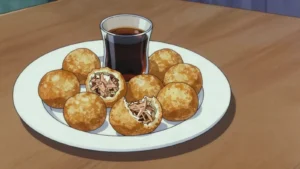
Bankye krakro is a snack from Ghana: grated cassava kneaded with pepper, onion and ginger, fried into crisp balls.
How long does Bankye krakro take to make?
Bankye krakro takes 30 minutes of preparation and 20 minutes of cooking. The recipe makes makes about 20. It is rated easy to make.
What can I substitute in Bankye krakro?
Yes, within limits. Frozen grated cassava replaces fresh and avoids the spoilage problem entirely. Palm oil replaces vegetable oil and gives a redder, more characteristically West African result. Scotch bonnet is the chilli actually used; any hot chilli substitutes. The ginger and garlic are both optional, and versions exist with neither. A beaten egg or a spoonful of flour binds the mixture if it crumbles; often neither is needed. Grated sweet potato or plantain can be mixed in for a softer, sweeter version.
What is the most important thing to get right in Bankye krakro?
Peel it thickly, removing the brown skin and the pink layer beneath. Remove the tough fibrous core from the centre if there is one. Never eat cassava raw at any point.