
Ingredients
Pork
- 1.2 kgmeaty pork ribs, cut into 5 cm lengths
- water, for blanching
Herbs
- 1bak kut teh spice packet, or: 15 g dang gui (angelica root), 10 g yu zhu (solomon’s seal), 8 g chuan xiong (lovage root), 5 g dried liquorice root, 1 tsp white peppercorns, 2 star anise, 1 cinnamon stick, 6 cloves
The pot
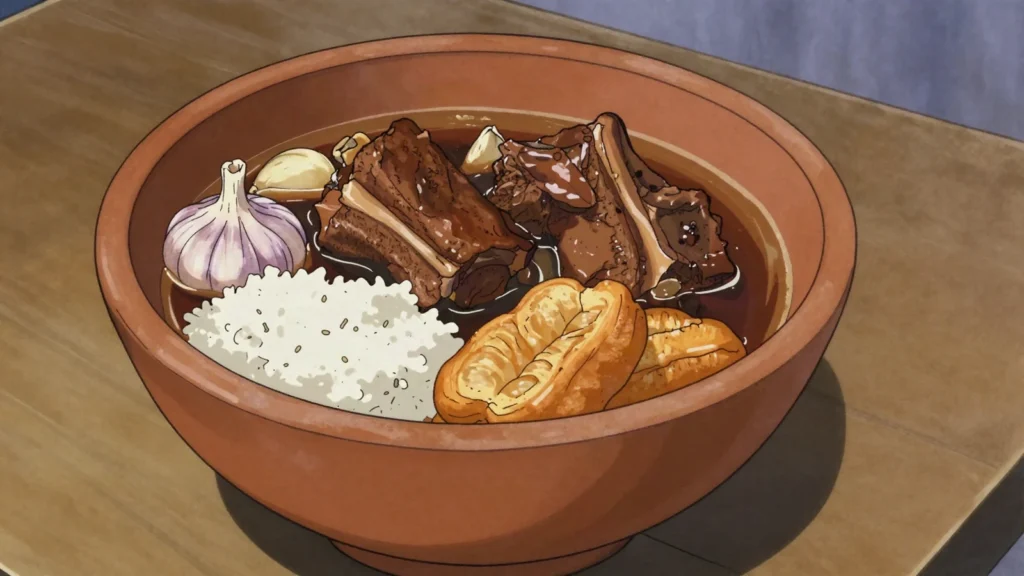
- 2whole bulbs garlic, unpeeled, tops cut off
- 2 tbspdark soy sauce
- 1 tbsplight soy sauce
- 1 tbspoyster sauce
- 2 litreswater
- 1½ tsp salt
- 1 tspsugar
To add
- 200 gfried tofu puffs
- 150 genoki or shiitake mushrooms
- 1 headlettuce or choy sum
To serve
- steamed rice
- you tiao (fried dough sticks)
- dark soy with sliced chilli, for dipping
Directions
- Soak the ribs in cold water for 1 hour, changing it twice, to draw out blood. Klang cooks are particular about this and it is what gives a clear rather than muddy broth.
- Blanch the ribs in boiling water for 5 minutes, until grey scum rises. Drain and rinse each piece under running water. Wash the pot too — any scum left behind clouds the soup.
- Return the ribs to the clean pot with the herb packet, whole garlic bulbs, 2 litres of fresh water, both soys, oyster sauce, salt and sugar.
- Bring to a boil, then drop to the barest simmer, cover, and cook 1 hr 30 min. A rolling boil emulsifies the fat and turns the broth cloudy; it should stay at a bare tremble throughout.
- Taste at 90 minutes. It should be deeply savoury, peppery and faintly medicinal from the angelica. Adjust with soy rather than salt.
- Add the tofu puffs and mushrooms and simmer 15 minutes more, then the greens for the last 3 minutes.
- Serve in bowls with rice, you tiao for dipping into the broth, and dark soy with chilli on the side for the meat.
Technique
- The blanch-and-wash is not optional. It is the difference between the clear Klang broth and a greasy one.
- Whole unpeeled garlic bulbs go soft and sweet without dominating; peeled cloves disintegrate and make the soup harsh.
- Spice packets vary and are the house secret of every shop. Buy one rather than assembling herbs blind if you can.
Substitutions
- The Teochew style uses far more white pepper and much less dark soy, giving a pale peppery broth.
- Pork belly or trotter alongside the ribs, for a richer pot.
Variations
- Dry bak kut teh, the ribs braised down with dried squid and chilli until almost no liquid remains.
- Chicken bak kut teh, for those avoiding pork.
History
A pork rib soup simmered for hours with garlic, herbs and a complex blend of spices including star anise and cinnamon, its name meaning literally meat bone tea in Hokkien Chinese, developed among Chinese immigrant communities, particularly from the Hokkien and Teochew dialect groups, who settled in British colonial Malaya during the 1800s and 1900s working in demanding physical labor, including at the port of Klang, where the dish is often said to have first been created or popularized as a restorative, nutrient-dense meal for laborers. Malaysia and Singapore each developed distinct regional styles, with Klang-style favoring a darker, more herbal broth and Singaporean versions often leaning peppery, reflecting genuine regional variation within the broader shared bak kut teh tradition across both countries.
Frequently asked questions
What is Bak Kut Teh?
Bak Kut Teh is a soup & stew from Malaysia: pork ribs simmered in dark herbal broth, Klang specialty. A pork rib soup simmered for hours with garlic, herbs and a complex blend of spices including star anise and cinnamon, its name meaning literally meat bone tea in Hokkien Chinese, developed among Chinese immigrant communities, particularly from the Hokkien and Teochew dialect groups, who settled in British colonial Malaya during the 1800s and 1900s working in demanding physical labor, including at the port of Klang, where the dish is often said to have first been created or popularized as a restorative, nutrient-dense meal for laborers. Malaysia and Singapore each developed distinct regional styles, with Klang-style favoring a darker, more herbal broth and Singaporean versions often leaning peppery, reflecting genuine regional variation within the broader shared bak kut teh tradition across both countries.
How long does Bak Kut Teh take to make?
Bak Kut Teh takes 20 min plus 1 hr soaking of preparation and 2 hr of cooking. The recipe makes 4 servings. It is rated medium to make.
What can I substitute in Bak Kut Teh?
Yes, within limits. The Teochew style uses far more white pepper and much less dark soy, giving a pale peppery broth. Pork belly or trotter alongside the ribs, for a richer pot.
What is the most important thing to get right in Bak Kut Teh?
Soak the ribs in cold water for 1 hour, changing it twice, to draw out blood. Klang cooks are particular about this and it is what gives a clear rather than muddy broth.