
Ingredients
The tea
- 2 tablespoonsgreen tea leaves
- loose, not bagged
- 500 mlwater
- cold to start
The milk
- 700 mlwhole milk
- or more, to taste
- warmed separately
- if you prefer
To finish
- 1 teaspoonsalt
- or to taste
- 40 gbutter
- or a spoon of cream
- black pepper, optional
To serve
- in wide bowls
- with non or lepyoshka bread
- torn straight into the bowl
- at breakfast
Directions
- Butter or cream is stirred in at the very end. Do not leave it out if you want the real thing. Stir it as it heats and keep the heat moderate. Use a heavy-based pan rather than a thin one. Never walk away from the pan once the milk goes in. Use a pan far larger than the volume seems to need. Put the green tea and cold water into a saucepan. Starting in cold water extracts more from the leaves.
- Bring the water and leaves up to a rolling boil. Boil it hard for about five full minutes in all. It should look strong and slightly bitter to taste. Make it stronger than seems reasonable at this stage. Pour the milk into the pan with the boiled tea. Add it gradually while the pan is still on the heat.
- Stir it in as you pour it to keep it combined. Adjust it to what suits your own household. Bring the whole pot back up to a gentle simmer. Take it off the heat the moment it starts to rise. Never leave the pan unattended at this stage. Let it simmer gently for about ten minutes in all.
- Stir it regularly to stop it catching on the base. Strain the tea through a fine sieve into a jug. Press the leaves gently to get the last of the liquid. Some households do not strain it at all in the Pamirs.
- Stir the salt into the strained hot milk tea. It should taste clearly salty rather than merely seasoned. Add the salt gradually and taste as you go along. It tastes closer to a thin soup than to a sweet drink.
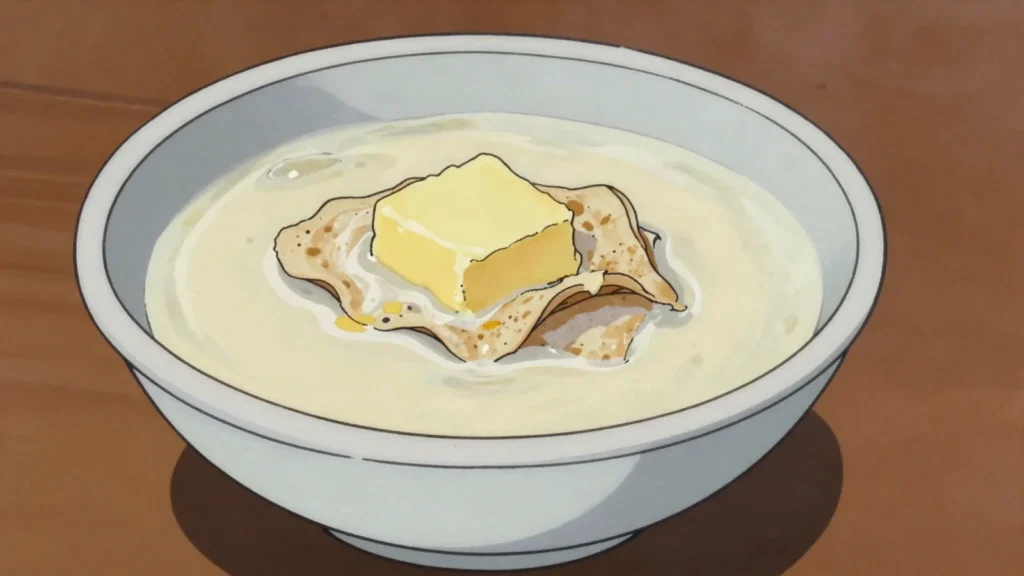
- Stir the butter into the hot tea until it melts. Add it off the heat so it melts gently through. It should disappear entirely into the hot liquid. Add more if you want it richer and more filling. Pour the hot shirchoy into wide bowls to serve. Tear the flatbread into pieces into each bowl. Tear it rather than cutting it with a knife.
- Add enough to make the bowl a genuine breakfast. Let it soften in the hot tea for a moment first. Grind a little black pepper over the bowl if you like. It adds a gentle warmth to a cold winter morning. Make only as much as will be drunk at that meal.
Technique
- Milk rises and boils over with no warning at all and climbs the pan far faster than expected — never leave it unattended once the milk goes in, and use a pan much larger than the volume seems to need. Milk also scorches easily, so keep the heat moderate, stir as it heats and use a heavy-based pan.
- Green tea is deliberately boiled hard here rather than steeped below boiling: the milk and butter soften the bitterness that produces, and a weak tea disappears entirely into the finished bowl. Make it stronger than seems reasonable.
- Make only as much as will be drunk at that meal — the butter separates unpleasantly on reheating.
Substitutions
- Cream replaces the butter and both are genuinely used across the Pamirs; sheep or yak butter is used in the highest villages, and ordinary butter works perfectly well at home. Highland households often use considerably more fat than the amount given.
- Salted buttered tea runs across high Central Asia — Tibetan po cha is the best known relative, with Kyrgyz and Kazakh versions under other names. Shirchoy is the Tajik and Uzbek member of that family.
Variations
- Start the tea in cold water rather than pouring boiling water over the leaves: the leaves open gradually as it heats and give a stronger extraction, which is the traditional method here.
- Some Pamiri households do not strain it and let the leaves settle in the bowl; both practices are genuinely followed, though straining gives a cleaner bowl for most people.
- It is served in a wide bowl rather than a cup, with flatbread torn — not cut, since torn edges soak better — straight into it and eaten with a spoon. Day-old non or lepyoshka works better than fresh, absorbing the tea without falling apart. Salted milk tea startles people expecting sweetness and tastes closer to a thin soup; that is entirely intended.
History
Green tea boiled with milk, salt and butter, the Pamir breakfast, eaten with bread torn into the bowl.
Frequently asked questions
What is Shirchoy?
Shirchoy is a drink from Tajikistan: salted milk tea with butter, Pamiri breakfast warmth. Green tea boiled with milk, salt and butter, the Pamir breakfast, eaten with bread torn into the bowl.
How long does Shirchoy take to make?
Shirchoy takes 5 minutes of preparation and 20 minutes of cooking. The recipe makes serves 4. It is rated easy to make.
What can I substitute in Shirchoy?
Yes, within limits. Cream replaces the butter and both are genuinely used across the Pamirs; sheep or yak butter is used in the highest villages, and ordinary butter works perfectly well at home. Highland households often use considerably more fat than the amount given. Salted buttered tea runs across high Central Asia — Tibetan po cha is the best known relative, with Kyrgyz and Kazakh versions under other names. Shirchoy is the Tajik and Uzbek member of that family.
What is the most important thing to get right in Shirchoy?
Butter or cream is stirred in at the very end. Do not leave it out if you want the real thing. Stir it as it heats and keep the heat moderate. Use a heavy-based pan rather than a thin one. Never walk away from the pan once the milk goes in. Use a pan far larger than the volume seems to need. Put the green tea and cold water into a saucepan. Starting in cold water extracts more from the leaves.