
Ingredients
The corn
- 12 earsfresh young sweetcorn
- maíz tierno, freshly picked
- husks reserved for wrapping
- kernels cut from the cob
- about 1.2 kg of kernels
The mixture
- 100 gbutter, softened
- or 100 ml mild oil
- or 100 g lard
- 100 gsugar
- or to taste
- 1 teaspoonsalt
- 150 mlmilk
- or cream, if needed
- 2 tablespoonsmasa harina
- optional, to thicken
Sometimes added
- 150 gcrumbled fresh cheese
- quesillo or a mild white cheese
- half a teaspoon ground cinnamon
- a little vanilla
- a pinch of baking powder
To wrap
- the reserved corn husks
- the largest and greenest
- strips of husk, to tie
- or kitchen string
To serve
- crema, soured cream
- crumbled fresh cheese
- hot coffee
- or on their own
Directions
- Press a kernel with a fingernail. It should burst and release white liquid. Brown dry silk means the corn is old. Strip the husks from each ear carefully. Do not tear them, since you will use them. Cut around the base with a knife. Keep the largest and greenest husks.
- Set the smaller ones aside for lining. Remove the silk from each ear. Rub with a dry cloth to catch stray strands. Stand each ear upright in a wide bowl. Cut down the cob with a sharp knife. Cut close to the cob but not into it. Most cooks skip this and they should not.
- Put the kernels and juice in the bowl. Some whole kernels should remain visible. Beat the butter until pale and soft. Beat it for two or three minutes. Add the sugar and beat it in well. Add the salt and mix it through.
- Add cinnamon or vanilla if using. The mixture should be thick and droppable. Add a little masa harina to thicken it. A drier corn gives a stiff mixture. Add a splash of milk to loosen it. It is a soft fresh white cheese. Fold the cheese in gently at the end. Fresh green husks need no soaking.
- Rinse the husks and pat them dry. Tear a few into long strips for tying. Use a tall pot with a rack inside. Line the rack with spare husks. Fill the pot with water to just below the rack. The water must never touch the tamales.
- Put a coin in the water at the bottom. It rattles while boiling and goes quiet when dry. Bring the water to a boil as you wrap. Lay a large husk flat, curved side up. Spoon three tablespoons of mixture into it. Spread it into a rough rectangle. Leave a clear border on every side. Fold one long side over the mixture. Fold the other long side over that.
- Fold both of the ends up underneath. Or overlap a second husk if needed. Tie the parcel with a husk strip. Tie it firmly but not tightly. Pack them snugly so they support each other. Do not crush them against each other. Cover the top with more spare husks. Lay a cloth over that before the lid.
- Put the lid on and keep the water boiling. Steam them for about a full hour. Check the water every twenty minutes. Top up with boiling water, never cold. Cold water stops the steam entirely. Steam scalds badly, so lift the lid carefully.
- Use a dry cloth, not a wet one. A wet cloth conducts the heat straight through. Take one out and let it rest briefly. Let it sit five minutes before opening. Resting lets the mixture set and firm.
- Turn off the heat and leave them ten minutes. Now serve them hot in their husks. Serve crema spooned over them. Serve crumbled fresh cheese alongside. Leftovers keep three days refrigerated. Wrap them in a damp cloth for that. Steam them from frozen for half an hour. Do not thaw them first, since they go watery.
Technique
- This is made from fresh young corn ground straight from the cob, not from masa. Most tamales use nixtamalised dried corn, and skipping that process entirely gives yoltamal its softer, wetter, sweeter texture — closer to a corn pudding than to a conventional tamal.
- Press a kernel with a fingernail before buying. It should burst and release white milky liquid; a kernel that dents rather than bursting is too old and gives a dry, starchy result. Corn converts sugar to starch from the moment it is picked, which is why this is a harvest dish made where the corn grows.
- Scrape the cob with the back of the knife after cutting off the kernels. The milky liquid still clinging carries a great deal of flavour and helps bind the mixture, and most cooks throw it away.
- Grind coarse, not smooth. Some whole kernels should stay visible; a completely smooth purée gives a pasty tamal.
- Judge the mixture, not the recipe. Very milky corn gives a loose mixture needing a little masa harina; a drier corn needs a splash of milk. It should hold its shape on a spoon and not run off.
- Use a fresh non-melting cheese if you add cheese. Quesillo stays in visible pieces where a melting cheese would run out of the parcel.
- Tie the parcels firmly but not tightly. The mixture expands as it steams and a tight tie squashes it.
- Rest a cooked tamal five minutes before opening it. Straight from the steamer it looks wet and clings to the husk, which reads as undercooked when it is not.
- Steam scalds worse than boiling water and condenses on skin. Tilt the lid away from your face and use a dry cloth — a wet one conducts heat straight through.
- The name comes from Nahuatl: yolotl, heart, for the heart of the corn. Nahuatl was spoken in Nicaragua before the Spanish arrived, by the Nicarao people from whom the country takes its name.
Substitutions
- Frozen sweetcorn replaces fresh out of season; thaw and drain it, and expect to add sugar and a little masa harina to compensate.
- Corn husks, dried and soaked, replace fresh green husks; banana leaf also works and gives a different aroma.
- Lard or mild oil replace butter; lard is the more traditional fat in the region.
- Quesillo can be replaced by any mild fresh white cheese, or left out entirely for the plain sweet version.
- Masa harina thickens a mixture that has come out too loose; a splash of milk loosens one that is too stiff.
- Cinnamon and vanilla are optional; many households use neither.
Variations
- A savoury version, made with less sugar and more cheese, is eaten as part of a meal rather than as a sweet.
- Tamales de elote in Mexico and Guatemala are the close relatives, made the same way from fresh corn.
- Nacatamal is the large Nicaraguan festival tamal, made from masa with pork and vegetables, and is a quite different dish.
- Torrejitas de maíz nuevo in Panama fry the same ground fresh corn as fritters rather than steaming it.
- Some cooks add a pinch of baking powder, which gives a lighter and more cake-like tamal.
- A version wrapped in banana leaf rather than corn husk is made where leaves are plentiful.
History
Made at the maize harvest from tender corn; the Nahuatl-derived name joins yolotl, the heart of the corn, with tamal.
Frequently asked questions
What is Yoltamal?
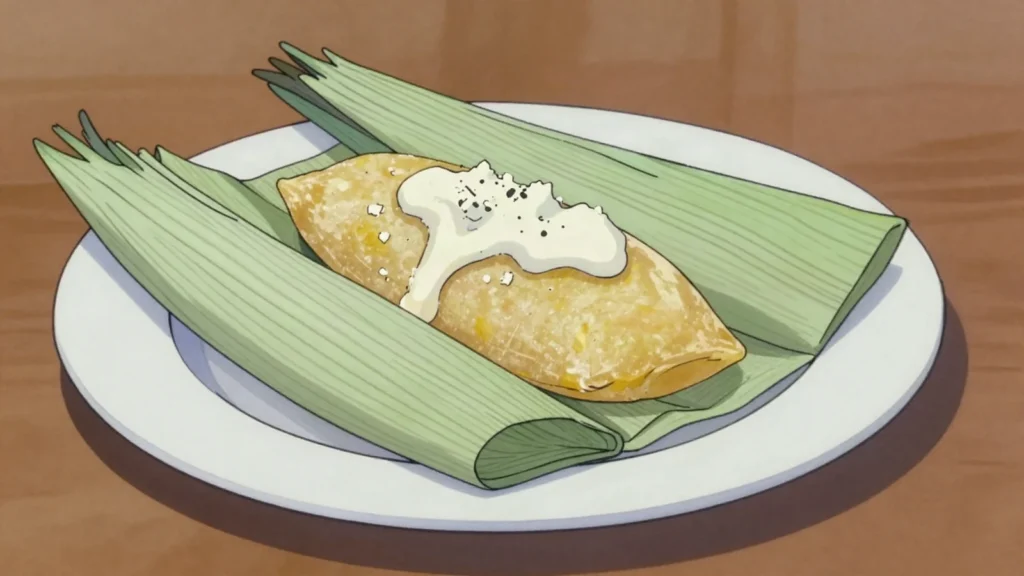
Yoltamal is a snack from Nicaragua: fresh young corn tamal steamed in its own husk, eaten with cream. Made at the maize harvest from tender corn; the Nahuatl-derived name joins yolotl, the heart of the corn, with tamal.
How long does Yoltamal take to make?
Yoltamal takes 45 minutes of preparation and 1 hour of cooking. The recipe makes makes about 14. It is rated medium to make.
What can I substitute in Yoltamal?
Yes, within limits. Frozen sweetcorn replaces fresh out of season; thaw and drain it, and expect to add sugar and a little masa harina to compensate. Corn husks, dried and soaked, replace fresh green husks; banana leaf also works and gives a different aroma. Lard or mild oil replace butter; lard is the more traditional fat in the region. Quesillo can be replaced by any mild fresh white cheese, or left out entirely for the plain sweet version. Masa harina thickens a mixture that has come out too loose; a splash of milk loosens one that is too stiff. Cinnamon and vanilla are optional; many households use neither.
What is the most important thing to get right in Yoltamal?
Press a kernel with a fingernail. It should burst and release white liquid. Brown dry silk means the corn is old. Strip the husks from each ear carefully. Do not tear them, since you will use them. Cut around the base with a knife. Keep the largest and greenest husks.