
Ingredients
The pastry
- 500 gfilo pastry
- thawed if frozen
- about 12 to 16 sheets
- kept covered with a damp cloth
The filling
- 800 gpumpkin
- peeled, seeded and coarsely grated
- or butternut squash
- 150 gsugar
- or to taste
- 150 gwalnuts, chopped
- 2 teaspoonsground cinnamon
- a pinch of ground cloves
- optional
- a pinch of salt
For brushing
- 150 mlsunflower oil
- or 120 g melted butter
- or a mixture of the two
To finish
- icing sugar, to dust
- or a light sugar syrup
- 100 gsugar
- 100 mlwater
- a strip of lemon peel
To serve
- warm, cut into slices
- hot tea or coffee
- a glass of boza
- or rakia, for Christmas Eve
Directions
- Oil is the traditional fasting choice. Butter is used at other times of year. Filo is very thin sheets of unleavened pastry. Keep the stack covered with a damp cloth. Not a wet cloth, which makes it soggy. Uncover only the sheet you are working on. Work quickly and cover the rest immediately. They are stringy and they release far too much water.
- Peel it and remove all the seeds and fibres. Grate it coarsely on a box grater. Coarse grating keeps more texture in the filling. Toss the grated pumpkin with a little salt. Leave it in a colander for twenty minutes. Fry the grated pumpkin in a little oil. Cook it until the moisture has evaporated. That takes about ten minutes over medium heat.
- Let it cool completely before using it. Squeezing keeps more of the fresh flavour. Combine the pumpkin, sugar and walnuts. Add the cinnamon, which should be generous. Do not be shy with the cinnamon at all.
- Add the cloves if you are using them. Add a pinch of salt, which sharpens the sweetness. Taste the mixture and adjust the sugar. It should be clearly sweet but not sickly. Toast them in a dry pan for a few minutes. Shake the pan so they do not burn. Let them cool before chopping them. Oil or butter a large round baking tin. A tin of about thirty centimetres works well.
- Lay one sheet of filo on the work surface. Brush it lightly all over with oil. Do not soak it, which makes it heavy. Lay a second sheet directly on top of it. Brush that one lightly with oil as well. Spread a line of filling along one long edge.
- Leave a clear border of about three centimetres. Do not overfill or the roll will burst. Roll it up loosely into a long log. Start in the middle and work outwards. Repeat with the remaining sheets and filling. Build outwards until the tin is filled. Brush the whole surface with the remaining oil. Bake it for about forty to forty-five minutes. It should be deep golden and clearly crisp.
- Cover it loosely with foil if it browns too fast. Now decide about the finishing sugar. Dust it once the pastry has cooled a little. Dusting a hot pastry just melts the sugar.
- Boil the sugar, water and lemon peel together. Simmer it for five minutes and let it cool. Pour cool syrup over the hot pastry. Hot syrup on hot pastry makes it soggy. Cool syrup on hot pastry soaks in and crisps. There is a safety note about sugar syrup.
- Cool any splash under running water for twenty minutes. Let the pastry stand before cutting it. Fifteen minutes lets the filling settle. Cut it into wedges or into squares. Serve it warm, which is when it is best. It keeps for three days in a tin. Bake it from frozen with extra time.
Technique
- Filo dries out within minutes and then cracks and shatters. Keep the stack under a well wrung-out damp cloth and uncover only the sheet you are working on. That single habit is the whole technique.
- Grated raw pumpkin releases a great deal of water, which makes the pastry soggy from the inside. Either salt it and squeeze it hard in a cloth, or fry it until the moisture has gone and cool it completely. Both work; squeezing keeps more fresh flavour, pre-cooking gives a softer filling.
- Roll the logs loosely. A tight roll bursts as the filling expands and gives a dense result.
- Cool syrup onto hot pastry, never hot onto hot. The temperature difference is what lets the syrup soak in while the pastry stays crisp — this rule applies to filo pastries generally.
- Use a dense orange pumpkin or butternut squash. Watery carving pumpkins are stringy and release far too much liquid.
- Boiling sugar syrup burns worse than boiling water because it is hotter and it sticks. Never taste it from the pan; cool a splash under running water for a full twenty minutes.
- Tikvenik is a Christmas Eve dish because it fits the fasting rules — no meat, no eggs, no dairy if made with oil. The Bulgarian Budni vecher table also requires an odd number of dishes and is traditionally left uncleared overnight for the household’s dead. The atlas records these as customs rather than theology.
Substitutions
- Butternut squash replaces pumpkin directly and is easier to buy and to peel.
- Melted butter replaces oil at any time other than a fasting day, and gives a richer pastry.
- Ground almonds or a mixture of walnuts and almonds replace walnuts, though walnut is the traditional nut.
- Icing sugar dusted over replaces the syrup entirely and gives a lighter, drier pastry.
- Greek filo replaces Bulgarian kori; it is generally thinner, so use a few more sheets per layer.
- A little grated lemon zest in the filling brightens it, though it is not traditional.
Variations
- Banitsa is the savoury sibling, filled with white brine cheese and eggs and made in the same coil.
- Banitsa with a lucky charm baked inside is the Bulgarian New Year version, with fortunes written on slips of paper.
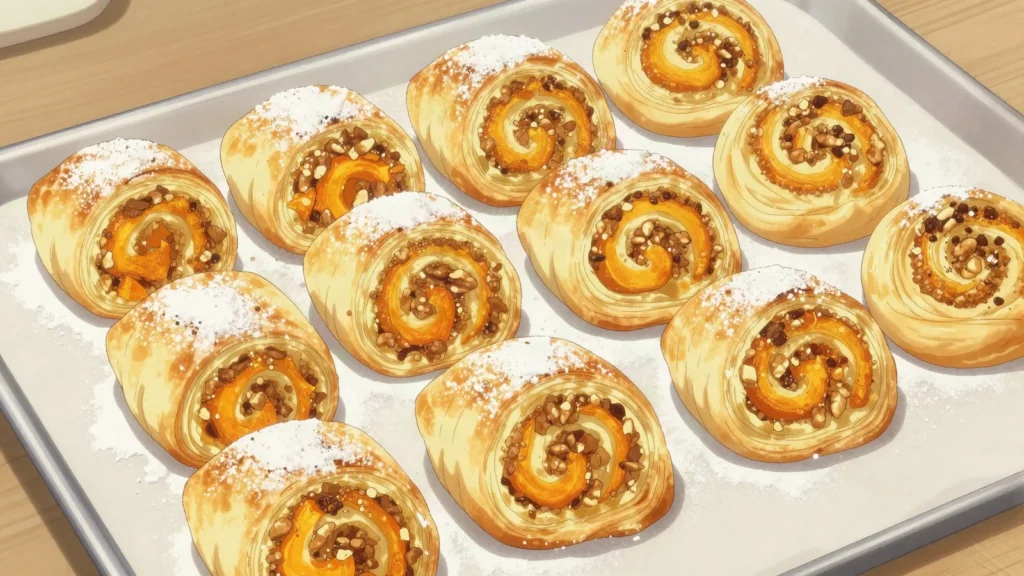
- A version made with individual rolls, baked side by side rather than coiled, is quicker and equally common.
- Some households add raisins or grated apple to the pumpkin filling.
- Milinki are small rolled filo pastries made from the same components.
- Related pumpkin filo pastries appear across the Balkans and in Turkey, where kabak tatlısı takes the same ingredients in a quite different form.
History
Baked for Christmas Eve in Bulgaria, when the meal must be meatless and made of an odd number of dishes.
Frequently asked questions
What is Tikvenik?
Tikvenik is a bread & pastry from Bulgaria: filo pastry coil filled with grated pumpkin, walnut and cinnamon. Baked for Christmas Eve in Bulgaria, when the meal must be meatless and made of an odd number of dishes.
How long does Tikvenik take to make?
Tikvenik takes 30 minutes of preparation and 45 minutes of cooking. The recipe makes serves 8. It is rated medium to make.
What can I substitute in Tikvenik?
Yes, within limits. Butternut squash replaces pumpkin directly and is easier to buy and to peel. Melted butter replaces oil at any time other than a fasting day, and gives a richer pastry. Ground almonds or a mixture of walnuts and almonds replace walnuts, though walnut is the traditional nut. Icing sugar dusted over replaces the syrup entirely and gives a lighter, drier pastry. Greek filo replaces Bulgarian kori; it is generally thinner, so use a few more sheets per layer. A little grated lemon zest in the filling brightens it, though it is not traditional.
What is the most important thing to get right in Tikvenik?
Let it cool completely before using it. Squeezing keeps more of the fresh flavour. Combine the pumpkin, sugar and walnuts. Add the cinnamon, which should be generous. Do not be shy with the cinnamon at all.