
Ingredients
To fry
- 400 gkashkaval, cut in slices 1.5 cm thick
- 60 gplain flour
- 2eggs, beaten
- 100 gfine dry breadcrumbs
- sunflower oil, for shallow frying
To serve
- lemon wedges
- a spoonful of jam or honey, if you like the contrast
- black pepper
Directions
- Cut the cheese into thick slices and pat them completely dry with kitchen paper. Any surface moisture makes the coating slide off in the pan.
- Set out three plates: flour, beaten egg, breadcrumbs. Coat each slice in flour, then egg, then crumbs, pressing the crumbs on firmly.
- Do it a second time — egg again, crumbs again. The double coat is not fussiness: a single layer splits as the cheese swells and the whole slice runs out into the oil.
- Chill the coated slices for 15 minutes. Cold cheese in hot oil holds its shape long enough to brown; room-temperature cheese melts before the crust sets.
- Heat 1 cm of oil to 180°C (350°F) — a crumb dropped in should sizzle briskly and brown in about 30 seconds.
- Fry the slices for about a minute and a half a side, until deep golden. Turn once only, with a fish slice, and do not crowd the pan.
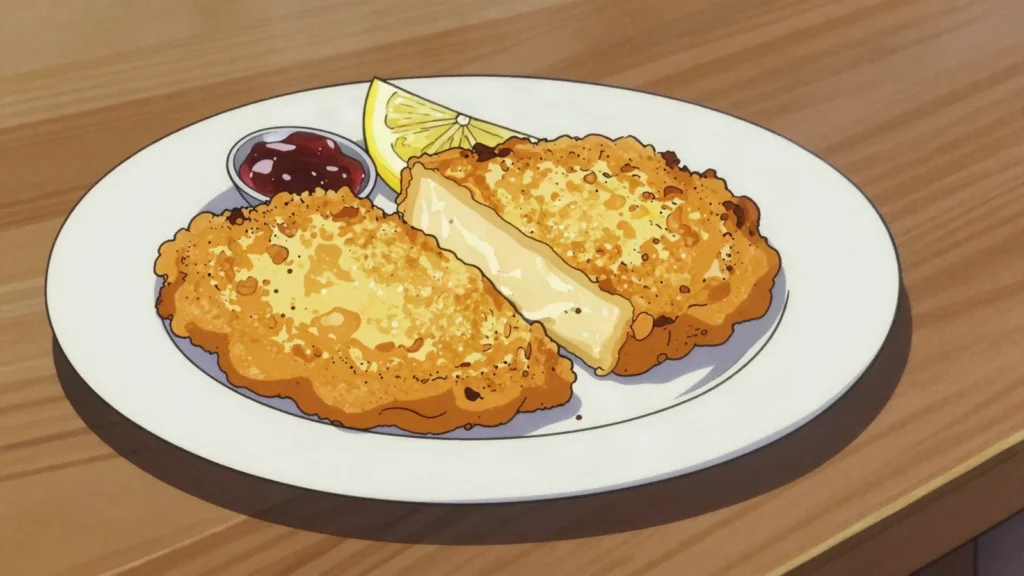
- Drain briefly on paper and serve immediately with lemon, black pepper and jam if you want it. Kashkaval pane waits for nobody — it is rubbery within five minutes.
Technique
- The temperature is everything. Too cool and the cheese melts through before the crust forms; too hot and the crumbs blacken while the middle is still cold.
- Use a firm aged kashkaval. Young or soft cheese has too much moisture and will burst whatever you do.
- If a slice does split, take it out at once — leaking cheese burns onto the pan and taints everything fried after it.
Substitutions
- Halloumi or a firm Greek graviera, both of which behave the same way in the pan.
- Panko in place of dry breadcrumbs, which gives a lighter, crisper crust.
- Sparkling water beaten into the egg for a lighter coat.
Variations
- Baked at 220°C (425°F) for 12 minutes on an oiled tray, which is less good but far less trouble.
- Grated over baked beans as kashkavalcheta, or melted onto bread under the grill.
History
The Balkan stretched-curd cheese; the sheep’s-milk version from the Balkan mountains is the most prized in Bulgaria.
Frequently asked questions
What is Kashkaval?
Kashkaval is a cheese & dairy from Bulgaria: firm yellow cheese, sliced, breaded and fried or grated. The Balkan stretched-curd cheese; the sheep’s-milk version from the Balkan mountains is the most prized in Bulgaria.
How long does Kashkaval take to make?
Kashkaval takes 15 min of preparation and 10 min of cooking. The recipe makes serves 4. It is rated easy to make.
What can I substitute in Kashkaval?
Yes, within limits. Halloumi or a firm Greek graviera, both of which behave the same way in the pan. Panko in place of dry breadcrumbs, which gives a lighter, crisper crust. Sparkling water beaten into the egg for a lighter coat.
What is the most important thing to get right in Kashkaval?
Do it a second time — egg again, crumbs again. The double coat is not fussiness: a single layer splits as the cheese swells and the whole slice runs out into the oil.