
Ingredients
Artichokes
- 8cimarolo or mammola artichokes, with long stems
- 2lemons
To fry
- 1.5 litresolive oil
- fine salt
- black pepper
Directions
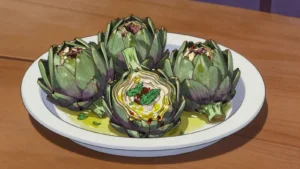
- Use the right artichoke. This wants a round, tight, essentially choke-free variety, the Roman cimarolo or mammola, in season from February to April. A spiny globe artichoke with a developed choke cannot be eaten whole and the dish falls apart.
- Fill a bowl with cold water and the juice of both lemons.
- Trim each artichoke by turning it against a small knife in a spiral, taking off the tough outer leaves and all the dark green from the base and stem, then cut the top third of the leaves straight off. Drop each one into the lemon water as you finish it.
- Peel the stem but leave it long, about 8 cm. The stem is part of the presentation and is very good eating.
- Bang each artichoke crown-down on the worktop to open the leaves, then work them apart with your thumbs into a rough flower.
- Drain them and dry them thoroughly, inside and out. Wet artichokes going into hot oil are genuinely dangerous.
- Season down inside the leaves with salt and pepper.
- Heat the oil to 130°C (265°F) and fry the artichokes stem-up for 10 to 12 minutes, until a knife slides into the base with no resistance. This first low fry cooks them through.
- Lift them out, drain, and press each one crown-down on a board to flatten it fully open into a disc.
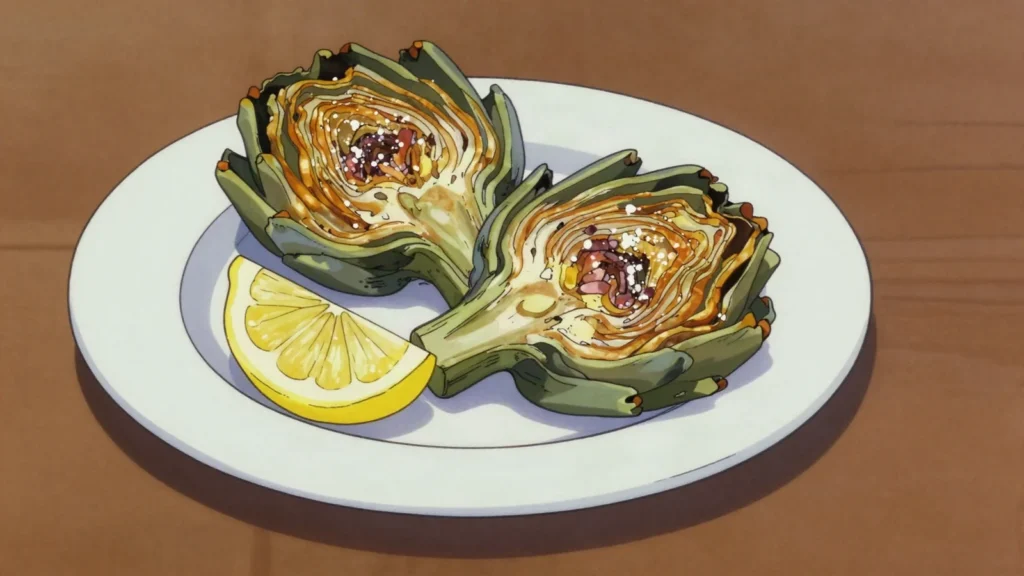
- Raise the oil to 180°C (355°F) and fry them a second time, briefly, for 2 to 3 minutes, until the outer leaves are dark and shatter-crisp.
- Two fries at two temperatures is the entire technique: one to cook, one to crisp. A single fry gives you either a raw heart or burnt leaves and there is no setting that gives both.
- Drain, salt heavily, and serve immediately while the leaves still snap.
Technique
- It is a dish of Rome’s Jewish ghetto, walled in 1555, and it is still made best in the few streets around it.
- Some Roman cooks flick a few drops of cold water into the oil at the end to crisp the leaves further. It spits violently and is not worth attempting at home.
- Eat them within minutes. The crisp outer leaves soften faster than almost anything else fried.
Substitutions
- Small globe artichokes with the choke scooped out, which works and is not the same thing.
- Sunflower oil, which many Roman kitchens now use for the first fry.
Variations
- Carciofi alla romana, the braised version, made from the same artichoke.
- Served with a wedge of lemon, though a Roman would tell you it needs none.
History
A dish of Rome’s Jewish ghetto, walled in 1555; it uses the local cimarolo artichoke, in season between February and April.
Frequently asked questions
What is Carciofi alla giudia?
Carciofi alla giudia is a salad & side from Vatican City: whole artichokes flattened and twice-fried until the leaves crisp. A dish of Rome’s Jewish ghetto, walled in 1555; it uses the local cimarolo artichoke, in season between February and April.
How long does Carciofi alla giudia take to make?
Carciofi alla giudia takes 30 min of preparation and 20 min of cooking. The recipe makes 8 artichokes. It is rated hard to make.
What can I substitute in Carciofi alla giudia?
Yes, within limits. Small globe artichokes with the choke scooped out, which works and is not the same thing. Sunflower oil, which many Roman kitchens now use for the first fry.
What is the most important thing to get right in Carciofi alla giudia?
Two fries at two temperatures is the entire technique: one to cook, one to crisp. A single fry gives you either a raw heart or burnt leaves and there is no setting that gives both.