Ingredients
Base
- 1 kgfull-fat Bulgarian yoghurt
- or 600 g thick strained yoghurt
Cucumber
- 3cucumbers
- 1 tspsalt
Flavour
- 4 clovesgarlic, crushed
- 1large bunch dill, chopped
- 3 tbspolive oil
- 1 tbspwhite wine vinegar, optional
- salt and white pepper
To finish
- 80 gwalnuts, roughly chopped
- extra dill
- a thread of olive oil
To serve
- cold, as a meze
- with bread
- with rakia
Directions
- Line a sieve with muslin or a clean cloth, tip the yoghurt in, and set it over a bowl in the fridge for at least 4 hours. Strain it properly. Keep the whey, which is drunk or used in baking rather than thrown away.
- Grate the cucumbers coarsely, or dice them very small. Toss the cucumber with the teaspoon of salt and leave it in a sieve for 20 to 30 minutes.
- Squeeze it genuinely dry, and be surprised at how much comes out. Cucumber is over ninety per cent water and unsalted cucumber will thin the yoghurt within minutes of mixing.
- Crush the garlic to a paste with a little salt. Crush it rather than chopping it, so it disperses evenly rather than sitting in sharp pieces. Bulgarians use a good deal of garlic here and it should be clearly present.
- Chop the dill finely and use plenty, because it is the herb the dish depends on and a scattering is not enough. Add the vinegar if the yoghurt is not tangy enough on its own. Season with salt and white pepper. Stir some of the walnuts through and keep the rest for the top.
- Add them shortly before serving rather than hours ahead, because walnuts left in yoghurt go soft and lose their crunch. Chill it for at least an hour so the flavours settle.
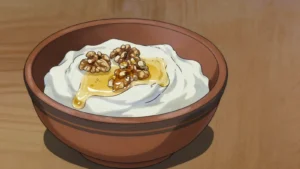
- Serve it cold in a shallow bowl, mounded, with the reserved walnuts and extra dill scattered over and olive oil poured on top. It is a summer dish above all, served cold when it is hot outside.
Technique
- Tarator is the soup version, made by thinning the same mixture with water.
- Bulgarian yoghurt is worth seeking out and Greek yoghurt is the usual substitute.
- It keeps two days but the walnuts should be added fresh.
Substitutions
- Thick Greek yoghurt, which needs less straining.
- Mint in place of some of the dill, though dill is traditional.
Variations
- Tarator, thinned into a cold soup.
- With sunflower seeds instead of walnuts.
- With a little sunflower oil, which is the older Bulgarian fat.
History
Called Snow White for its colour, it is a thick, undiluted relative of tarator served as a salad rather than a soup.
Frequently asked questions
What is Snezhanka?
Snezhanka is a salad & side from Bulgaria: strained yoghurt with cucumber, garlic, dill and walnuts. Called Snow White for its colour, it is a thick, undiluted relative of tarator served as a salad rather than a soup.
How long does Snezhanka take to make?
Snezhanka takes 20 min plus 4 hr straining of preparation and no cooking at all. The recipe makes 6 servings. It is rated easy to make.
What can I substitute in Snezhanka?
Yes, within limits. Thick Greek yoghurt, which needs less straining. Mint in place of some of the dill, though dill is traditional.
What is the most important thing to get right in Snezhanka?
Line a sieve with muslin or a clean cloth, tip the yoghurt in, and set it over a bowl in the fridge for at least 4 hours. Strain it properly. Keep the whey, which is drunk or used in baking rather than thrown away.