Ingredients
In the vineyard
- Palomino Fino grapes, for almost all dry styles, grown on albariza chalk soils
- Pedro Ximénez and Moscatel grapes, for the sweet styles
- the Jerez triangle: Jerez de la Frontera, El Puerto de Santa María and Sanlúcar de Barrameda
In the bodega
- 600 litreAmerican oak butts, filled only to five-sixths so a headspace remains
- neutral grape spirit, for fortification
- a solera and its criaderas, three to fourteen tiers of butts
- cool, high-ceilinged cathedral bodegas with earth floors kept damp
To serve
- 1 bottleof sherry
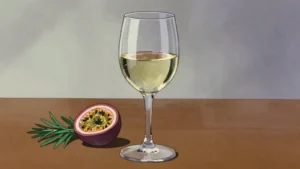
- 1copita or a white wine glass
- 1venencia, for drawing from the butt
- salted almonds, green olives and aged Manchego
Directions
- Press the Palomino gently and ferment the must dry, to about 11–12 percent alcohol. Sherry begins as a plain, neutral, bone-dry white wine; everything distinctive happens afterwards.
- Classify each butt. Wines destined to become fino or manzanilla are fortified to exactly 15 percent, low enough for flor yeast to survive. Wines destined for oloroso are fortified to 17 percent, which kills the flor.
- Under flor, a living blanket of yeast forms on the wine’s surface and seals it from the air. This is biological ageing: the wine stays pale, loses glycerine and gains the sharp, bready, saline character of fino.
- Without flor, the wine ages oxidatively in contact with the air, darkening steadily to mahogany and developing walnut, dried fig and polished-wood aromas over decades.
- Run the solera. Wine is drawn (the saca) from the oldest tier and replaced from the tier above, which is refilled from the tier above that, and so on. No sherry is a single vintage: it is a continuous blend of many years.
- Draw a sample with a venencia, a long-handled silver cup, poured from height into the copita to wake the wine up.
- Serve by style and temperature: fino and manzanilla very cold at 6–8 C and only from a freshly opened bottle, amontillado at 10–12°C (50–55°F), oloroso and palo cortado at 13–14°C (55–55°F), and Pedro Ximénez cool at 12–13°C (55–55°F).
- Pour a third of a glass so the aromas gather. Fino and manzanilla oxidise within days once opened and should be treated like a white wine; oloroso and PX will keep for months.
Technique
- The styles are made, not blended from grape sweetness: fino and manzanilla are bone dry, amontillado is a fino whose flor has died and which then ages oxidatively, and palo cortado begins as one and turns into the other.
- Manzanilla is simply fino aged in Sanlúcar, where the damp Atlantic air keeps the flor thicker year-round and gives the wine a distinctly saline edge.
- Sweet sherry gets its sugar from sun-dried Pedro Ximénez grapes laid out on esparto mats, not from stopping fermentation, which is why PX is syrupy and almost black.
Substitutions
- No sherry to hand: Montilla-Moriles wines from Córdoba are made in the same solera system, largely from Pedro Ximénez, and are the closest relative.
- For cooking, an inexpensive dry oloroso is the most useful bottle to keep, since it keeps for months and lifts stews and sauces.
- Vin Jaune from the Jura shares the flor-aged, oxidative character, though it is unfortified.
Variations
- En rama fino, bottled with minimal filtration straight from the butt, cloudier and far more expressive.
- VOS and VORS designations, for soleras of average age over 20 and 30 years.
- Cream sherry, an oloroso sweetened with PX, and the light Moscatel dessert style.
History
From Jerez de la Frontera, whose name English merchants turned into sherry; the solera blends young wine into old, and flor yeast shields fino from air.
Frequently asked questions
What is Sherry?
Sherry is a wine & spirit from Spain: fortified Andalusian wine aged in solera, from dry fino to sweet PX. From Jerez de la Frontera, whose name English merchants turned into sherry; the solera blends young wine into old, and flor yeast shields fino from air.
How long does Sherry take to make?
Sherry takes 10 min to serve of preparation and 3 to 30 years in solera of cooking. The recipe makes 1 bottle (750 ml), 8 copitas. It is rated hard to make.
What can I substitute in Sherry?
Yes, within limits. No sherry to hand: Montilla-Moriles wines from Córdoba are made in the same solera system, largely from Pedro Ximénez, and are the closest relative. For cooking, an inexpensive dry oloroso is the most useful bottle to keep, since it keeps for months and lifts stews and sauces. Vin Jaune from the Jura shares the flor-aged, oxidative character, though it is unfortified.
What is the most important thing to get right in Sherry?
Press the Palomino gently and ferment the must dry, to about 11–12 percent alcohol. Sherry begins as a plain, neutral, bone-dry white wine; everything distinctive happens afterwards.