
Ingredients
The rice
- 700 glong grain rice
- basmati or similar
- soaked and rinsed
- 3 tablespoonssalt
- for the boiling water
- a pinch of saffron
- steeped in hot water
The filling
- 800 glamb
- cut into small cubes
- 2onions, chopped
- 150 gdried apricots
- 100 graisins
- 100 gchestnuts
- cooked and peeled, optional
- 1 teaspoonturmeric
- 1 teaspooncinnamon
- salt and black pepper
- 4 tablespoonsbutter or ghee
The crust
- 4 sheetslavash
- or thin flatbread
- 150 gbutter, melted
- 1egg yolk, optional
- for glazing
The equipment
- a deep heavy pot
- or a cake tin
- with straight sides
Directions
- Brush it with water and wait a moment. It is drained while still firm. Drain it the moment it reaches that. An hour is a genuinely good minimum.
- Rinse the rice until the water runs clear. It is steeped in hot water first. Check it over before assembling. Rinse the rice until the water runs clear. Rinse it in several changes of water. Rub the grains gently as you rinse. That takes five or six changes.
- Cover the rice with cold salted water. Give it at least one full hour. Drain it well before boiling it. Brown the lamb pieces in the butter. Do not crowd the pan at any point.
- Brown it in several batches instead. Take the time to do it properly. Add the chopped onion to the pan. Cook it for about twelve minutes. It should soften and turn golden. Add the turmeric and the cinnamon. Season it with salt and pepper. Fry them briefly in the hot fat.
- Heat releases their aromatic oils. Give them about thirty seconds only. Stir them so they do not burn. Add a little water and cover it. Simmer it until genuinely tender. Give it about forty full minutes. Stir the apricots and raisins in.
- Add them for the last ten minutes. The filling should be quite dry. Cook the liquid right off entirely. It should cling rather than pour. Bring a large pot of water to a boil. Add plenty of salt to the water. The rice takes up only some of it.
- Add the drained rice to the boiling water. Give it about seven minutes only. Drain it the moment it is right. Drain it into a large colander. Let it all drain quite thoroughly. Rinse it briefly in warm water. That stops it cooking further. Brush the pot generously with butter. Butter every part of the inside. That helps the crust release later.
- Line the pot with the lavash sheets. Let them hang well over the rim. Cover the whole base entirely too. Brush each sheet with melted butter. Put a layer of rice in the bottom.
- Finish it with a final layer of rice. That keeps the filling enclosed. Press it down gently as you go. Do not colour all of it evenly. Fold the overhanging lavash over the top. Fold each piece over the filling. Brush each fold with melted butter. It must be sealed right over the top.
- Brush the top with butter or egg yolk. Butter gives a golden crisp finish. Brush it generously either way. Bake it at one hundred and eighty degrees. Give it about forty-five minutes. Cover it with foil if it browns early. Let it stand for fifteen minutes. Turning it out hot breaks it apart. Hold the plate firmly against it. Turn the whole thing over together. The pot is genuinely extremely hot.
- Use thick dry oven gloves for it. Get someone to help if it is heavy. Bring it whole to the table first. Everyone should see it whole first. Cut it into wedges from the top. Use a long sharp knife for it. Serve the crust with the rice. Leftovers keep two days refrigerated.
Technique
- The rice must be drained while still firm in the centre after about seven minutes — bite a grain to check, since it should be soft outside and firm inside. It finishes steaming in the oven, and fully cooked rice at this stage turns to mush.
- Line the pot generously with butter and brush every lavash sheet with butter as you lay it: that is what crisps the crust, glues the layers and lets it release. Let the sheets hang well over the rim so they fold over the top and seal it entirely — an open top dries the rice and fails to hold its shape.
- Let it rest fifteen minutes before turning out, since it settles and firms in that time and turning it out hot breaks it apart. The pot is extremely hot: use thick dry gloves, work over a stable surface and get help if it is heavy.
Substitutions
- Any thin pliable flatbread stands in for lavash and tortillas work reasonably; filo is too fragile for this. Dry lavash cracks when lining the pot — brush it with water and wait a moment and it becomes pliable again.
- Butter gives a golden crisp glaze and egg yolk a deeper colour; both are genuinely used. Cooked peeled chestnuts are a common addition alongside the dried fruit.
Variations
- Rinse the rice through five or six changes until the water runs clear, which removes the surface starch that makes grains stick, then soak it an hour so it cooks faster and more evenly into longer separate grains.
- Add the dried fruit only for the last ten minutes of the lamb’s cooking, since it plumps in that time but dissolves entirely if added early, and cook the filling quite dry — a wet filling makes the crust soggy.
- Drizzle the steeped saffron water over only part of the rice rather than colouring it evenly, since the mottled contrast is genuinely wanted. Bring it whole to the table and cut it open there like a cake — that moment is the point of the dish.
History
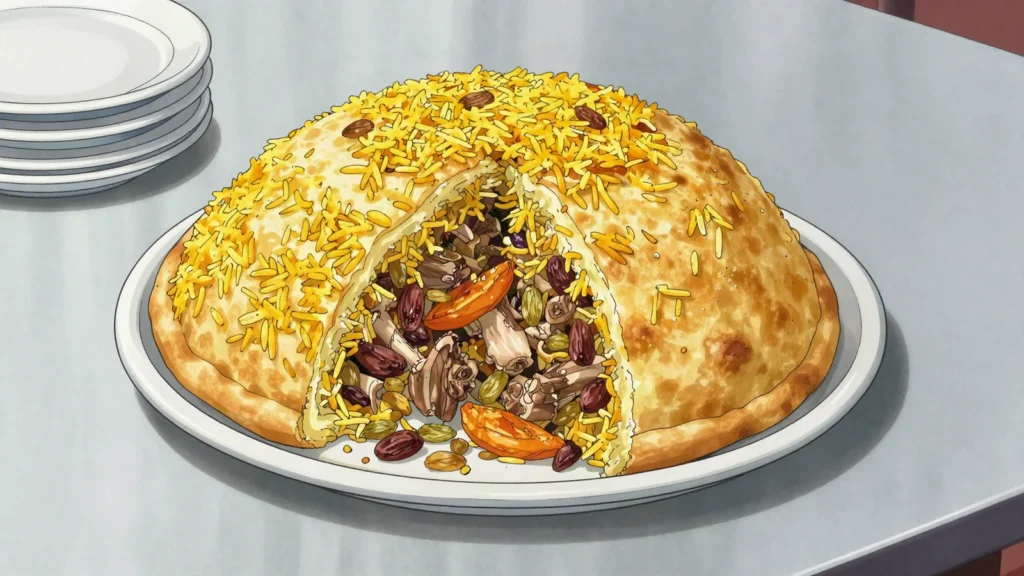
Festive Baku pilaf baked in a golden bread shell that is cut open at the table like a cake.
Frequently asked questions
What is Shah plov?
Shah plov is a main from Azerbaijan: crown of rice, dried fruit and meat baked inside a lavash crust. Festive Baku pilaf baked in a golden bread shell that is cut open at the table like a cake.
How long does Shah plov take to make?
Shah plov takes 1 hour 30 minutes plus soaking of preparation and 1 hour 30 minutes of cooking. The recipe makes serves 8. It is rated hard to make.
What can I substitute in Shah plov?
Yes, within limits. Any thin pliable flatbread stands in for lavash and tortillas work reasonably; filo is too fragile for this. Dry lavash cracks when lining the pot — brush it with water and wait a moment and it becomes pliable again. Butter gives a golden crisp glaze and egg yolk a deeper colour; both are genuinely used. Cooked peeled chestnuts are a common addition alongside the dried fruit.
What is the most important thing to get right in Shah plov?
Cover the rice with cold salted water. Give it at least one full hour. Drain it well before boiling it. Brown the lamb pieces in the butter. Do not crowd the pan at any point.