Ingredients
The pastry
- 1 packetfilo pastry
- about 400 g, thawed
- 180 gbutter or ghee
- melted, for brushing
The ashta cream
- 1 litrewhole milk
- 80 gcornflour
- 60 gsugar
- 2 tablespoonsorange blossom water
- 1 tablespoonrose water
- 2 piecesmastic, optional
- ground with sugar
The syrup
- 500 gsugar
- 300 mlwater
- juice of half a lemon
- 1 tablespoonorange blossom water
- or rose water
To finish
- chopped pistachios
- to scatter
- generously
Directions
- Put the sugar and water in a pan. Warm it gently until the sugar dissolves. Stir it until no grains remain. Bring it to a boil and simmer it. Give it about ten full minutes. Stir the lemon juice in at the end. Acid stops the sugar crystallising.
- Add it after the boiling is done. Stir the orange blossom water in. Add it in off the heat entirely. The aroma escapes if it boils. Let the syrup cool completely. It must be cold for hot pastry. Whisk the cornflour into cold milk.
- Use cold milk rather than warm. Cornflour lumps instantly in hot milk. Whisk it entirely smooth first. Heat it gently while whisking constantly. Whisk it right through the heating. Keep whisking hard as it does. That prevents any lumps entirely. Cook it until it is genuinely stiff. Cook it two minutes past thickening. Keep whisking through that time.
- Grind the mastic with a little sugar. Grind it down into a fine powder. The sugar stops the resin sticking. Stir the powder into the hot cream. It needs heat to disperse properly.
- Stir them in off the heat entirely. Heat drives their aroma off completely. Add them once the pan is off the heat. Taste it and adjust cautiously. You cannot take them back out. Let the cream cool completely. Press cling film onto the surface. That stops a skin forming on it.
- Lay one sheet of filo on the bench. Keep the rest under a damp cloth. Work with one sheet at a time. Cover it again the moment you finish. Use a damp cloth rather than a wet one. A wet cloth makes the filo soggy.
- Brush the sheet with melted butter. Brush it on lightly and evenly. It also helps them crisp in the oven. Lay a second sheet over the first. Brush that one with butter too. Cut the layered filo into squares. Cut squares about ten centimetres across.
- Cut them all with a very sharp knife. Cut through all the layers at once. Put a spoonful of cream in the centre. Use about a tablespoon per square. Do not overfill any of them at all.
- Leave a clear border all round. Fold the square into a triangle. Bring one corner to the opposite one. Press the edges together firmly. Brush them with butter to seal. Press them down along the edges. The cream must stay inside entirely.
- Press every edge firmly closed. Check every one of them before baking. Set them on a lined baking tray. Brush the tops with more butter. Brush them all generously on top. That is what makes them golden.
- Bake them at one hundred and eighty degrees. Give them about thirty minutes. Lift one of them up to look underneath. The base should be golden too. Pour the cold syrup over the hot pastries. Pour it slowly over every one. Cover every one of them generously.
- Let it pool right around them. Keep pouring until they are drenched. Use far more syrup than seems right. Leave them to absorb the syrup. Give them at least thirty minutes. Scatter chopped pistachios over them. Chop the pistachios fairly finely. Scatter them while still sticky. Serve them all on a flat plate. Spoon some syrup over each one. Have plenty of napkins ready for them.
Technique
- The temperature difference is the whole technique: hot pastry takes cold syrup, or cold pastry takes hot syrup, but never both at the same temperature — both hot goes soggy and both cold barely absorbs. Pour the cold syrup the moment the pastries leave the oven, generously, since these are genuinely meant to be drowned and absorb a surprising amount.
- The ashta must be genuinely very thick and completely cold, holding its shape on a spoon, since a loose cream runs out of the pastry. Whisk the cornflour into cold milk first, since it lumps instantly in hot milk, and cook it two minutes past thickening since raw cornflour tastes chalky.
- Boiling sugar syrup is far hotter than boiling water, sticks to skin and keeps burning — never touch or taste it hot.
Substitutions
- True ashta is made by simmering milk and layering the lifted skin, which takes hours and a great deal of milk; the cornflour version is smoother and less layered but is genuinely what most bakeries use, and the atlas gives that route.
- Mastic ground with a little sugar, which stops the resin sticking, gives a distinct piney aroma — two small pieces is enough and more tastes medicinal entirely. Rose and orange blossom waters are both very strong, so measure them rather than pouring freely.
Variations
- Filo dries out extremely fast and cracks when dry — keep the stack under a barely damp cloth, wrung out well since a wet cloth makes it soggy, and work with one sheet at a time.
- Press every edge firmly closed and brush with butter to seal, since escaping cream burns on the tray; some fold them as rolled triangles from strips rather than folding squares, which gives more visible layers, and both are genuinely done.
- This baked Jordanian version softens more under the syrup where the fried Kuwaiti sh’aybiyat stays crisper — a genuine difference between them, and both are as they should be. Pistachios on top are visible but tree nut allergy can be severe, so say clearly if you have used them.
History
A Ramadan and celebration pastry sold by the tray from Jordanian sweet shops beside knafeh.
Frequently asked questions
What is Shaabiyat?
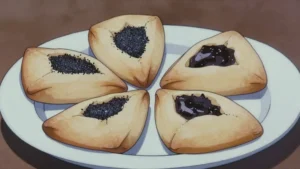
Shaabiyat is a dessert from Jordan: triangles of crisp filo filled with ashta cream and drowned in syrup. A Ramadan and celebration pastry sold by the tray from Jordanian sweet shops beside knafeh.
How long does Shaabiyat take to make?
Shaabiyat takes 1 hour of preparation and 35 minutes of cooking. The recipe makes about 24 pastries. It is rated medium to make.
What can I substitute in Shaabiyat?
Yes, within limits. True ashta is made by simmering milk and layering the lifted skin, which takes hours and a great deal of milk; the cornflour version is smoother and less layered but is genuinely what most bakeries use, and the atlas gives that route. Mastic ground with a little sugar, which stops the resin sticking, gives a distinct piney aroma — two small pieces is enough and more tastes medicinal entirely. Rose and orange blossom waters are both very strong, so measure them rather than pouring freely.
What is the most important thing to get right in Shaabiyat?
Add it after the boiling is done. Stir the orange blossom water in. Add it in off the heat entirely. The aroma escapes if it boils. Let the syrup cool completely. It must be cold for hot pastry. Whisk the cornflour into cold milk.