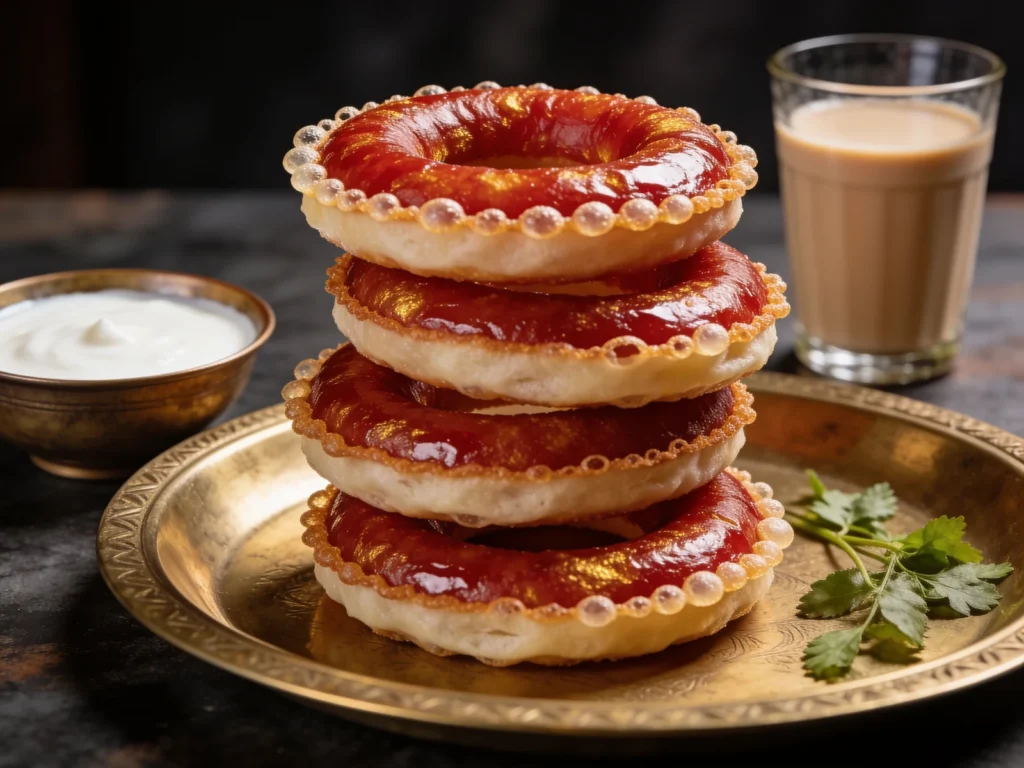

Ingredients
Batter
- 500 graw white rice, preferably a short or medium grain, soaked 8–12 hr and drained
- 150 gsugar
- 120 mlwhole milk
- 80 gghee, melted
- 1ripe banana, mashed (optional, for lift and colour)
- 1 tspgreen cardamom seeds, ground
- 4cloves, ground
- ¼ tspgrated nutmeg
- ½ tspsalt
- 100–150 mlwater, as needed
To fry
- 1.2 litresghee, or a mix of ghee and sunflower oil, for deep frying
To serve
- Plain yoghurt or aloo ko achar (potato pickle)
- Hot milk tea
Directions
- Soak the rice in plenty of cold water for at least 8 hours, or overnight. Drain it thoroughly and spread it on a cloth for 20 minutes; wet rice makes a watery batter.
- Grind the drained rice to a fine paste in a wet grinder or a powerful blender, adding the milk and only as much water as the machine needs to move. Traditionally this is done in a stone mortar and the texture is very slightly gritty.
- Beat in the sugar, melted ghee, banana, cardamom, cloves, nutmeg and salt.
- Now beat the batter by hand, in one direction, for 20–30 minutes. This is the step that decides everything: the batter should turn pale, aerated and fall from the hand in a thick, unbroken ribbon.
- Test it by dropping a small blob into a bowl of water. If it floats within a couple of seconds the batter is aerated enough; if it sinks, keep beating.
- Rest the batter, covered, for 30 minutes to an hour. Adjust the consistency so it just pours in a heavy stream, roughly the thickness of double cream.
- Heat the ghee in a deep, wide karahi to 165–170°C (325–350°F). Too hot and the ring browns before the inside sets; too cool and it drinks fat and goes heavy.
- Take a handful of batter in your fist and pour it into the hot fat in a fast, confident circle 12–14 cm across, joining the ends. Beginners can use a squeeze bottle or a piping bag, which is now common in Nepali kitchens too.
- Fry 60–90 seconds until the ring sets and floats, then turn it with two long skewers or chopsticks and fry the second side 60–90 seconds, spooning ghee over so it puffs.
- It is done when it is a glossy reddish gold all over, crisp at the outer rim and still soft and slightly chewy inside. Drain on a rack, not paper, and cook the rest.
- Serve warm with yoghurt or potato pickle. Sel roti keeps several days at room temperature and is traditionally strung on a string and given away during Tihar and Dashain.
Technique
- This is a rice bread, not a doughnut. There is no wheat flour, no yeast and no baking powder; every bit of lightness comes from the long hand-beating and from properly ground soaked rice.
- The float test is how Nepali cooks judge the batter and it is more reliable than time. Under-beaten batter gives a dense, greasy ring that never puffs.
- Pour in one continuous motion. A hesitant pour gives a broken ring, and the joins are where it cracks when you turn it.
- Ghee is traditional and gives both the flavour and the keeping quality. Frying in ghee also lets you hold a lower temperature without the batter absorbing fat.
Substitutions
- No wet grinder: soak the rice a full 12 hours and blend in small batches with the milk, scraping down often. Alternatively use 400 g fine rice flour with 250 ml milk and 100 ml water, and beat it just as long; the texture is slightly smoother and less chewy.
- Ghee can be replaced by sunflower oil for frying, but keep the ghee in the batter or the flavour disappears.
- The banana can be left out; it is a modern addition many families use for a softer crumb and deeper colour.
Variations
- Plain white sel roti, made without banana, the strict festival form.
- Sel roti flavoured with fennel seed instead of cardamom, common in the eastern hills.
- Thin, brittle sel roti fried at higher heat for a crisp biscuit-like ring.
History
A ring-shaped, deep-fried sweet rice bread, made by pouring a fermented batter of rice flour, sugar and milk in a circular motion directly into hot oil, a technique requiring practiced hand control to produce the bread’s characteristic ring shape and crisp, slightly chewy texture. It is most closely associated with Tihar, the Nepali festival of lights, and Dashain, another major Hindu festival celebrated across Nepal, when households traditionally prepare large batches to share with family and offer to guests, rather than making it as an everyday food. The exact age of the recipe is not well documented, though rice flour frying and festival-specific sweet breads are a broader pattern across South Asian festival cooking, suggesting sel roti likely developed as a regional Nepali expression of that wider tradition.
Frequently asked questions
What is Sel Roti?
Sel Roti is a bread & pastry from Nepal: ring-shaped sweet fried rice bread made for festivals. A ring-shaped, deep-fried sweet rice bread, made by pouring a fermented batter of rice flour, sugar and milk in a circular motion directly into hot oil, a technique requiring practiced hand control to produce the bread’s characteristic ring shape and crisp, slightly chewy texture. It is most closely associated with Tihar, the Nepali festival of lights, and Dashain, another major Hindu festival celebrated across Nepal, when households traditionally prepare large batches to share with family and offer to guests, rather than making it as an everyday food. The exact age of the recipe is not well documented, though rice flour frying and festival-specific sweet breads are a broader pattern across South Asian festival cooking, suggesting sel roti likely developed as a regional Nepali expression of that wider tradition.
How long does Sel Roti take to make?
Sel Roti takes 30 min plus overnight soaking of preparation and 40 min of cooking. The recipe makes about 16 rings. It is rated hard to make.
What can I substitute in Sel Roti?
Yes, within limits. No wet grinder: soak the rice a full 12 hours and blend in small batches with the milk, scraping down often. Alternatively use 400 g fine rice flour with 250 ml milk and 100 ml water, and beat it just as long; the texture is slightly smoother and less chewy. Ghee can be replaced by sunflower oil for frying, but keep the ghee in the batter or the flavour disappears. The banana can be left out; it is a modern addition many families use for a softer crumb and deeper colour.
What is the most important thing to get right in Sel Roti?
The float test is how Nepali cooks judge the batter and it is more reliable than time. Under-beaten batter gives a dense, greasy ring that never puffs.