
Ingredients
The dough
- 600 gplain flour
- about 380 ml warm water
- 7 gdried yeast
- 2 teaspoonssalt
- 1 teaspoonsugar
- 2 tablespoonsoil
The topping
- 4 tablespoonssesame seeds
- 2 tablespoonsnigella seeds
- water, to brush
- a little oil
The oven
- a clay tannour
- or a very hot oven
- with a baking stone
- or a heavy dry pan
To serve
- broken into shards
- with dips and stews
- shared from one plate
Directions
- Warm the water gently in a jug. Stir the yeast and sugar into it. Let it stand there for ten minutes. The yeast should foam up visibly. Discard it and start again if not. It costs ten minutes to be certain. Put the flour in a large bowl. Add the salt to one side of it. Salt kills yeast on direct contact.
- Keep them apart until the water goes in. Combining it is straightforward enough. Add the yeast water and the oil. Bring it together into a soft dough. This is a fairly wet slack dough. Use oiled hands rather than flour. Knead it for about ten minutes. That gluten is what lets it stretch thin. Put the dough in an oiled bowl. Cover it and leave it somewhere warm. Give it about ninety full minutes.
- Divide it into eight equal pieces. Roll each one into a smooth ball. Weigh them if you want them exact. Roll them all tight and smooth. Cover the balls and let them rest. Give them about twenty full minutes. Heat the oven as hot as it goes. Put a baking stone in to heat. The stone must be genuinely searing.
- Roll each ball out as thin as you can. Roll it until nearly translucent. You should almost see through it. Take your time over every single one. Roll out from the centre outward. Turn it a quarter turn between rolls. That keeps it both round and even.
- Lift it occasionally so it does not stick. They work it thin over their knuckles. Brush the surface lightly with water. Brush it thinly rather than wetting it. Too much water makes it soggy.
- Scatter sesame and nigella over the top. Scatter them generously and evenly. Press them lightly into the dough. Press them in with a flat hand. Lay the bread onto the hot stone. Work quickly and confidently here. Use a peel or a floured board. Hesitating folds the thin dough.
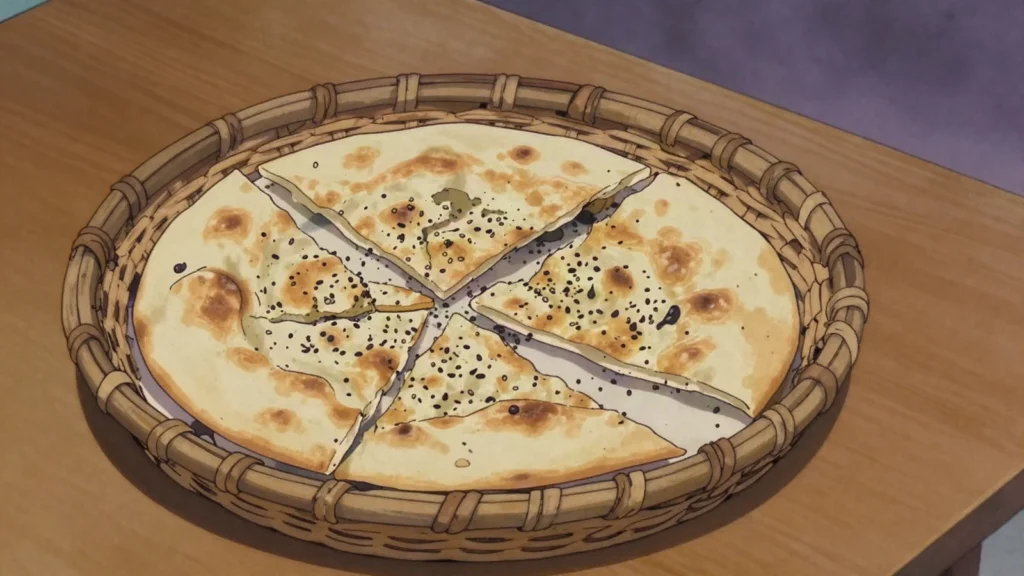
- Lift them all onto a wire rack. Stacking them hot traps the steam. Let the air get all round them. Serving them is done broken up. Break the cooled bread into shards. Break it by hand rather than cutting. Pile all the shards on one plate. People take shards with the right hand.
Technique
- The traditional method slaps the bread onto the inner wall of a clay tannour, which means putting an arm inside an oven at extreme heat — a genuine and serious burn risk that bakers do with long practice. The atlas records the method but does not recommend improvising one, and gives the home route most readers should use. Pepper bun and poisson yéménite carry the same hazard.
- The bread is rolled nearly translucent and that thinness is what makes it crisp: thin dough dries out and cannot hold steam to puff, so it crisps right through, where thick dough stays soft and chewy. It also bakes extremely fast and goes from pale to burnt quickly, so watch it right through and do not walk away.
- Preheat the stone or heavy pan for a full forty-five minutes at the oven’s highest setting — a cold stone gives a pale soft bread, and that preheating is not optional.
Substitutions
- A heavy upturned baking tray or a cast iron pan works in place of a baking stone; any heavy surface will do provided it is preheated equally.
- Some bakers stretch the dough thin over their knuckles rather than rolling it, which is skilled practised work; rolling is the practical route.
Variations
- This is a fairly wet dough, which stretches far thinner but is stickier — use oiled hands rather than flour, knead a full ten minutes for the gluten that lets it stretch, and rest the balls twenty minutes so they stop springing back.
- Brush the surface only lightly with water before the seeds go on, since water makes them stick but too much makes the dough soggy, and press them in with a flat hand so they do not fall off in the oven.
- Break the cooled bread by hand rather than cutting it, so it shatters into the irregular shards that are shared from one plate and used to scoop dips and stews.
History
A Tihama coastal bread slapped onto the oven wall and broken into shards for shared meals.
Frequently asked questions
What is Rashoosh?
Rashoosh is a bread & pastry from Yemen: very thin crisp flatbread scattered with sesame and nigella, baked in a clay oven. A Tihama coastal bread slapped onto the oven wall and broken into shards for shared meals.
How long does Rashoosh take to make?
Rashoosh takes 30 minutes plus rising of preparation and 15 minutes of cooking. The recipe makes about 8 breads. It is rated hard to make.
What can I substitute in Rashoosh?
Yes, within limits. A heavy upturned baking tray or a cast iron pan works in place of a baking stone; any heavy surface will do provided it is preheated equally. Some bakers stretch the dough thin over their knuckles rather than rolling it, which is skilled practised work; rolling is the practical route.
What is the most important thing to get right in Rashoosh?
Keep them apart until the water goes in. Combining it is straightforward enough. Add the yeast water and the oil. Bring it together into a soft dough. This is a fairly wet slack dough. Use oiled hands rather than flour. Knead it for about ten minutes. That gluten is what lets it stretch thin. Put the dough in an oiled bowl. Cover it and leave it somewhere warm. Give it about ninety full minutes.