
Ingredients
Raw material
- fresh sugarcane, grown in Herrera province on Panama’s Azuero peninsula
- cane juice pressed within hours of cutting – not molasses, which is the key difference from rum
- cultured yeast
- water from local wells
Production equipment
- open fermentation tanks
- column stills, run three times
- charcoal and cellulose filtration
- no cask ageing at all
To serve
- 50 mlSeco Herrerano, chilled
- ice, cold milk, coconut water or fresh lime, depending on the serve
- a shot glass or a plain tumbler
- a wedge of lime and a pinch of salt, for the shot serve
Directions
- Understand what it is: Seco Herrerano is a clear spirit distilled from fermented fresh sugarcane juice, made by Varela Hermanos in Pese since 1936. Because it is made from cane juice and then triple-distilled to near neutrality, Panamanians class it as its own category rather than as rum.
- The cane is cut and pressed the same day; leave it longer and the juice starts to ferment wild and sour.
- The juice is fermented in open tanks with cultured yeast for 3–5 days at ambient tropical temperature until the sugar is spent and a cane wine of roughly 6–8 per cent alcohol remains.
- That wine is distilled three times in column stills, each pass stripping more congeners, until the spirit comes off clean, high and neutral with only a faint grassy cane note surviving.
- It is reduced with local water to 35 per cent alcohol by volume for the standard bottling, filtered through charcoal and cellulose, and bottled unaged and colourless. Nothing is added and nothing is barrelled.
- To serve it as Panamanians most often do, pour 60 ml over a glass of cubed ice and top with 120 ml of cold milk for a seco con vaca, stirring gently once.
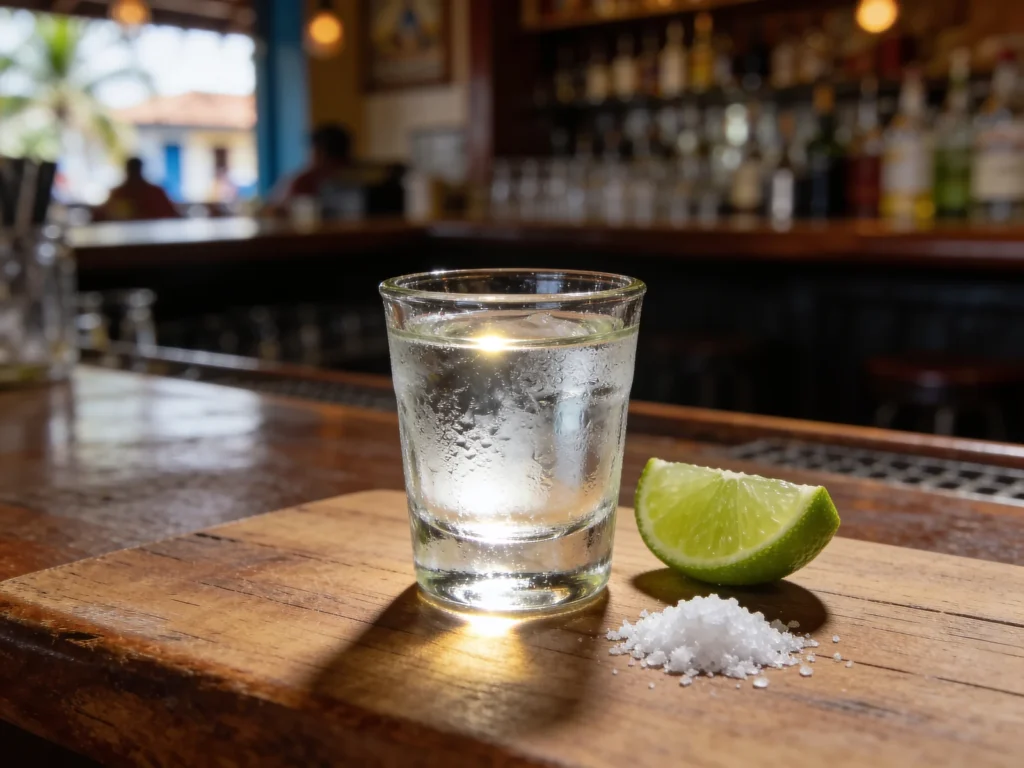
- For the field serve, pour 50 ml neat into a shot glass, take it in one, and follow with a lime wedge and a lick of salt.
- For the beach serve, pour it straight into a hacked-open green coconut and drink it through a straw with the coconut water.
- Serve everything very cold. At 35 per cent it is lighter than most spirits, which is exactly why it disappears into long drinks and why it is drunk all through Carnival.
Technique
- Do not attempt to distil this at home. Home distilling is illegal in most countries and unsafe without proper cut management. This is a description of how the spirit is actually made.
- The cane-juice base is what separates seco from rum. Molasses-based spirits are heavier and sweeter; cane juice gives seco its dry, faintly grassy, almost vodka-clean profile.
- The standard bottling is 35 per cent, lower than most spirits, and there is an 80-proof export version. Check the label, since it changes how much you use in a mix.
Substitutions
- Outside Panama, an unaged rhum agricole blanc from Martinique or a Brazilian cachaca prata are the closest available spirits, both being cane-juice based – though both are more aromatic.
- A clean white rum will substitute in mixed drinks, but it will make the drink noticeably sweeter.
Variations
- Seco Herrerano Reserva, a small-batch expression bottled at higher strength.
- Seco con vaca, the milk serve and the national drink of the Azuero.
- Seco con pipa, poured into a green coconut, the beach and Carnival serve.
History
Distilled at Pese in Herrera province by Varela Hermanos since 1936; it is regarded as Panama’s national spirit and the base of seco con vaca.
Frequently asked questions
What is Seco Herrerano?
Seco Herrerano is a wine & spirit from Panama: clear sugarcane spirit drunk with milk or in shots with lime. Distilled at Pese in Herrera province by Varela Hermanos since 1936; it is regarded as Panama’s national spirit and the base of seco con vaca.
How long does Seco Herrerano take to make?
Seco Herrerano takes n/a – industrially distilled of preparation and 3–5 days fermenting, then triple distillation of cooking. The recipe makes one 750 ml bottle equals about 25 servings. It is rated medium to make.
What can I substitute in Seco Herrerano?
Yes, within limits. Outside Panama, an unaged rhum agricole blanc from Martinique or a Brazilian cachaca prata are the closest available spirits, both being cane-juice based – though both are more aromatic. A clean white rum will substitute in mixed drinks, but it will make the drink noticeably sweeter.
What is the most important thing to get right in Seco Herrerano?
Understand what it is: Seco Herrerano is a clear spirit distilled from fermented fresh sugarcane juice, made by Varela Hermanos in Pese since 1936. Because it is made from cane juice and then triple-distilled to near neutrality, Panamanians class it as its own category rather than as rum.