
Ingredients
Greens
- 1 kgmustard greens
- 300 gspinach
- 200 gbathua, or more spinach
To cook
- 2green chillies
- 1thumb ginger, chopped
- 6garlic cloves
- 500 mlwater
- salt
To thicken
- 4 tbspfine maize flour
Tempering
- 100 gghee, or white butter
- 1large onion, finely chopped
- 1thumb ginger, grated
- 8garlic cloves, crushed
- 2tomatoes, chopped
- 2dried red chillies
- 1 tspred chilli powder
- 1/2 tspasafoetida
To serve
- makai ki roti, maize flatbread
- white butter
- jaggery
- sliced onion
Directions
- Strip the leaves from any thick woody stems. Keep the tender upper stems and chop them short. Wash everything in several changes of cold water. Lift them out of the water rather than pouring, so the grit stays behind.
- Chop all of the greens roughly. Put all the greens in a large heavy pot. Add the water, chillies, chopped ginger, garlic and salt. Bring it to the boil and then lower the heat. Cover it and simmer for at least an hour. Some cooks go to two hours or use a pressure cooker.
- Work it in the pot, pressing and turning. Keep going until the mixture is coarse and blended. It should not be a smooth purée. Whisk the maize flour into a little cold water first. That is what prevents any lumps.
- Stir the slurry into the mashed greens. Simmer it for another twenty minutes. Stir it regularly, since it catches easily once thickened. Heat the ghee in a wide pan over a medium heat. Add the dried red chillies and let them darken. Add the asafoetida for a few seconds. Cooking the onions properly takes time. Add the finely chopped onion to it.
- Cook it for twelve to fifteen minutes. It should turn deep golden brown rather than merely soft. Add the garlic and ginger and cook for two minutes. Add the chopped tomatoes and the chilli powder. Cook them down for eight minutes until the ghee separates.
- Pour most of the tempering into the saag. Keep a few spoonfuls back for serving. Stir it through and simmer for ten minutes more. Taste it and adjust the salt at the end. It should be thick and should hold on a spoon. Add hot water if it has gone too stiff. Simmer it longer if it is loose. Spoon it out into a warm bowl.
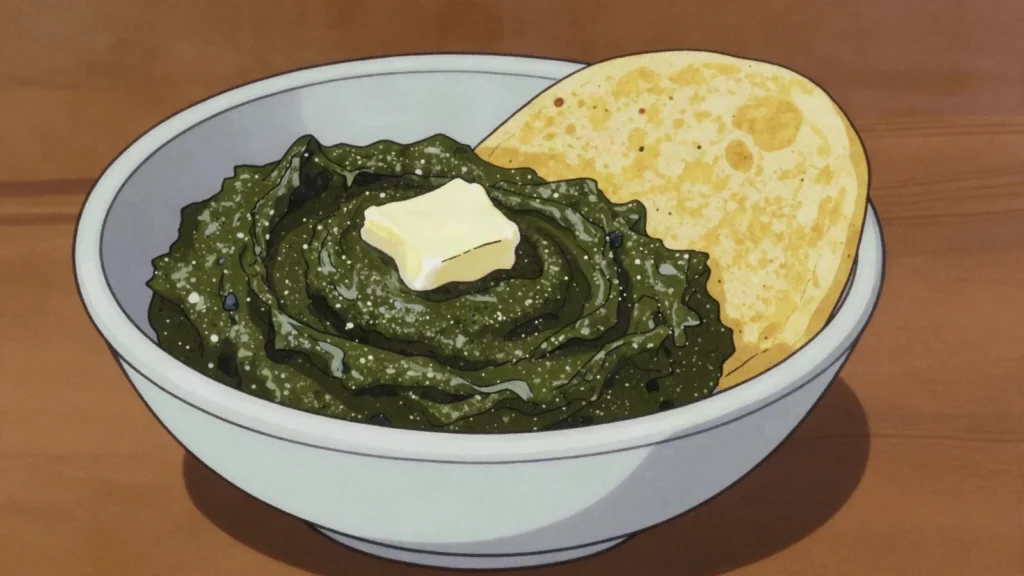
- Pour the reserved tempering over the top. Set a lump of white butter on the surface to melt in. Serve makai ki roti alongside, hot from the griddle.
Technique
- The greens must cook down for at least an hour; bright green saag is undercooked.
- Whisk the maize flour into cold water first, or it lumps.
- It is noticeably better on the second day, so make it ahead if you can.
Substitutions
- More spinach in place of bathua, which is hard to find.
- Butter in place of ghee, though ghee is traditional.
Variations
- Made with a higher proportion of spinach for a milder dish.
- With a knob of white butter stirred right through.
- Cooked in a pressure cooker to shorten the boil.
History
Punjab’s winter field food, made when mustard is harvested; served with makai ki roti and white butter on both sides of the border.
Frequently asked questions
What is Sarson ka Saag?
Sarson ka Saag is a main from Pakistan: slow-cooked mustard greens with butter, eaten with maize bread in winter. Punjab’s winter field food, made when mustard is harvested; served with makai ki roti and white butter on both sides of the border.
How long does Sarson ka Saag take to make?
Sarson ka Saag takes 40 min of preparation and 1 hour 30 min of cooking. The recipe makes 6 servings. It is rated medium to make.
What can I substitute in Sarson ka Saag?
Yes, within limits. More spinach in place of bathua, which is hard to find. Butter in place of ghee, though ghee is traditional.
What is the most important thing to get right in Sarson ka Saag?
Strip the leaves from any thick woody stems. Keep the tender upper stems and chop them short. Wash everything in several changes of cold water. Lift them out of the water rather than pouring, so the grit stays behind.