
Ingredients
Bread
- 1loaf of pan de miga, unsliced or ready-sliced lengthways into 5 mm sheets (about 24 slices)
- 150 gsoft unsalted butter, whipped with 2 tbsp milk until spreadable
Classic filling
- 300 gcooked ham, sliced paper-thin
- 300 gqueso de maquina or a mild sliced cheese such as Port Salut
Other usual fillings
- 2red peppers, roasted, peeled and cut into flat panels
- 3hard-boiled eggs, sliced
- 150 ggreen olives, sliced
- 200 gtinned tuna mixed with 3 tbsp mayonnaise
- 1 headof soft lettuce, leaves flattened
To finish
- a clean damp tea towel
Directions
- Buy the bread the same day. Pan de miga is a soft, tight-crumbed, crustless white loaf sold in long sheets; if you cut it yourself, use a long serrated knife and slice horizontally to 5 mm, keeping the sheets under a damp cloth as you go.
- Whip the butter with a little milk until it is genuinely soft, then spread a thin, edge-to-edge film on every slice. The butter is a moisture barrier as much as a flavour: without it the bread goes soggy within the hour.
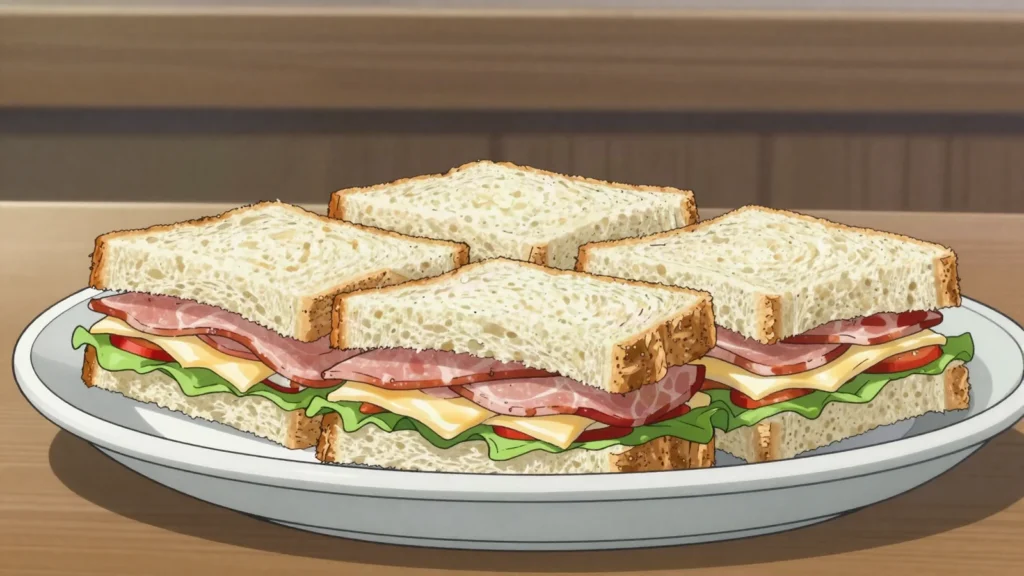
- Lay the ham in an even single layer that reaches every corner, folding rather than piling, then the cheese in the same way. A miga sandwich should be flat and uniform, never mounded in the middle.
- Close each sandwich, press the whole surface gently with a flat tray so the layers bond, and stack them under light weight in the fridge for 30 minutes.
- Trim all four edges with a long sharp knife wiped clean between cuts, so the layers show as clean stripes.
- Cut each sandwich into three rectangles or two triangles, depending on whether you are serving them as sandwiches or as canapes.
- Keep every finished piece under a damp tea towel until the moment of serving; the crumb dries out visibly in fifteen minutes of open air.
- Arrange overlapping on a tray, alternating fillings so the colours alternate, and serve for merienda with tea, or in stacks at a birthday.
Technique
- A triple is three slices of bread and two fillings, and is the standard sold in Buenos Aires sandwich shops; a simple is two slices. Ham and cheese is the default pairing and everything else is described in relation to it.
- The bread is the dish. Ordinary sandwich loaf is too open and too dry, and any crust at all disqualifies it; look for pan de miga, or Japanese shokupan sliced very thin, which behaves similarly.
- These are made hours ahead by professionals and kept wrapped in damp cloth and film in the fridge. Made fresh and left uncovered they are noticeably worse.
Substitutions
- No pan de miga: use a very fresh soft white loaf, cut the crusts off entirely and roll each slice once with a rolling pin to compress the crumb before buttering.
Variations
- Miga tostado: the finished sandwich is pressed in a hot sandwich press until the outside is striped and the cheese has melted.
- Special versions layer roasted pepper, egg, olive and lettuce with the ham and cheese in a four-layer triple.
History
A thin, crustless sandwich, made from very thinly sliced white bread filled with layers of ham, cheese, tomato and other ingredients, then pressed flat, documented across Argentina, particularly associated with Buenos Aires, as a popular light meal and party food. Its notably thin, crustless bread and pressed, layered construction distinguish sándwich de miga clearly from heartier sandwich traditions found elsewhere in Latin America, reflecting a more refined, European-influenced style of sandwich-making that developed within Argentina’s substantial European immigrant communities. Sándwich de miga remains a popular choice for parties, afternoon tea and casual gatherings across Argentina, commonly served cut into small triangles.
Frequently asked questions
What is Sándwich de miga?
Sándwich de miga is a snack from Argentina: crustless layered white-bread sandwiches of ham and cheese, teatime. A thin, crustless sandwich, made from very thinly sliced white bread filled with layers of ham, cheese, tomato and other ingredients, then pressed flat, documented across Argentina, particularly associated with Buenos Aires, as a popular light meal and party food. Its notably thin, crustless bread and pressed, layered construction distinguish sándwich de miga clearly from heartier sandwich traditions found elsewhere in Latin America, reflecting a more refined, European-influenced style of sandwich-making that developed within Argentina’s substantial European immigrant communities. Sándwich de miga remains a popular choice for parties, afternoon tea and casual gatherings across Argentina, commonly served cut into small triangles.
How long does Sándwich de miga take to make?
Sándwich de miga takes 40 min of preparation and no cooking, 30 min chilling of cooking. The recipe makes 24 triangles (12 sandwiches). It is rated easy to make.
What can I substitute in Sándwich de miga?
Yes, within limits. No pan de miga: use a very fresh soft white loaf, cut the crusts off entirely and roll each slice once with a rolling pin to compress the crumb before buttering.
What is the most important thing to get right in Sándwich de miga?
Lay the ham in an even single layer that reaches every corner, folding rather than piling, then the cheese in the same way. A miga sandwich should be flat and uniform, never mounded in the middle.