
Ingredients
Chhena
- 2 litreswhole milk
- juice of 2 lemons, or 3 tbsp white vinegar
- 500 mlcold water
To sweeten
- 150 gcaster sugar, or to taste
- 1 tspground cardamom
Sometimes added
- a pinch of saffron, steeped in warm milk
- 1 tbsprosewater
- 2 tbspnolen gur, date palm jaggery, in season
To finish
- chopped pistachios
- silver leaf, if wanted
Equipment
- muslin
- small wooden or plastic moulds
- a heavy non-stick pan
Directions
- Use whole milk, not skimmed or semi-skimmed. Do not use homogenised milk if you can avoid it. Bring the milk to the boil in a heavy pan. Stir it so it does not catch on the bottom. Take it off the heat the moment it rises.
- Let it cool for about two minutes. Adding the acid is done slowly. Add the lemon juice a spoonful at a time. Stir gently after each addition. Stop adding acid the moment the whey runs clear. Pour the cold water into the pan immediately. That drops the temperature and stops the curd tightening.
- Line a sieve with muslin and set it over a bowl. Pour the curds into the cloth. Rinse them briefly under cold running water. Hang it up to drain for about an hour. It should be soft, moist and slightly crumbly. Tip it out onto a clean surface.
- Knead it with the heel of your hand for eight to ten minutes. It will go from crumbly to completely smooth. Put the kneaded chhena and sugar in a heavy non-stick pan.
- Cook it over a low heat, stirring constantly. It is ready when it pulls away from the sides of the pan. Stir in the ground cardamom now. Add the saffron milk or rosewater now if you are using them. Cooling and moulding is done while it is warm.
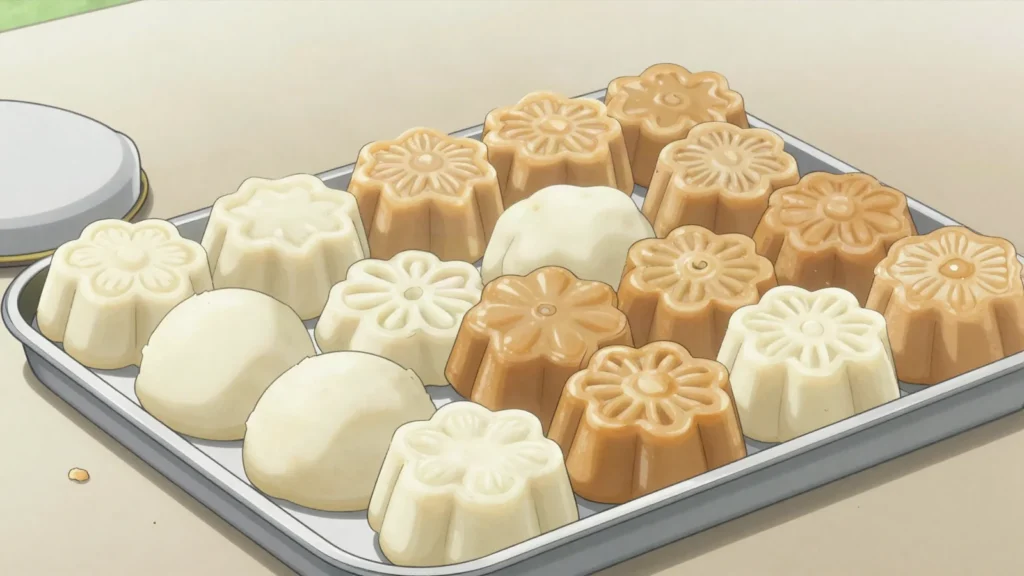
- Tip the mixture onto a plate and let it cool slightly. Knead it briefly once more while warm. Press it into small moulds, or shape it by hand. Press firmly so the pattern takes. Turn each one out onto a tray. Press a chopped pistachio into the top of each.
- Let them set at room temperature for an hour. They keep for three days and are best on the first. Take them out twenty minutes before serving. Fridge-cold sandesh tastes of very little.
Technique
- Chhena must stay soft and moist; pressed paneer gives a grainy sweet.
- Knead it for eight to ten minutes until no grain is left on your palm.
- Stop cooking while it is still soft, since overcooked sandesh goes hard and chewy.
Substitutions
- White vinegar in place of lemon juice for curdling.
- Nolen gur in place of sugar, which is the prized winter version.
Variations
- Nolen gurer sandesh, made with date palm jaggery.
- Kacha sandesh, barely cooked and very soft.
- Stuffed with a spoonful of thickened milk in the centre.
History
A sweet made from fresh chhena, an unaged curd cheese, and sugar, formed into decorative shapes, closely tied to Bengali culture spanning both Bangladesh and the Indian state of West Bengal, with the two regions sharing this and several other closely related sweets as part of a common Bengali culinary heritage that predates the modern political division between them, which occurred through the 1947 Partition of British India. Its preparation, kneading fresh chhena with sugar and shaping it, often using decorative wooden molds for special occasions, requires genuine skill to achieve the correct smooth, not-too-crumbly texture, and different Bengali sweet-makers, called moiras, are traditionally known for their own particular sandesh specialties and reputations. It remains one of the most essential and widely made traditional Bengali sweets on both sides of the border.
Frequently asked questions
What is Sandesh?
Sandesh is a dessert from Bangladesh: pressed fresh-cheese sweet moulded into shells and flowers, scented with cardamom. A sweet made from fresh chhena, an unaged curd cheese, and sugar, formed into decorative shapes, closely tied to Bengali culture spanning both Bangladesh and the Indian state of West Bengal, with the two regions sharing this and several other closely related sweets as part of a common Bengali culinary heritage that predates the modern political division between them, which occurred through the 1947 Partition of British India. Its preparation, kneading fresh chhena with sugar and shaping it, often using decorative wooden molds for special occasions, requires genuine skill to achieve the correct smooth, not-too-crumbly texture, and different Bengali sweet-makers, called moiras, are traditionally known for their own particular sandesh specialties and reputations. It remains one of the most essential and widely made traditional Bengali sweets on both sides of the border.
How long does Sandesh take to make?
Sandesh takes 40 min plus 1 hour draining of preparation and 20 min of cooking. The recipe makes 20 pieces. It is rated hard to make.
What can I substitute in Sandesh?
Yes, within limits. White vinegar in place of lemon juice for curdling. Nolen gur in place of sugar, which is the prized winter version.
What is the most important thing to get right in Sandesh?
Use whole milk, not skimmed or semi-skimmed. Do not use homogenised milk if you can avoid it. Bring the milk to the boil in a heavy pan. Stir it so it does not catch on the bottom. Take it off the heat the moment it rises.