
Ingredients
Hulba (fenugreek froth)
- 3 tbspwhole fenugreek seeds
- cold water for soaking and whipping
- 1 tspsalt
- 1 tbsplemon juice
Maraq (the stew)
- 600 glamb shoulder or neck, cut into 3 cm cubes
- 2onions, diced
- 4garlic cloves, crushed
- 3tomatoes, chopped
- 2potatoes, cut into 2 cm dice
- 1courgette, diced
- 2 tbspsamn or vegetable oil
- 1 tbsphawaij for soup (cumin, turmeric, black pepper, cardamom)
- 1 tspsalt
- 1.2 litreswater
Sahawiq (chilli relish)
- 4green chillies
- 1large handful coriander
- 2garlic cloves
- 1tomato
- ½ tspsalt
- 1 tspground cumin
To serve
- 4rounds of malooj or khubz tannour flatbread
- 1egg, beaten (optional, stirred in at the end)
Directions
- Rinse the fenugreek, cover with plenty of cold water and soak overnight; change the water twice to draw out the harsh bitterness. Next morning drain and rinse again.
- Whip the drained seeds with 4 tbsp of ice-cold water in a bowl, beating hard with a fork or a small whisk for 5 to 8 minutes, adding water a spoon at a time, until it turns into a pale, glossy, mousse-like foam that trebles in volume. Season with the salt and lemon and set aside.
- Brown the lamb in the samn in a heavy pot over high heat for 6 minutes, until the edges catch; take it out and cook the onions in the same fat for 8 minutes until soft and golden.
- Return the meat with the garlic, hawaij and tomatoes, stir 2 minutes until the tomatoes collapse and the spices smell toasted.
- Add the water and salt, cover and simmer gently for 1 hour, until the lamb is tender enough to press apart with a spoon.
- Add the potato and courgette and cook a further 15 minutes uncovered, until the potato is soft and the stew has thickened to a thick, spoonable maraq.
- Pound the sahawiq ingredients in a mortar or blitz briefly to a rough, wet green relish; it should be coarse, not a smooth sauce.
- Heat a madara stone bowl, or a small cast-iron pot, on a high flame until it is smoking hot, then ladle in the stew so it boils violently and keeps boiling at the table.
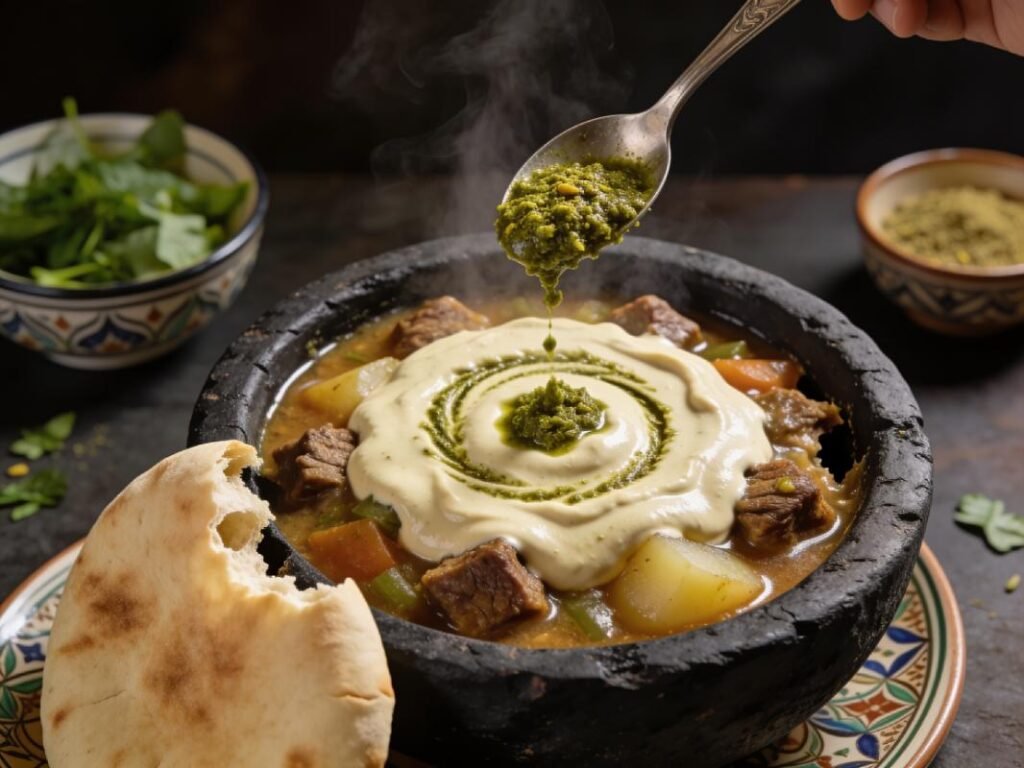
- Spoon the fenugreek froth over the surface in a thick white cap and swirl in a spoonful of sahawiq; if using egg, stir it into the boiling stew just before the froth goes on.
- Carry it to the table still spitting and eat immediately, scooping with torn flatbread; no cutlery, and no waiting for it to cool.
Technique
- Saltah is defined by the hulba cap and by the stone. The bowl must be violently hot, so the stew is still bubbling when it reaches the table, and the froth sizzles as it hits.
- Whipping fenugreek by hand is a knack. It only foams if the seeds are properly soaked and the water is ice cold; warm water gives a slack grey paste.
- The maraq underneath is leftovers logic. Yemeni households build saltah on whatever stew was already made, so the vegetables and the meat vary from house to house and day to day.
- It is a lunch dish, eaten in the middle of the day, and almost never served in the evening.
Substitutions
- No fenugreek seeds: a hulba made from 2 tbsp fenugreek powder whipped with ice water works, but the foam is looser and greyer. A small cast-iron casserole replaces the soapstone madara well.
Variations
- Fahsa is the near-identical dish made with shredded stewed meat rather than cubes, and no vegetables.
- Saltah bayda, whitened with extra hulba and no tomato, is a Taiz style.
History
Widely considered Yemen’s national dish, built around a base of hilbeh, a frothy fenugreek paste, combined with a meat stew called maraq and often a green herb-and-chili relish called sahawiq, served bubbling hot, traditionally in the same stone or clay pot it was cooked in so it stays hot at the table. Its exact origin is not well documented, though the combination of fenugreek, a plant long cultivated in the region, with a savory meat base reflects ingredients available across Yemen’s varied agricultural regions for a long stretch of its history. The dish’s assembly, with each component, stew, fenugreek foam and relish, prepared somewhat separately before being combined, means saltah varies noticeably by household and region depending on exactly which additional vegetables or grains are layered in.
Frequently asked questions
What is Saltah?
Saltah is a soup & stew from Yemen: bubbling meat stew topped with whipped fenugreek froth; national lunch. Widely considered Yemen’s national dish, built around a base of hilbeh, a frothy fenugreek paste, combined with a meat stew called maraq and often a green herb-and-chili relish called sahawiq, served bubbling hot, traditionally in the same stone or clay pot it was cooked in so it stays hot at the table. Its exact origin is not well documented, though the combination of fenugreek, a plant long cultivated in the region, with a savory meat base reflects ingredients available across Yemen’s varied agricultural regions for a long stretch of its history. The dish’s assembly, with each component, stew, fenugreek foam and relish, prepared somewhat separately before being combined, means saltah varies noticeably by household and region depending on exactly which additional vegetables or grains are layered in.
How long does Saltah take to make?
Saltah takes 30 min plus overnight fenugreek soak of preparation and 1 hr 30 min of cooking. The recipe makes 4 servings. It is rated medium to make.
What can I substitute in Saltah?
Yes, within limits. No fenugreek seeds: a hulba made from 2 tbsp fenugreek powder whipped with ice water works, but the foam is looser and greyer. A small cast-iron casserole replaces the soapstone madara well.
What is the most important thing to get right in Saltah?
Saltah is defined by the hulba cap and by the stone. The bowl must be violently hot, so the stew is still bubbling when it reaches the table, and the froth sizzles as it hits.