
Ingredients
Fenugreek
- 4 tablespoonsfenugreek seeds
- cold water, for soaking
- about 200 ml cold water, for whipping
To flavour
- 4garlic cloves, crushed
- juice of 1 lemon
- 1 teaspoonsalt
- a handful of coriander, chopped
- 1green chilli, chopped, optional
- 2 tablespoonszhug, optional
Served over
- saltah
- fahsa
- or any Yemeni stew
Directions
- Rinse the fenugreek seeds in cold water. Put them in a bowl with plenty of cold water.
- Cover them well, since they swell a great deal. Leave them for at least twelve hours. Each change takes away more bitterness. Drain the seeds thoroughly in a sieve. Rinse them once under cold running water.
- Let them drain for a few minutes. Put the drained seeds in a blender. Add a little of the cold water. Grind them into a smooth paste.
- Add water gradually as it needs it. It should be smooth with no whole seeds. Tip the paste into a wide bowl. Add cold water a little at a time. Whip it hard with a whisk or a fork.
- Keep whipping as you add the water. It takes about five minutes of hard work. Add more water if it is too stiff. Whip it longer if it will not lighten. Add the crushed garlic to the foam. Add the lemon juice and the salt. Add the chopped coriander to it. Add the chilli if you want heat.
- Whip it briefly again to combine. It also helps the foam hold its structure. Add it after whipping rather than before. Serving it is done immediately. Whip it just before it goes to the table.
- Spoon it generously over the hot stew. It does not keep at all well once whipped. Whip a fresh batch of it each time.
Technique
- Fenugreek can lower blood sugar and add to the effect of diabetes medication, is traditionally avoided in pregnancy having been used to stimulate labour, and can interact with blood thinning medication; it also causes a harmless maple syrup smell in sweat and urine.
- Soaked fenugreek seeds release a mucilage that traps air when whipped, turning a paste into a pale foam that roughly doubles in volume; changing the soaking water two or three times reduces bitterness, but changing it more loses what makes it whip.
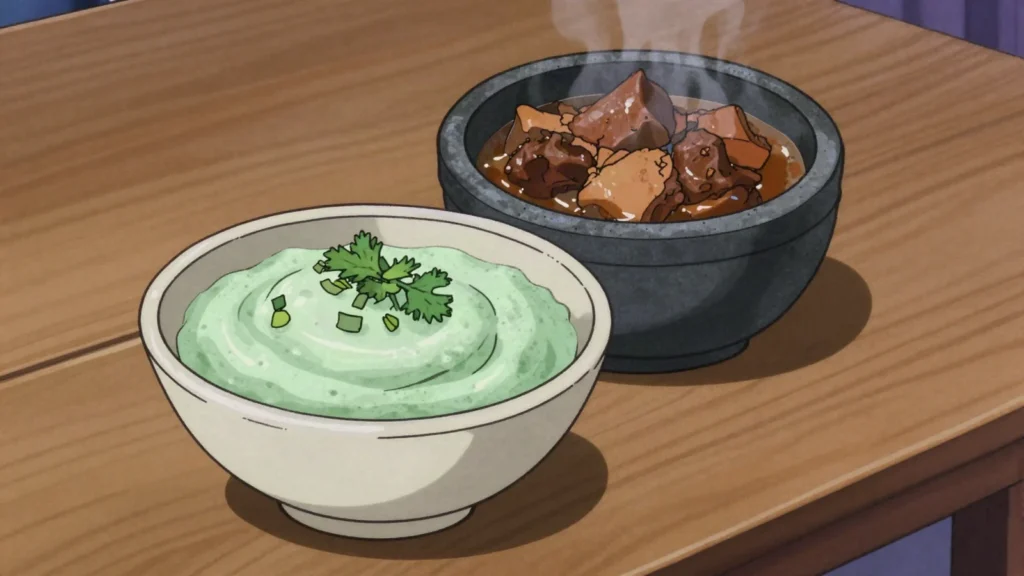
- Saltah, the Yemeni national dish, arrives bubbling in a hot stone bowl and the hulba is poured over it at the table, where it froths against the heat; that moment is the theatre of the dish.
Substitutions
- An electric whisk does the whipping far faster than a hand whisk.
- Zhug stirred through turns it pale green and adds considerable heat.
Variations
- Some cooks whip zhug into the hulba and others serve them separately.
- The amount of garlic and lemon varies from cook to cook.
- Fahsa and saltah both take hulba over the top.
History
Fenugreek soaked and whipped to a pale bitter froth, spooned over saltah and fahsa.
Frequently asked questions
What is Hulba?
Hulba is a sauce & condiment from Yemen: whipped fenugreek foam stirred into stews. Fenugreek soaked and whipped to a pale bitter froth, spooned over saltah and fahsa.
How long does Hulba take to make?
Hulba takes 10 minutes plus overnight soaking of preparation and none of cooking. The recipe makes serves 6 as a topping. It is rated medium to make.
What can I substitute in Hulba?
Yes, within limits. An electric whisk does the whipping far faster than a hand whisk. Zhug stirred through turns it pale green and adds considerable heat.
What is the most important thing to get right in Hulba?
Whip it briefly again to combine. It also helps the foam hold its structure. Add it after whipping rather than before. Serving it is done immediately. Whip it just before it goes to the table.