
Ingredients
Leaves
- 500 gyoung taro leaves, rourou
Coconut
- 600 mlthick coconut milk, or fresh coconut cream
Also
- 1onion, sliced
- 2 clovesgarlic
- 1 tspsalt
- black pepper
Optional
- 1 tincorned beef
- or 200 g smoked fish, flaked
- 1chilli
To serve
- boiled dalo, taro root
- cassava
- or rice
Directions
- Put it back on the heat. Wash the leaves thoroughly in several changes of water. Now strip out the thick central stems and the heavy veins.
- Roll the leaves up and shred them coarsely, or leave them whole for layering. Add the shredded leaves and the rest of the coconut milk.
- Bring it to a gentle simmer and leave the pot uncovered for the first 20 minutes. Now cover it and simmer very gently for a further 45 minutes to an hour. Keep the heat low.
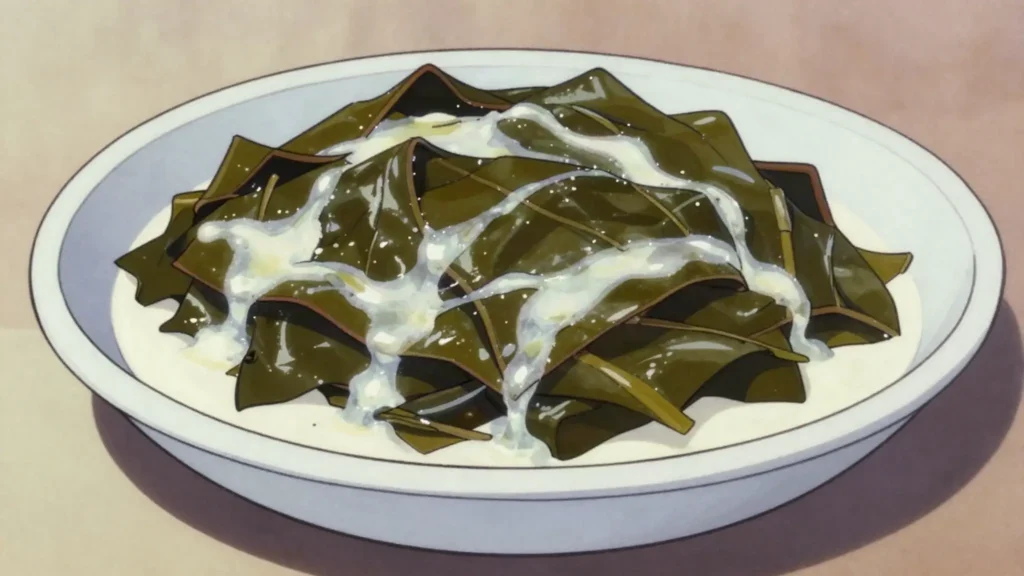
- Stir it occasionally and gently as it simmers. The leaves go from bright green through olive to a very dark, almost black green, and they become completely soft and silky.
- Add the corned beef or smoked fish for the last 15 minutes if using.
- Season with salt and plenty of black pepper. It should be completely smooth in the mouth with no tingling, itching or scratchiness at all.
- Serve it with boiled dalo, the taro root, or with cassava or rice. It is everyday food across Fiji and it appears at every lovo, the earth oven feast, where it is cooked in parcels among the hot stones.
Technique
- Frozen taro leaves are sold in Pacific and Asian shops and are already blanched, though they still need the long cook.
- The same rule applies to every taro leaf dish from Hawaii to West Africa.
- It thickens as it stands and reheats well.
Substitutions
- Frozen taro leaves, which are widely available.
- Spinach, which is a completely different thing and needs no long cooking.
Variations
- Palusami, baked in parcels in a lovo.
- With tinned corned beef, which is the everyday Fijian version.
- With smoked fish or prawns.
History
A dish of taro leaves cooked down with coconut milk, closely related to Samoan palusami in basic concept, developed across Fiji using taro, a root vegetable whose broad leaves are cooked thoroughly before eating since raw or undercooked taro leaves contain compounds that irritate the mouth and throat, a necessity that likely shaped the dish’s development toward long, thorough cooking in coconut milk. Onion and sometimes meat or corned beef are common additions to the base coconut-and-taro-leaf combination, varying by household and occasion. Rourou remains an everyday dish across Fijian households rather than one reserved specifically for feasts or ceremonial occasions, distinguishing it somewhat from more elaborate, celebration-specific Pacific Islander dishes like lovo-cooked feast foods.
Frequently asked questions
What is Rourou?
Rourou is a salad & side from Fiji: taro leaves simmered in coconut milk until silky. A dish of taro leaves cooked down with coconut milk, closely related to Samoan palusami in basic concept, developed across Fiji using taro, a root vegetable whose broad leaves are cooked thoroughly before eating since raw or undercooked taro leaves contain compounds that irritate the mouth and throat, a necessity that likely shaped the dish’s development toward long, thorough cooking in coconut milk. Onion and sometimes meat or corned beef are common additions to the base coconut-and-taro-leaf combination, varying by household and occasion. Rourou remains an everyday dish across Fijian households rather than one reserved specifically for feasts or ceremonial occasions, distinguishing it somewhat from more elaborate, celebration-specific Pacific Islander dishes like lovo-cooked feast foods.
How long does Rourou take to make?
Rourou takes 20 min of preparation and 1 hr 15 min of cooking. The recipe makes 6 servings. It is rated easy to make.
What can I substitute in Rourou?
Yes, within limits. Frozen taro leaves, which are widely available. Spinach, which is a completely different thing and needs no long cooking.