
Ingredients
The cake
- 300 gcoarse semolina
- 150 gplain flour
- 200 gsugar
- 4eggs
- 200 mlplain yoghurt
- 150 mloil
- or melted butter
- 2 teaspoonsbaking powder
- grated zest of 1 lemon
- a pinch of salt
The syrup
- 500 gsugar
- 500 mlwater
- juice of 1 lemon
- 1strip lemon peel
- 1 stickcinnamon, optional
To finish
- desiccated coconut
- or chopped walnuts
- to scatter
To serve
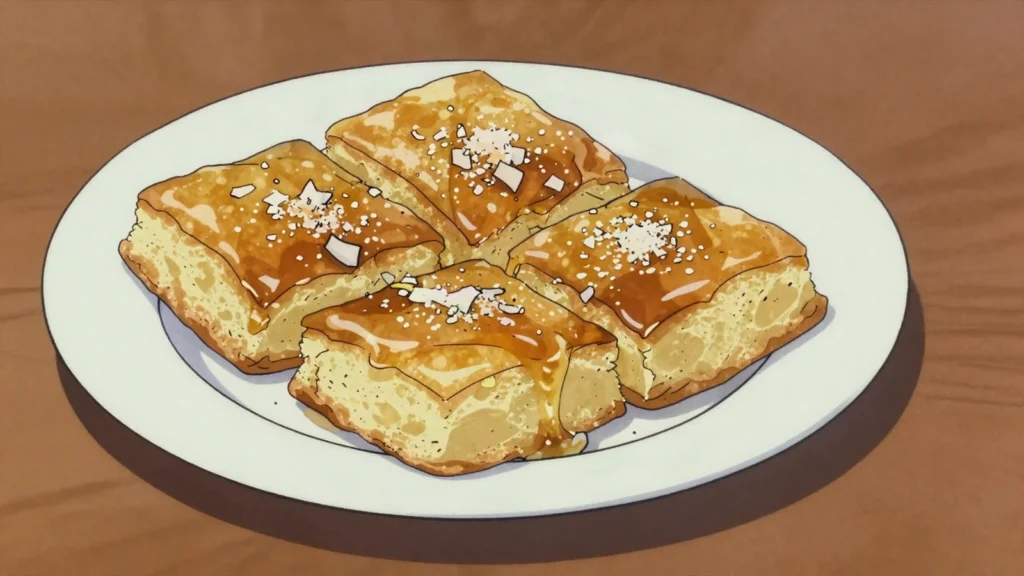
- cut into squares
- or diamonds
- at celebrations
Directions
- Put the sugar and water in a pan. Add the lemon peel and cinnamon. Warm it gently until the sugar dissolves. Stir it until no grains remain. Bring the whole pot up to a boil.
- Let it boil for about ten minutes. It should still be quite thin. Stir the lemon juice in at the end. Acid stops the sugar crystallising. Add it after the boiling is done. Let the syrup cool completely. It must be cold for a hot cake. Whisk the eggs and sugar together.
- Whisk them until pale and thick. Give it a good five full minutes. Whisk in the yoghurt and the oil. Add the lemon zest in with them. Adding the dry is the next step here.
- Mix the semolina, flour and baking powder. Fold them into the wet mixture. Fold rather than beating it hard. Stop as soon as it comes together. Let the batter stand for ten minutes. Pour it into a lined baking tin. About three centimetres is right.
- Bake it at one hundred and eighty degrees. Give it about thirty-five minutes. Take it out when it is just done. Cut the hot cake into squares at once. Cut right down through to the tin. Cut it into squares or diamonds. Do it while the cake is still hot. Cut straight lines one way first. Pour the cold syrup over the hot cake.
- Pour it slowly and quite evenly. Cover the whole surface as you go. Let each ladleful soak in a little. Keep pouring until it is all used. Leave the cake to absorb the syrup. Give it at least two full hours. Spoon it back over the top again. It absorbs slowly if given time.
- Scatter coconut or walnuts over it. Scatter them once it has soaked. Lift the squares out with a spatula. Lift them cleanly one at a time. Serve them all on a flat plate. It keeps five days at room temperature.
Technique
- The whole technique of these cakes is the temperature difference: hot cake takes cold syrup, or cold cake takes hot syrup, but never both at the same temperature. Both hot makes it soggy and both cold means it barely absorbs — the difference is what drives absorption, and it is a genuinely real effect. Pouring cold syrup over the hot cake is the more common route.
- Cut the hot cake into squares or diamonds right down to the tin before any syrup goes on, since those cuts let it reach every side — an uncut cake soaks only from the top.
- Boiling sugar syrup is far hotter than boiling water, sticks to skin and keeps burning, so never touch or taste it while hot.
Substitutions
- Chopped walnuts scatter over instead of coconut; walnuts are visible on top but tree nut allergy can be severe, so say clearly if you have used them.
- Melted butter stands in for the oil, and the yoghurt is doing real work — it gives a tender moist crumb and its acid reacts with the baking powder for extra lift.
Variations
- Semolina absorbs syrup without collapsing where a flour sponge would go to mush, its grains staying distinct as they soak; the resulting grainy crumb is characteristic rather than a fault.
- Boil the syrup only about ten minutes so it stays quite thin and barely coats a spoon — a thick syrup will not soak in — and stir the lemon juice in at the end, since it stops crystallisation and long boiling drives its flavour off.
- Give it at least two hours to soak and preferably overnight; if syrup pools beneath, it was too thick or the cake overbaked, so spoon it back over and give it time.
History
Semolina cake soaked in sugar syrup, from the Ottoman revani, served in squares at celebrations.
Frequently asked questions
What is Ravanija?
Ravanija is a dessert from North Macedonia: syrup-soaked semolina sponge cake. Semolina cake soaked in sugar syrup, from the Ottoman revani, served in squares at celebrations.
How long does Ravanija take to make?
Ravanija takes 25 minutes of preparation and 40 minutes of cooking. The recipe makes serves 12. It is rated medium to make.
What can I substitute in Ravanija?
Yes, within limits. Chopped walnuts scatter over instead of coconut; walnuts are visible on top but tree nut allergy can be severe, so say clearly if you have used them. Melted butter stands in for the oil, and the yoghurt is doing real work — it gives a tender moist crumb and its acid reacts with the baking powder for extra lift.
What is the most important thing to get right in Ravanija?
Put the sugar and water in a pan. Add the lemon peel and cinnamon. Warm it gently until the sugar dissolves. Stir it until no grains remain. Bring the whole pot up to a boil.