
Ingredients
Vegetables
- 3 kgred peppers, ideally roga or kapija
- 1 kgaubergines
- 1 kgripe tomatoes
- 3hot peppers, optional
Also
- 1whole head of garlic
- 200 mlsunflower oil
- 3 tbspred wine vinegar
- 2 tbspsalt
- 1 tbspsugar
- black pepper
Equipment
- sterilised jars with lids
Directions
- Use fleshy red roasting peppers, roga or kapija, which are long and pointed and have thick walls. Thin-walled salad peppers give a watery relish, and the whole thing depends on the flesh being meaty.
- Roast the peppers whole over an open fire, on a barbecue or under a very hot grill. Turn them until the skins are blackened and blistered all over. Take the skins genuinely black. Roast the aubergines whole alongside them until they collapse.
- Put everything into a large covered pot or a bag as it comes off the heat and leave it 20 minutes. The covered rest steams the skins loose, and peeling without it takes half the flesh away with the skin.
- Peel the peppers and aubergines, pulling the skins off with your fingers. Never rinse them under the tap while peeling. Deseed the peppers and pull out the stems. Put the peeled flesh in a colander and let it drain for at least an hour, or overnight. Undrained, the pindjur never thickens and it will not keep.
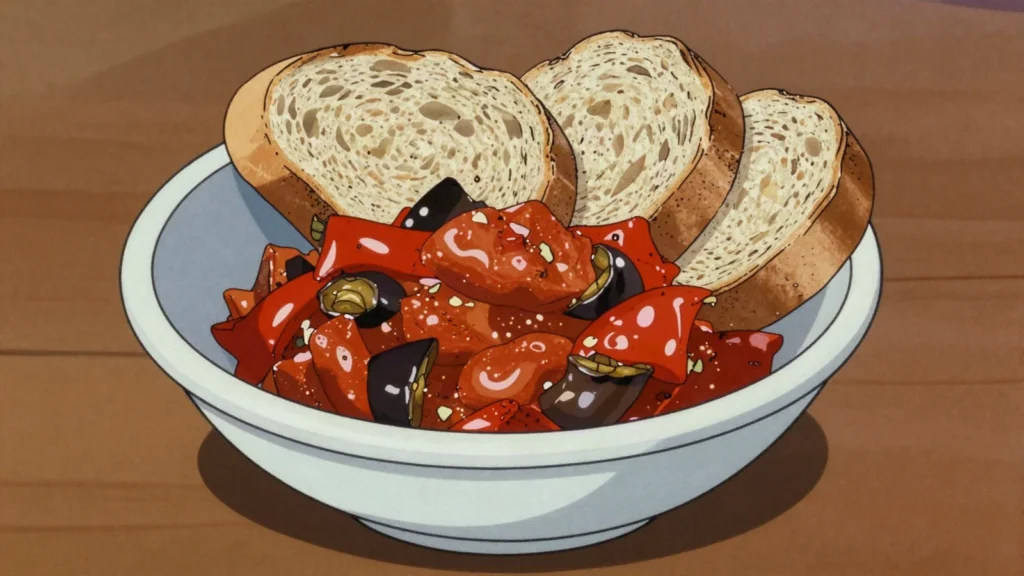
- Discard the tomato seeds and their jelly, which is mostly water. Chop everything coarsely with a knife, or pulse it very briefly. Keep it chunky. Pindjur should have visible pieces, and blending it smooth turns it into ajvar. Put the oil in a wide heavy pot and heat it, then add the chopped vegetables, garlic, salt and sugar. Now cook it slowly for 1 hour 30 minutes to 2 hours, stirring often.
- Stir it regularly and scrape the base with a wooden spoon, because it catches and burns easily as it thickens. Use a wide pot rather than a deep one, so the water evaporates at a reasonable rate. It is ready when it has darkened, thickened and the oil rises to the surface.
- Stir in the vinegar and black pepper at the end. The vinegar goes in last, both for flavour and because its acidity helps the preserve keep. Spoon it boiling hot into sterilised jars, seal them, and turn them upside down to cool. Fill them hot and seal immediately, which is what creates the vacuum.
- Cover the surface of each jar with a film of oil before sealing, which keeps air off it. It keeps a year in a cool dark place and it is made in autumn to be eaten all winter.
Technique
- Pepper-roasting season in September is a communal event in North Macedonia and Serbia, done outdoors in large batches.
- Once opened, a jar keeps a couple of weeks in the fridge.
- Ljutenica is the closely related Bulgarian version, usually hotter.
Substitutions
- Any thick-walled red pepper.
- Jarred roasted peppers, drained very well, which is a considerable compromise.
Variations
- Made hot, with more chilli.
- Ajvar, blended smooth and without tomato.
- Ljutenica, the Bulgarian version.
History
Made at the same autumn pepper-roasting as ajvar but with tomato and aubergine added, then jarred as a winter spread.
Frequently asked questions
What is Pindjur?
Pindjur is a sauce & condiment from North Macedonia: roasted pepper, tomato and aubergine relish, chunkier than ajvar. Made at the same autumn pepper-roasting as ajvar but with tomato and aubergine added, then jarred as a winter spread.
How long does Pindjur take to make?
Pindjur takes 1 hr of preparation and 2 hr of cooking. The recipe makes about 4 jars. It is rated medium to make.
What can I substitute in Pindjur?
Yes, within limits. Any thick-walled red pepper. Jarred roasted peppers, drained very well, which is a considerable compromise.
What is the most important thing to get right in Pindjur?
Use fleshy red roasting peppers, roga or kapija, which are long and pointed and have thick walls. Thin-walled salad peppers give a watery relish, and the whole thing depends on the flesh being meaty.