
Ingredients
Mash
- 50 kgvery ripe white mulberries, picked from sheets spread under the tree
- 5 litresclean water, only if the mash is too thick to stir
- no sugar in a traditional batch
Fermentation
- a food-grade vat of 80 litres with a loose lid
- wild yeast on the fruit, or 20 g wine yeast
- an ambient temperature of 18 to 22°C (70°F)
Distillation
- a copper alembic with condenser coil and water bath
- rye dough, to seal the still head
- an alcoholmeter
To serve
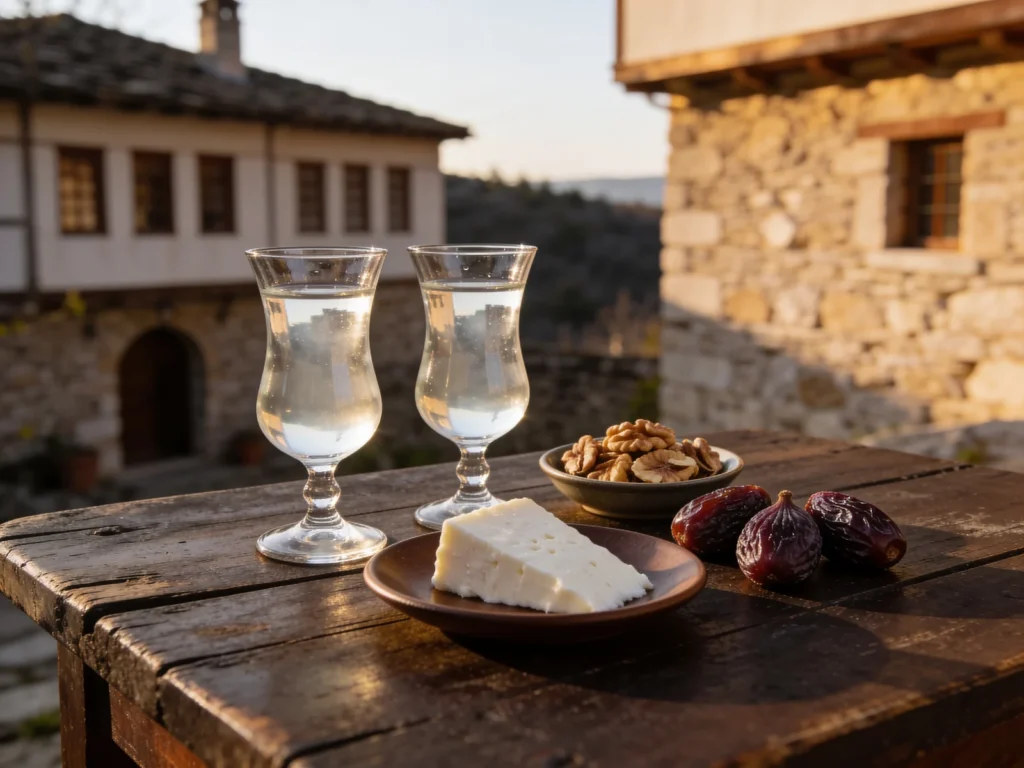
- 40to 50 ml at room temperature
- small tulip or straight glasses
- walnuts, white cheese and dried figs
Directions
- Shake the tree over clean sheets in high summer and gather only ripe, soft, pale fruit; unripe mulberries are astringent and green stems taint the run.
- Crush the berries lightly by hand into the vat, keeping stems and leaves out, and do not wash them, since the wild yeast lives on the skins. Mulberry is low in acid and ferments slowly, so it is more prone to spoiling than grape; if it smells of vinegar or nail varnish, discard it.
- Cut away the first 1 percent of the run as heads, which smell sharply of solvent and carry the methanol, and never keep them. Collect the heart from about 80 percent down to 50 percent, watching for the moment the aroma turns from honeyed and floral to wet cardboard, and cut to tails there.
- Rest the spirit in glass for at least two months, reduce with clean water to 43 to 45 percent, and serve at room temperature in small glasses with walnuts and cheese.
Technique
- Mulberry raki is prized in Albania, Kosovo and North Macedonia for its perfume, which comes through as honey, hay and white flowers, and it is usually distilled stronger than grape raki.
- Because mulberry mash is low in acid, many distillers add a little citric acid or a splash of lemon to bring the pH to about 4, which protects the ferment from bacteria.
- The heads cut is a safety step, not a matter of taste. Poorly cut fruit spirits carry methanol at dangerous levels, and home distilling is illegal in most countries outside the Balkans.
Substitutions
- Black mulberries can be used and give a darker, jammier spirit, though the classic is made from the white fruit.
- If you cannot distil, look for Balkan dudova rakija or Turkish dut rakisi, which are the same drink under different names.
Variations
- A Kosovar version rests the spirit on a few fresh mulberries for a week before reduction.
- Some highland distillers blend one part mulberry to three parts grape raki for a lighter, everyday bottle.
History
Distilled in southern Albania from white mulberries, trees planted for silkworm rearing under Ottoman rule.
Frequently asked questions
What is Raki mani?
Raki mani is a wine & spirit from Albania: clear brandy distilled from white mulberries, strong and fragrant. Distilled in southern Albania from white mulberries, trees planted for silkworm rearing under Ottoman rule.
How long does Raki mani take to make?
Raki mani takes 2 hr over the season of preparation and 3 to 6 weeks fermenting plus 1 day distilling of cooking. The recipe makes about 4 litres of 45 percent spirit from 50 kg of fruit. It is rated hard to make.
What can I substitute in Raki mani?
Yes, within limits. Black mulberries can be used and give a darker, jammier spirit, though the classic is made from the white fruit. If you cannot distil, look for Balkan dudova rakija or Turkish dut rakisi, which are the same drink under different names.
What is the most important thing to get right in Raki mani?
Crush the berries lightly by hand into the vat, keeping stems and leaves out, and do not wash them, since the wild yeast lives on the skins. Mulberry is low in acid and ferments slowly, so it is more prone to spoiling than grape; if it smells of vinegar or nail varnish, discard it.