
Ingredients
What is in the beer (industrial recipe, not a home process)
- two-row malted barley, pale, giving around 10.5 to 11 degrees Plato of wort
- maize or rice adjunct, roughly 20 to 30 per cent of the grist, for lightness and pale colour
- noble-type hop extract to about 12 to 16 IBU, low bitterness by design
- bottom-fermenting lager yeast, Saccharomyces pastorianus
- brewing liquor from the Buenos Aires aquifer, treated to a soft profile
The serve
- 1 litrebottle of Quilmes Clasica, at 3 to 4°C (40°F)
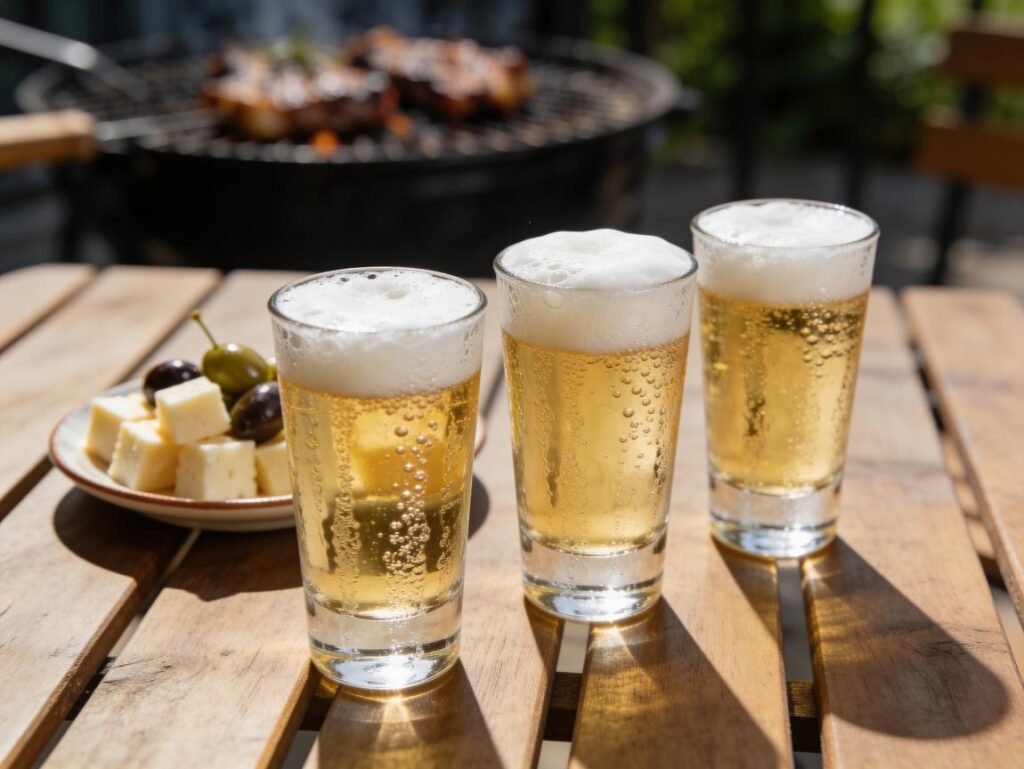
- small stemmed or straight glasses, chilled
- no ice, no lime
What it goes with
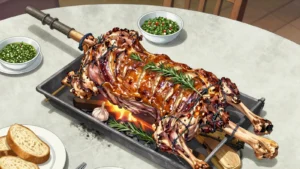
- an asado, a picada, empanadas, a football match
Directions
- Understand the origin: Otto Bemberg, a German-Argentine, opened the brewery in the town of Quilmes on the southern edge of Buenos Aires in 1888, and the beer took the name of the town, which took it from the Kilme people forcibly resettled there.
- Milled malt and cooked maize or rice are mashed at around 63 to 72°C (160°F) to convert starch into fermentable sugar; the adjunct is what makes the beer pale, thin-bodied and dry rather than bready.
- The wort is lautered, boiled about an hour with a low hop charge, then whirlpooled and chilled to roughly 10°C (50°F).
- Lager yeast ferments it cool for about a week, then the beer is lagered near 0°C (30°F) for two weeks or more, which drops the yeast, rounds the sulphur out and gives the clean finish.
- The beer is filtered bright, carbonated to roughly 2.6 volumes and bottled at about 4.9 per cent alcohol; the returnable litre bottle, the porron half-litre and the draught chopp are the three formats you meet in Argentina.
- To serve it properly, chill the bottle to 3 to 4°C (40°F), hold the glass at 45 degrees and pour steadily down the side, straightening at the end to raise a finger of foam.
- Pour for everyone else before yourself, top up other people’s glasses as they empty, and put the bottle back on the table rather than holding it; the litre is a shared object.
- Drink it fast and cold, with salty food. It is built to refresh in summer heat, not to be nosed.
Technique
- This is a mass-produced lager, not a home recipe. The description above is what actually happens at the Quilmes plant; brewing a passable clone at home is possible but the water treatment, filtration and long cold lagering are what give the industrial version its clarity and neutrality.
- The style is an international pale lager, not a German pilsner. Judging it by pilsner standards misses the point: low bitterness, high carbonation and extreme cold are deliberate.
- Quilmes has been owned by AB InBev since 2006, and its blue-and-white label deliberately mirrors the national flag, which is why the beer functions as a patriotic shorthand.
Substitutions
- Outside Argentina, any clean international pale lager served brutally cold, such as a standard Mexican or Brazilian lager, fills the same role at the table.
Variations
- Quilmes Cristal is the crisper, more filtered line; Quilmes Bock is a darker seasonal; Quilmes Stout is a sweeter dark version sold in winter.
- In summer, some drinkers cut the lager half-and-half with lemon soda, a shandy known locally as clara.
History
Brewed since 1888 at Quilmes near Buenos Aires by German immigrant Otto Bemberg; the town takes its name from the Quilmes people.
Frequently asked questions
What is Quilmes?
Quilmes is a wine & spirit from Argentina: pale lager in a litre bottle, shared at asados and football matches. Brewed since 1888 at Quilmes near Buenos Aires by German immigrant Otto Bemberg; the town takes its name from the Quilmes people.
How long does Quilmes take to make?
Quilmes takes 5 min to serve of preparation and Industrial brewing takes about 3 weeks from mash to bottle of cooking. The recipe makes 1 litre bottle, shared between 3 or 4 glasses. It is rated easy to make.
What can I substitute in Quilmes?
Yes, within limits. Outside Argentina, any clean international pale lager served brutally cold, such as a standard Mexican or Brazilian lager, fills the same role at the table.
What is the most important thing to get right in Quilmes?
Milled malt and cooked maize or rice are mashed at around 63 to 72°C (160°F) to convert starch into fermentable sugar; the adjunct is what makes the beer pale, thin-bodied and dry rather than bready.