
Ingredients
Fruit
- 1 kgfirm fruit: sour cherries stoned, whole small apricots, quince cut into wedges, or whole carrots cut into batons
- 700 gwhite sugar
- 200 mlwater
- juice of 1 lemon
- 4cardamom pods, cracked
- 1 tbsprosewater
For quince or carrot moraba
- 1cinnamon stick
- 1 tsplemon zest, pared in strips
Equipment
- 3clean 350 ml jars with lids, sterilised in a 120°C (250°F) oven for 15 minutes
Directions
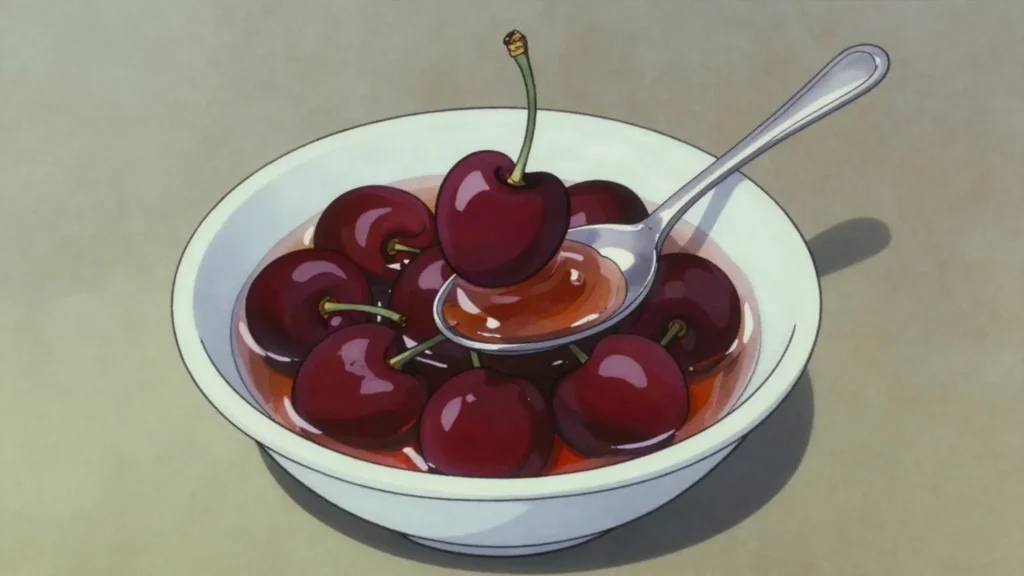
- Prepare the fruit whole or in large pieces; the point of a moraba, unlike a jam, is that the fruit stays intact and glossy and you can lift out a whole cherry or apricot on a spoon.
- Layer the fruit with the sugar in a wide bowl and leave it overnight in a cool place. The sugar draws out the juice and firms the fruit so it holds its shape in the syrup.
- Next day, pour the accumulated syrup into a wide heavy pan with the 200 ml of water and the cardamom, and bring it to a boil.
- Boil the syrup alone for 8 to 10 minutes, until it thickens slightly and is reduced by about a quarter; concentrating the syrup first keeps the fruit from overcooking.
- Slide the fruit in and bring it back to a bare simmer. For quince and carrot, add the cinnamon and lemon zest now and cook 45 to 55 minutes; for cherries and apricots, 20 to 25 minutes is enough.
- Skim off any foam that rises, and shake the pan rather than stirring, so the fruit is not broken up.
- Add the lemon juice in the last 5 minutes to set the syrup and stop it crystallising later.
- Test the syrup by dripping a little onto a cold plate: it should form a thick bead that wrinkles when nudged, at about 105°C (225°F). Quince will also have turned from pale yellow to deep ruby.
- Take the pan off the heat, stir in the rosewater, and let the moraba stand 10 minutes so the fruit settles and reabsorbs syrup.
- Ladle into the sterilised warm jars, making sure the fruit is submerged, seal and cool. Store in a cool dark place and refrigerate once opened; it will keep a year unopened.
Technique
- Moraba sits at the tea table, not in the cake tin. A spoonful goes onto bread, into yoghurt, or straight into the mouth between sips of green tea.
- The overnight sugaring is what separates a moraba from a jam. Skip it and the fruit collapses into a purée the moment it hits hot syrup.
- The lemon juice is doing two jobs: it supplies acid for the pectin to set against, and it stops the sugar recrystallising in the jar over the winter.
- Quince moraba turns red on its own through long slow cooking, as the tannins oxidise. If yours is still yellow, it has not cooked long enough.
Substitutions
- No rosewater: use an extra pod of cardamom or a strip of orange peel. Under-ripe firm plums or figs behave much like apricots and are common village moraba fruits.
Variations
- Moraba-e alu bokhara, made with whole sour plums, is the most common in Kabul households.
- Moraba-e zardak, a carrot preserve scented with cardamom, is eaten with bread at breakfast.
- Moraba-e behi, the quince version, is the prestige one, served to important guests.
History
Autumn preserving of apricots, cherries and quince from northern Afghan orchards; the technique and the name come from Persian kitchens.
Frequently asked questions
What is Moraba?
Moraba is a sauce & condiment from Afghanistan: whole fruit preserved in thick sugar syrup, spooned onto bread or eaten with tea. Autumn preserving of apricots, cherries and quince from northern Afghan orchards; the technique and the name come from Persian kitchens.
How long does Moraba take to make?
Moraba takes 25 min plus overnight standing of preparation and 1 hr of cooking. The recipe makes about 1 kg, 3 jars. It is rated medium to make.
What can I substitute in Moraba?
Yes, within limits. No rosewater: use an extra pod of cardamom or a strip of orange peel. Under-ripe firm plums or figs behave much like apricots and are common village moraba fruits.
What is the most important thing to get right in Moraba?
Prepare the fruit whole or in large pieces; the point of a moraba, unlike a jam, is that the fruit stays intact and glossy and you can lift out a whole cherry or apricot on a spoon.