
Ingredients
The rice
- 200 gwhite rice
- long grain or broken rice
- rinsed lightly
- about 1.5 litres water
- adjust to taste
- a good pinch of salt
To serve with it
- kitoza, dried beef strips
- grilled over a fire
- or dried fish, grilled
- or a fried egg
- or salted greens
Sometimes added
- a thumb of ginger, sliced
- a little chopped garlic
- a knob of butter
- for a richer bowl
To drink alongside
- ranovola
- the toasted rice water
- made in the same pot
- or hot tea
Directions
- Rinse the rice only lightly for this dish. Two changes of water is quite enough.
- Put the rinsed rice in a heavy pot. Add the water and the pinch of salt. Use roughly seven parts water to one of rice.
- Adjust it to your own preference. Others make it thick enough to hold a spoon. Bring it to a boil over a high heat. Simmer it uncovered for about thirty minutes.
- Stir it occasionally as it cooks. That helps it thicken slightly. Add more hot water if it becomes too thick. Simmer it longer if it is too thin.
- Add ginger or garlic if you are using them. The name means golden water in Malagasy.
- Grill or fry it briefly before serving. Ladle it into deep bowls with plenty of liquid. Lay the kitoza or fish on top or beside. Serve sakay for those who want heat.
- Serve ranovola alongside in cups. It is warm food on a cool highland morning. Stir constantly, since it catches easily.
Technique
- Use roughly seven parts water to one of rice. That is far more than for plain rice, and it is the whole point — cooking rice loose stretches a small ration across more bowls. It is thrift, and it is also genuinely liked for itself.
- Rinse the rice only lightly, two changes of water at most. The surface starch is wanted here because it clouds and thickens the liquid; over-rinsing gives a thin watery result.
- Use a heavy pot and stir occasionally. Rice porridge scorches easily in a thin pan and a burnt batch tastes burnt throughout.
- Ranovola is not an afterthought. After the rice is served, water is boiled in the pot with the toasted crust still stuck to the base, turning brown and toasty. It is drunk at nearly every meal, costs nothing, and uses what would otherwise be scraped away. It is also considered good for digestion — recorded as a belief, with no medical claim.
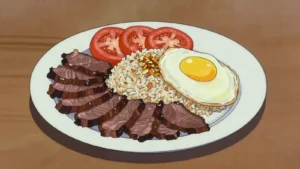
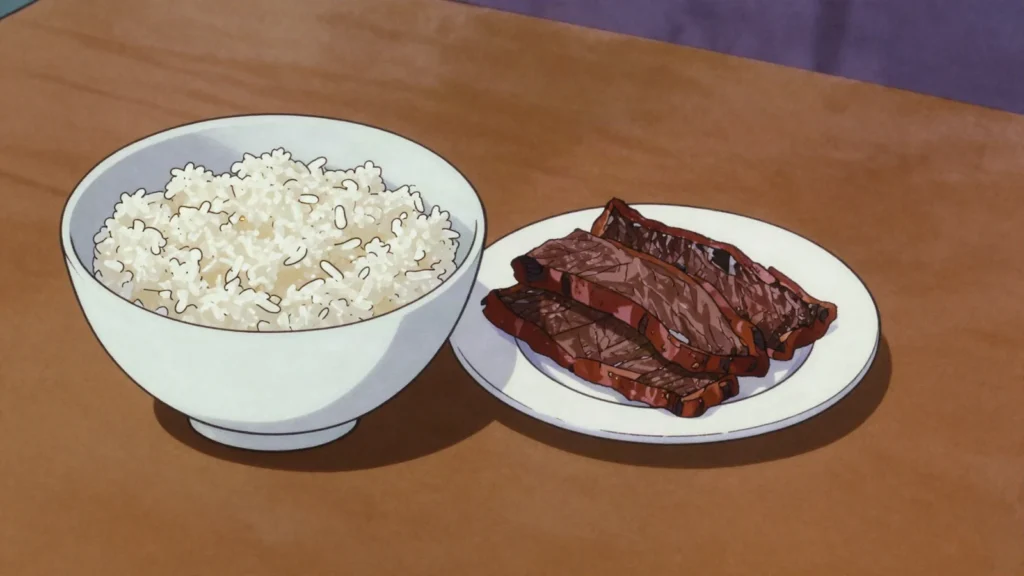
- The porridge is deliberately plain and needs something salty alongside. Kitoza, dried and grilled beef strips, is the classic; dried fish is the coastal alternative and a fried egg the everyday one.
- The atlas gives no home method for drying kitoza. Air-dried meat depends on salt, smoke and practised knowledge to be safe. Buy it from a Malagasy source, or use biltong or bresaola grilled briefly instead.
- Madagascar was settled from Southeast Asia and its language is Austronesian, related to languages of Borneo, despite the island lying off Africa. The terraced highland rice paddies look strikingly like Southeast Asian ones for exactly that reason.
- It is eaten at dawn before work, and Antananarivo sits high enough that highland mornings are genuinely cold. The warmth matters more than it might seem.
Substitutions
- Broken rice replaces whole grain and breaks down faster, giving a softer porridge.
- Biltong or bresaola, grilled or fried briefly, replaces kitoza reasonably well.
- Grilled dried fish replaces the beef and is the coastal version.
- A fried egg replaces both and is the quickest everyday topping.
- Ginger or garlic can be added to the pot, though the plainest and most common version has neither.
- Any fresh chilli paste stands in for sakay.
Variations
- Vary amin’anana is the same principle with chopped greens cooked into the pot.
- A thicker version, closer to a set porridge, is made in some households.
- Some cooks add a knob of butter to each bowl, which is a richer treatment.
- Related rice porridges are eaten across Southeast Asia, from congee to lugaw, on the same principle of stretching rice.
- A version made with leftover cooked rice cooks in about ten minutes.
- Some households serve it with salted greens rather than meat or fish.
History
Rice cooked with extra water stretches a small ration; it is the standard Malagasy breakfast, taken with the water it cooked in.
Frequently asked questions
What is Vary sosoa?
Vary sosoa is a breakfast from Madagascar: loose rice porridge eaten at dawn with kitoza or dried fish. Rice cooked with extra water stretches a small ration; it is the standard Malagasy breakfast, taken with the water it cooked in.
How long does Vary sosoa take to make?
Vary sosoa takes 5 minutes of preparation and 30 minutes of cooking. The recipe makes serves 4. It is rated easy to make.
What can I substitute in Vary sosoa?
Yes, within limits. Broken rice replaces whole grain and breaks down faster, giving a softer porridge. Biltong or bresaola, grilled or fried briefly, replaces kitoza reasonably well. Grilled dried fish replaces the beef and is the coastal version. A fried egg replaces both and is the quickest everyday topping. Ginger or garlic can be added to the pot, though the plainest and most common version has neither. Any fresh chilli paste stands in for sakay.
What is the most important thing to get right in Vary sosoa?
Use roughly seven parts water to one of rice. That is far more than for plain rice, and it is the whole point — cooking rice loose stretches a small ration across more bowls. It is thrift, and it is also genuinely liked for itself.