
Ingredients
Dough
- 500 gplain flour
- 1 tbspbaking powder
- 1½ tsp salt
- 1 tspsugar
- 60 gvegetable shortening or cold butter, cubed
- 280 mlwarm water or whole milk
To fry
- 1.5 litrescoconut or vegetable oil, for deep frying
To serve
- 400 grefried red kidney beans, cooked in vegetable oil with onion and garlic
- 4eggs, scrambled or fried
- 150 gBelizean or mild white cheese, grated
- honey, jam or a dusting of icing sugar
- hot habanero pepper sauce
Directions
- Whisk the flour, baking powder, salt and sugar together, then rub in the shortening with your fingertips until the mixture looks like coarse breadcrumbs.
- Add the warm water gradually and bring the dough together with a fork, then knead for just 2–3 minutes until smooth. Over-kneading makes fry jacks tough rather than puffy.
- Cover with a cloth and rest 30 minutes at room temperature. The rest relaxes the gluten and is the difference between a puffed pillow and a flat biscuit.
- Divide into three balls. Roll each on a lightly floured board into a round about 25 cm across and 3 mm thick — thin, but with no tears or thin patches, which would let steam escape.
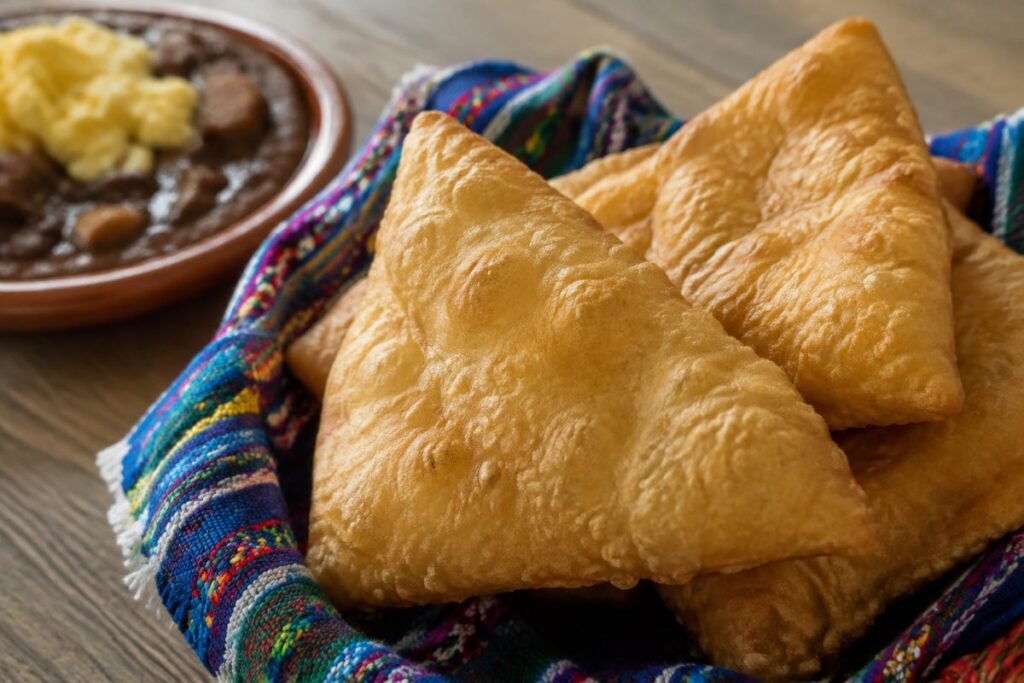
- Cut each round into four triangles like a pizza, and slice a 3 cm slit through the middle of each triangle. The slit is traditional and helps the piece puff evenly rather than ballooning at one end.
- Heat the oil to 190°C (375°F). Slide in one triangle at a time and immediately spoon hot oil over the top surface, or push it under with a slotted spoon.
- It should inflate within 10–15 seconds. Fry 45–60 seconds a side until pale golden and hollow — dark brown means the oil is too cool and the fry jack has drunk it.
- Drain on a rack and serve within minutes, split open and stuffed with refried beans, egg and cheese for breakfast, or torn and dipped in honey or jam.
Technique
- Fry jacks are the Belizean breakfast bread, sold at every roadside stand from six in the morning, always eaten hot and never reheated.
- Oil temperature is everything. Below about 185°C (375°F) they absorb oil and go greasy and heavy; above 200°C (400°F) they colour before they can inflate.
- Roll thin and even. A thick patch will stay doughy inside while the rest is cooked, and the fry jack will not balloon.
- The name is Belizean; the closely related Mexican and Honduran versions are called by other names, and only in Belize is the triangle with a slit standard.
Substitutions
- No shortening: cold butter gives a richer, slightly heavier fry jack, and coconut oil is common in the south of the country.
- Refried beans are usually cooked in vegetable oil or coconut oil in Belize, so the whole plate stays meat-free if you want it to.
Variations
- Sweet fry jacks, sprinkled with cinnamon sugar as they come out of the oil and served with coffee.
- Johnny cakes are the baked sibling, a dense coconut-milk biscuit eaten with the same fillings.
History
Puffed fried dough eaten at breakfast with beans and eggs, made from the same flour dough as Creole bakes and sold at roadside stands.
Frequently asked questions
What is Fry jacks?
Fry jacks is a breakfast from Belize: puffy fried dough triangles with beans, eggs, or jam. Puffed fried dough eaten at breakfast with beans and eggs, made from the same flour dough as Creole bakes and sold at roadside stands.
How long does Fry jacks take to make?
Fry jacks takes 20 min plus 30 min resting of preparation and 20 min of cooking. The recipe makes 4 servings (12 fry jacks). It is rated easy to make.
What can I substitute in Fry jacks?
Yes, within limits. No shortening: cold butter gives a richer, slightly heavier fry jack, and coconut oil is common in the south of the country. Refried beans are usually cooked in vegetable oil or coconut oil in Belize, so the whole plate stays meat-free if you want it to.
What is the most important thing to get right in Fry jacks?
Add the warm water gradually and bring the dough together with a fork, then knead for just 2–3 minutes until smooth. Over-kneading makes fry jacks tough rather than puffy.