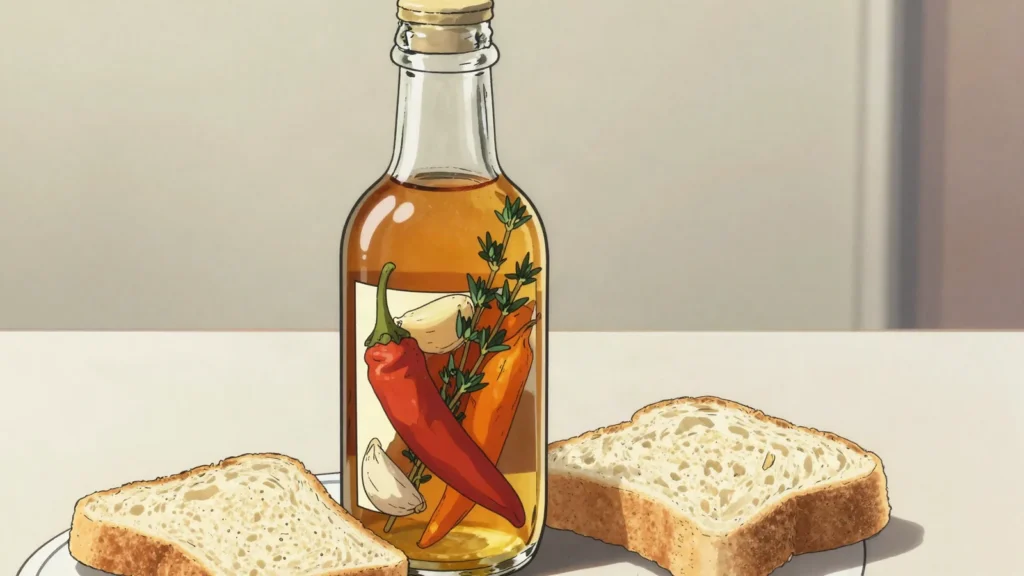

Ingredients
The peppers
- 10hot peppers
- scotch bonnet or bird pepper
- washed and dried
- left whole or split
The liquid
- 500 mldry sherry
- or white rum
- or a mix of both
Sometimes added
- 2garlic cloves, peeled
- a sprig of thyme
- a few peppercorns
- a strip of lime peel
The bottle
- a clean glass bottle
- with a narrow neck
- or a shaker top
Directions
- Wash with soap and plenty of water. Both of them are very hot indeed. Start with whole peppers if unsure. You cannot make it less hot afterwards.
- Put on gloves before handling them. Wash all of the peppers thoroughly. Wash them properly rather than quickly. Dry all the peppers completely. Leave the stems on if you like. Wash the whole bottle thoroughly. Rinse it and dry it completely. A wet bottle dilutes the alcohol.
- Rinse the bottle with boiling water. Let it dry completely afterwards. Drop the peppers into the bottle. Adjust it all to your own taste. Add garlic, thyme or peppercorns. Both of them are done in Barbados. Pour the sherry or rum over them.
- Fill the bottle right to the top. The peppers must be fully submerged. Top it up if they float above it. Dry sherry is the traditional Barbadian choice.
- Keep it sealed tight between uses. Set the bottle somewhere cool and dark. Leave it for at least two weeks. It keeps getting hotter for months.
- Put one drop on a spoon and taste it. One drop is genuinely enough to judge. Add more spirit over the same peppers. Discard all the old peppers then.
- Start again with entirely fresh ones. Serving it is done in a few drops. Shake a few drops onto the food. Start with only one or two drops. Taste it before adding any more. It keeps for years once sealed. Keep it out of direct sunlight.
Technique
- Capsaicin transfers readily from the peppers to hands and then to eyes and skin, causing real and lasting burning. It is oil soluble rather than water soluble, so water alone does not remove it and rinsing eyes with water only spreads it — wear gloves, wash with soap and plenty of water, and use milk or oil rather than water if it reaches skin or eyes.
- Alcohol rather than water is used because capsaicin dissolves readily in it and barely at all in water, so the spirit draws the heat out of the pepper. That is the whole principle, and it also preserves the bottle so it keeps for years without refrigeration — which suited a hot climate before fridges. The finished condiment does contain alcohol; the amount per drop is tiny, but say so if anyone avoids it.
- Dry the peppers and the bottle completely before filling: water dilutes the alcohol, which then preserves less well and can let mould grow. Keep the peppers fully submerged too, pushing them down with a skewer, since any pepper above the liquid can mould.
Substitutions
- Dry sherry is the traditional Barbadian choice and white rum the other common one — sherry gives a rounder softer result and rum a cleaner sharper one; some use both together and all three versions are made.
- Garlic, thyme, peppercorns or lime peel add depth beyond the heat, garlic being the commonest; many bottles have peppers alone, and both are done in Barbados.
Variations
- Whole peppers give a slower gentler extraction and split ones a much faster hotter result. Start whole if unsure, since you can always split them later but cannot make it less hot afterwards.
- Two weeks gives a usable heat and a month a much stronger one; it keeps getting hotter for months with no real upper limit. Taste it one drop at a time on a spoon rather than by the spoonful.
- Barbados was a sugar plantation colony whose economy was built on enslaved labour, and the food culture formed under that system — which the atlas records rather than skipping.
History
A Barbadian table condiment of the plantation era, kept in a bottle and splashed into soup and fish.
Frequently asked questions
What is Pepper wine?
Pepper wine is a sauce & condiment from Barbados: hot peppers steeped in sherry or rum, shaken a few drops at a time. A Barbadian table condiment of the plantation era, kept in a bottle and splashed into soup and fish.
How long does Pepper wine take to make?
Pepper wine takes 15 minutes plus steeping of preparation and no cooking at all. The recipe makes about 500 ml. It is rated easy to make.
What can I substitute in Pepper wine?
Yes, within limits. Dry sherry is the traditional Barbadian choice and white rum the other common one — sherry gives a rounder softer result and rum a cleaner sharper one; some use both together and all three versions are made. Garlic, thyme, peppercorns or lime peel add depth beyond the heat, garlic being the commonest; many bottles have peppers alone, and both are done in Barbados.
What is the most important thing to get right in Pepper wine?
Put on gloves before handling them. Wash all of the peppers thoroughly. Wash them properly rather than quickly. Dry all the peppers completely. Leave the stems on if you like. Wash the whole bottle thoroughly. Rinse it and dry it completely. A wet bottle dilutes the alcohol.