
Ingredients
Grapes
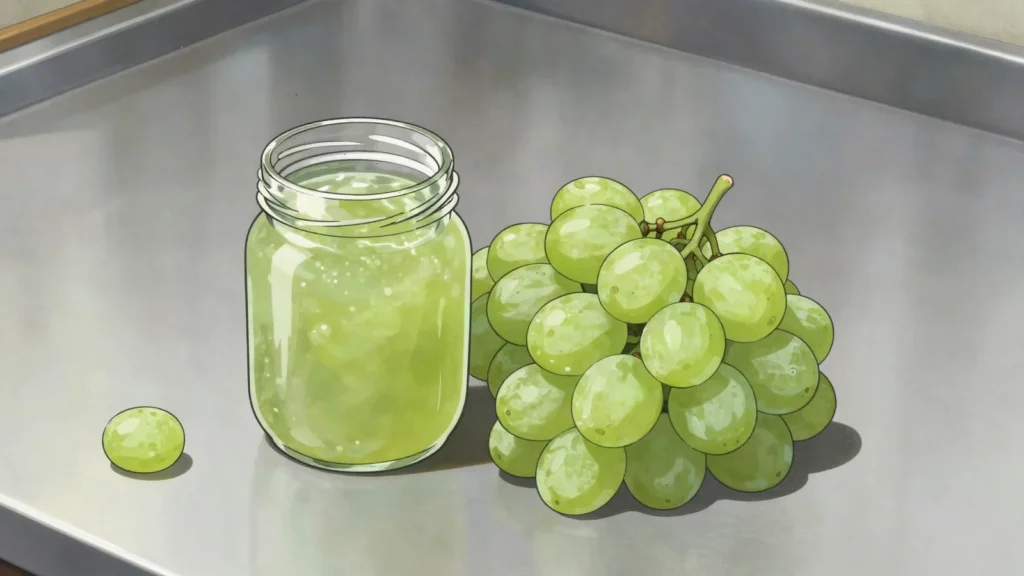
- 3 kgunripe green grapes
- still hard and sour
To preserve
- 1 teaspoonsalt per litre, optional
- clean bottles with tight caps
Equipment
- a large bowl
- a cloth or fine sieve
- a mortar or a food mill
Directions
- Pull all the grapes off their stems. Discard any grape that looks damaged. Discard any that have started to soften. Rinse them thoroughly in cold water.
- Drain them well in a colander. Put the grapes in a large bowl. Crush them with a wooden masher or clean hands. Work through the whole batch until every grape bursts. The juice should run out freely.
- Line a sieve with muslin or a clean cloth. Set it over a large clean bowl. Ladle the crushed grapes into the cloth. Let the juice run through under its own weight. Give it at least one full hour.
- Squeeze firmly but not brutally. Stop when what comes out turns thick and cloudy. Discard the skins and the seeds. Let the strained juice stand for a few hours.
- Pour the clear juice off carefully. Leave all the sediment behind. Strain it once more through a fine cloth. Pour the juice into clean dry bottles. Fill them nearly up to the top. Add a teaspoon of salt per litre if you want. Seal them tightly and label them. Storing it needs a little care.
- Keep the bottles somewhere cool and dark. Unopened bottles keep for about a year. Discard any bottle that smells of yeast or alcohol. Some households pasteurise it to prevent that.
- Heat the juice to 80C and bottle it hot. Do not boil it, which dulls the flavour. Add a splash to lamb and vegetable stews. Use it in the cooking liquid for dolma. Add it to soups at the end of cooking.
Technique
- Verjuice was widely used across medieval Europe and the Middle East before lemons became cheap and common.
- It survives in everyday use across Iran, Azerbaijan and parts of the Caucasus.
Substitutions
- Bottled verjuice is sold in Middle Eastern shops and in some delicatessens.
- Lemon juice diluted with a little water is the nearest substitute, though it is sharper and more one-dimensional.
Variations
- Some households boil the juice down to concentrate it.
- Dried unripe grapes, ground to a powder, are used the same way in some regions.
- A version made from unripe plums is used in parts of the Caucasus.
History
Verjuice pressed in late summer from green grapes, a Persianate souring agent used across Azerbaijani cooking.
Frequently asked questions
What is Abgora?
Abgora is a sauce & condiment from Azerbaijan: sour juice pressed from unripe grapes, used instead of lemon in stews. Verjuice pressed in late summer from green grapes, a Persianate souring agent used across Azerbaijani cooking.
How long does Abgora take to make?
Abgora takes 45 minutes of preparation and none of cooking. The recipe makes about 1 litre. It is rated easy to make.
What can I substitute in Abgora?
Yes, within limits. Bottled verjuice is sold in Middle Eastern shops and in some delicatessens. Lemon juice diluted with a little water is the nearest substitute, though it is sharper and more one-dimensional.
What is the most important thing to get right in Abgora?
Drain them well in a colander. Put the grapes in a large bowl. Crush them with a wooden masher or clean hands. Work through the whole batch until every grape bursts. The juice should run out freely.