
Ingredients
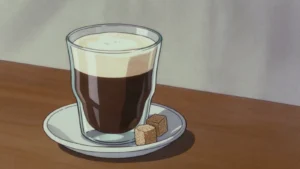
The coffee
- 60 gTanna arabica beans
- whole, roasted
- or 250 g green Tanna beans
- to roast yourself
- medium roast is the usual choice
The water
- 700 mlfresh cold water
- filtered if your tap water is hard
- heated to about 94 degrees
- just off the boil
Sometimes added
- sugar, to taste
- coconut milk
- or evaporated milk
- a little grated nutmeg
Equipment
- a burr grinder, if possible
- a plunger pot or a pour-over cone
- paper or metal filter
- a heavy pan or drum, to roast
- a metal colander, to cool beans
Directions
- Keep them away from light and away from heat. Do not store coffee in the fridge or the freezer. Heat a heavy pan over a medium to high flame. Add a single layer of green beans to the pan. Do not crowd it, or they will roast unevenly. Stir them constantly and never leave them alone. After a few minutes you will hear a cracking sound.
- Tip them out into a metal colander immediately. Toss them in the air to cool them quickly. Do this outdoors, because the chaff goes everywhere. Let roasted beans rest for a day before brewing. Freshly roasted beans need to release their gas.
- Dust makes the coffee taste harsh and bitter. Grind coarse for a plunger pot, like coarse sand. Grind medium for a pour-over cone, like table salt. Heat the water to just off a full boil. Let a boiled kettle stand for about thirty seconds. For a plunger pot, warm the pot with hot water first.
- Pour that water away before adding the coffee. Add sixty grams of coffee for seven hundred of water. Pour in just enough water to wet all the grounds. Wait thirty seconds and watch the bed swell.
- Pour in the rest of the water in a steady stream. Stir the surface gently with a wooden spoon. Put the lid on but do not push the plunger down. Let it steep for four minutes by the clock.
- Pour it all out immediately after plunging. Discard that rinse water before you brew. Add the ground coffee and level the bed flat. Pour a little water on and let it bloom.
- Keep the water level below the top of the filter. The whole pour should take about three minutes. Serve the coffee black to taste it properly. Taste is subjective and yours may differ entirely. Never reheat coffee once it has gone cold.
Technique
- Vanuatu is a very small coffee producer by world standards. Tanna coffee is genuinely its best-known agricultural export brand, but the atlas records that without inflating the scale.
- The coffee grows on ash slopes below Mount Yasur, an almost continuously active volcano. The ash is what enriches the soil, and the volcano is also a major draw for visitors to the island.
- Vanuatu sits in the South Pacific cyclone belt, and Cyclone Pam caused severe damage across the country including Tanna in March 2015. Coffee trees take years to recover, and smallholder growers carry that risk directly.
- Home roasting produces a lot of smoke and a lot of papery chaff. Roast outdoors or with a window open and the extractor running, and expect an indoor smoke alarm to go off.
- Cool roasted beans fast in a metal colander. Beans hold enough heat to keep roasting themselves, and slow cooling takes them past the roast you wanted.
- Buy beans by roast date rather than use-by date, and store them airtight at room temperature. The fridge and freezer cause condensation, which does real damage.
Substitutions
- Any single-origin arabica can be brewed by the same method if Tanna beans are unavailable. It will not taste the same, and the atlas will not pretend otherwise.
- Pre-ground coffee works if you have no grinder, but buy it in small quantities and use it within a week or two.
- A pour-over cone replaces a plunger pot; grind a little finer and pour more slowly.
- Coconut milk or evaporated milk replaces fresh dairy, and both are more usual than fresh milk in the islands.
- A stovetop moka pot makes a stronger, more concentrated cup from the same beans; grind fine for it.
Variations
- A dark roast is sold for espresso and gives a heavier, more bitter cup that suits milk drinks.
- Iced black coffee is the everyday tropical version, brewed strong and poured over plenty of ice.
- Some Vanuatu households add grated nutmeg or a little cinnamon to the cup.
- Coffee brewed simply by boiling grounds in a pot and letting them settle is still made in village kitchens.
- Papua New Guinea and Solomon Islands arabicas are the nearest regional relatives, grown at higher altitude and on different soils.
History
Planted on Tanna’s volcanic soils and revived as a smallholder industry in the 1980s, it is Vanuatu’s best-known agricultural brand.
Frequently asked questions
What is Tanna Coffee?
Tanna Coffee is a drink from Vanuatu: arabica grown on volcanic ash slopes below Mount Yasur, roasted in Port Vila. Planted on Tanna’s volcanic soils and revived as a smallholder industry in the 1980s, it is Vanuatu’s best-known agricultural brand.
How long does Tanna Coffee take to make?
Tanna Coffee takes 10 minutes of preparation and 20 minutes, if roasting green beans of cooking. The recipe makes makes 4 cups. It is rated easy to make.
What can I substitute in Tanna Coffee?
Yes, within limits. Any single-origin arabica can be brewed by the same method if Tanna beans are unavailable. It will not taste the same, and the atlas will not pretend otherwise. Pre-ground coffee works if you have no grinder, but buy it in small quantities and use it within a week or two. A pour-over cone replaces a plunger pot; grind a little finer and pour more slowly. Coconut milk or evaporated milk replaces fresh dairy, and both are more usual than fresh milk in the islands. A stovetop moka pot makes a stronger, more concentrated cup from the same beans; grind fine for it.
What is the most important thing to get right in Tanna Coffee?
Keep them away from light and away from heat. Do not store coffee in the fridge or the freezer. Heat a heavy pan over a medium to high flame. Add a single layer of green beans to the pan. Do not crowd it, or they will roast unevenly. Stir them constantly and never leave them alone. After a few minutes you will hear a cracking sound.