
Ingredients
Chickpeas
- 300 gdried chickpeas
- 1 tspbicarbonate of soda
- water, for soaking and cooking
Sauce
- 150 gtahini
- juice of 2 lemons
- 3 clovesgarlic, crushed with salt
- 100 mlof the chickpea cooking water, or more
- salt
To finish
- 1 tspground cumin
- olive oil, generously
- chopped parsley
- sumac
- a little chilli or Aleppo pepper
To serve
- warm pita or taboon bread
- raw onion
- olives
- pickles
Directions
- Soak the dried chickpeas overnight with the bicarbonate of soda. The bicarbonate raises the pH of the water, which breaks down the pectin in the skins and lets the chickpeas cook far softer than they otherwise would.
- Use dried chickpeas rather than tinned. Tinned ones are firm and never reach the collapsing softness this dish needs. Drain, cover with fresh water, and boil for an hour to an hour and a half. Skim the foam and the loose skins that float to the surface as they cook.
- Cook them until they are genuinely soft, to the point where one crushes to paste between your fingers with no resistance. Undercooked chickpeas are the single reason a musabbaha disappoints, and firm ones will not do.
- Keep the cooking water, which you need for the sauce. Crush the garlic to a smooth paste with a pinch of salt in a mortar. Whisk the tahini with the lemon juice, and it will seize and go thick and grainy. Keep whisking and add cold water a little at a time and it will suddenly loosen into a pale smooth cream.
- Add the garlic paste and enough of the warm chickpea water to bring it to a pouring consistency. Keep the sauce noticeably looser than a hummus. It should run rather than hold, and this is what distinguishes the dish.
- Season it with salt and taste it, adjusting the lemon. Now warm the drained chickpeas through, keeping back a few tablespoons of them. Crush about half the warm chickpeas roughly with a fork or a masher, leaving the rest whole. That mix of crushed and whole is the texture the dish is built on, and blending it smooth turns it into hummus.
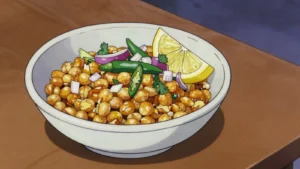
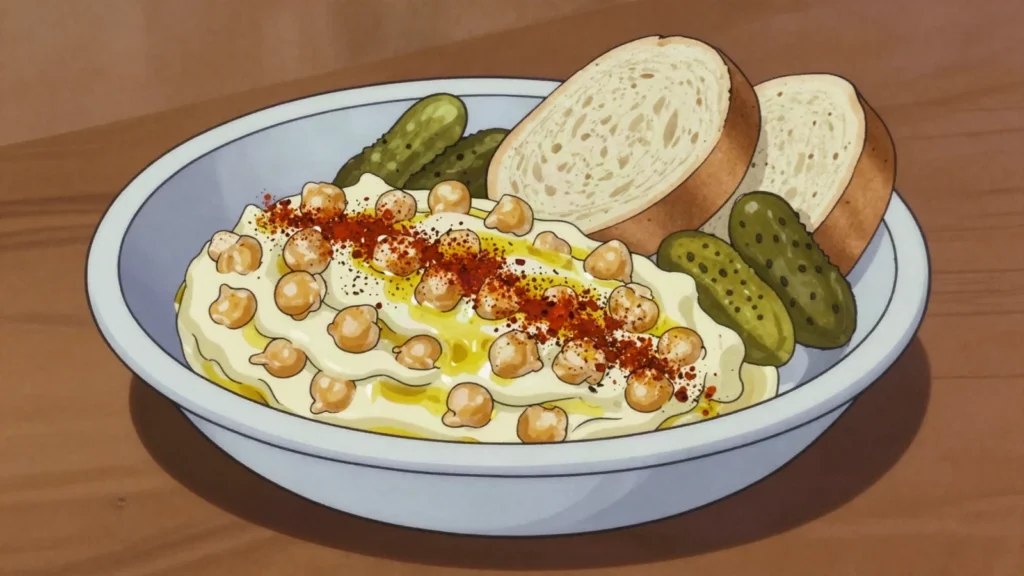
- Spread the crushed and whole chickpeas in a wide shallow dish. Pour the tahini sauce over them generously and scatter the reserved whole chickpeas on top. Dust with cumin and sumac, add a little chilli, and pour a great deal of olive oil over.
- Serve immediately while warm, with hot bread, raw onion and pickles. It is never served cold, which is the other thing separating it from the hummus most people know.
Technique
- Some versions add a spoonful of yoghurt or a hard-boiled egg on top.
- The tahini should be good quality and runny; a stiff bitter tahini shows immediately.
- It does not keep, because the point is that it is warm.
Substitutions
- Tinned chickpeas, simmered a further 20 minutes to soften them.
- Lime in place of lemon at a pinch.
Variations
- With whole cooked fava beans alongside, as a mixed plate.
- Topped with fried pine nuts and lamb.
- Hummus, the smooth blended relative.
History
The swimming cousin of hummus, left chunky and eaten hot for breakfast with bread and raw onion.
Frequently asked questions
What is Musabbaha?
Musabbaha is a salad & side from Palestine: warm whole chickpeas under loose tahini, lemon and cumin. The swimming cousin of hummus, left chunky and eaten hot for breakfast with bread and raw onion.
How long does Musabbaha take to make?
Musabbaha takes 15 min plus overnight soaking of preparation and 1 hr 30 min of cooking. The recipe makes 4 servings. It is rated easy to make.
What can I substitute in Musabbaha?
Yes, within limits. Tinned chickpeas, simmered a further 20 minutes to soften them. Lime in place of lemon at a pinch.
What is the most important thing to get right in Musabbaha?
Soak the dried chickpeas overnight with the bicarbonate of soda. The bicarbonate raises the pH of the water, which breaks down the pectin in the skins and lets the chickpeas cook far softer than they otherwise would.