
Ingredients
Chillies
- 150 gfresh malagueta chillies, small and red
- stems removed
Also
- 6 clovesgarlic
- 1 tspcoarse salt
- 150 mlred palm oil, or olive oil
Optional
- juice of 1 lime
- 1small onion
- 1 tspground ginger
Equipment
- a mortar and pestle
- gloves
Directions
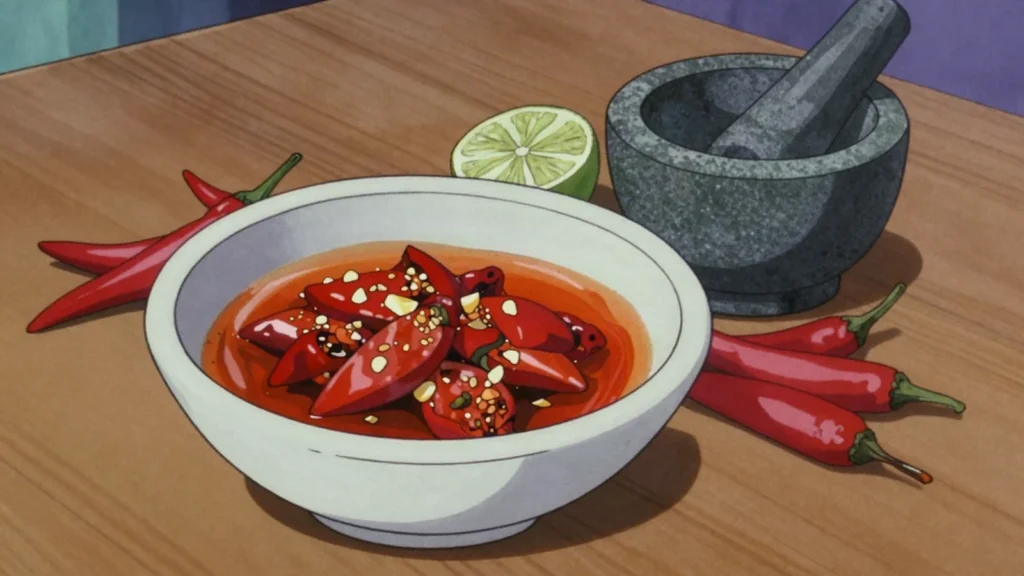
- Pound the chillies with the garlic and coarse salt in a mortar. Use a mortar rather than a blender if you can. Work it to a coarse paste with visible flecks rather than a smooth purée. Piri-piri should have texture.
- Leave the seeds in, which is where much of the heat sits. Warm the palm oil gently in a small pan, but do not let it smoke. Warm the oil only.
- Pour the warm oil over the pounded chilli paste and stir it through. Add the lime juice if using, which brightens it and helps it keep.
- Let it stand at least an hour before using, and it is better the next day. Taste it very cautiously, on the tip of a spoon.
- Spoon it into a clean jar and make sure the oil covers the solids. That layer of oil on top keeps air off it and it will keep several weeks in the fridge.
- Stir it before each use, because the solids settle to the bottom. That is the whole point of it: the pot is cooked mild enough for everyone and the heat is a personal decision at the table.
- Wash your hands, the mortar and the board thoroughly with soap and hot water, and do so before touching your face.
Technique
- Malagueta chillies are small, red and very hot, and they grow throughout the islands.
- Red palm oil is used across São Toméan cooking and gives dishes their orange colour.
- The same sauce blended with lemon and garlic becomes the marinade for piri-piri chicken.
Substitutions
- Any small hot red chilli, adjusting the quantity to its heat.
- Olive oil in place of palm oil, which is milder and less characteristic.
Variations
- Blended with vinegar and lemon as a marinade for grilled chicken.
- Made with onion for a milder table sauce.
- Pili pili, the Central African version.
History
Portuguese ships carried American chilies to São Tomé, where the small malagueta became the standard heat in island cooking.
Frequently asked questions
What is Piri-piri?
Piri-piri is a sauce & condiment from São Tomé and Príncipe: crushed malagueta chili in palm oil, set on the table with everything. Portuguese ships carried American chilies to São Tomé, where the small malagueta became the standard heat in island cooking.
How long does Piri-piri take to make?
Piri-piri takes 15 min of preparation and 10 min of cooking. The recipe makes about 250 ml. It is rated easy to make.
What can I substitute in Piri-piri?
Yes, within limits. Any small hot red chilli, adjusting the quantity to its heat. Olive oil in place of palm oil, which is milder and less characteristic.
What is the most important thing to get right in Piri-piri?
Pound the chillies with the garlic and coarse salt in a mortar. Use a mortar rather than a blender if you can. Work it to a coarse paste with visible flecks rather than a smooth purée. Piri-piri should have texture.