
Ingredients
Aubergine
- 5large aubergines
- salt
- oil, for frying
Stew
- 700 glamb shoulder or shank, in pieces
- 2onions, sliced
- 3 clovesgarlic
- 1 tspground turmeric
- 1 tspblack pepper
- 3 tbsptomato paste
- 3tomatoes, halved
- 700 mlwater
- salt
Souring
- 150 gghooreh unripe grapes, or juice of 2 lemons
- 1 tspsaffron, steeped
To serve
- chelow rice
Directions
- Peel the aubergines, cut them lengthways into thick slabs, salt them heavily, and leave them 1 hour.
- Rinse them, squeeze them gently, and dry them completely.
- Salting and drying properly is what stops them drinking the entire bottle of oil, which is the usual complaint about this dish.
- Fry the slabs in oil until deep golden on both sides and completely soft, then drain them on a rack.
- Fry them rather than roasting them. Roasted aubergine gives a lighter and noticeably lesser stew, and the frying is part of the flavour.
- Brown the lamb in a heavy pot, then set it aside.
- Fry the onions until deep gold, add the garlic, turmeric and pepper, then the tomato paste.
- Fry the tomato paste for 2 minutes until it darkens from bright red to brick.
- Frying the paste is what takes away its raw tinny edge, and it is a step Persian cooks never skip.
- Return the lamb, add the water, cover, and simmer for 1 hour 30 minutes until the meat is tender.
- Now the aubergine goes in, and only now.
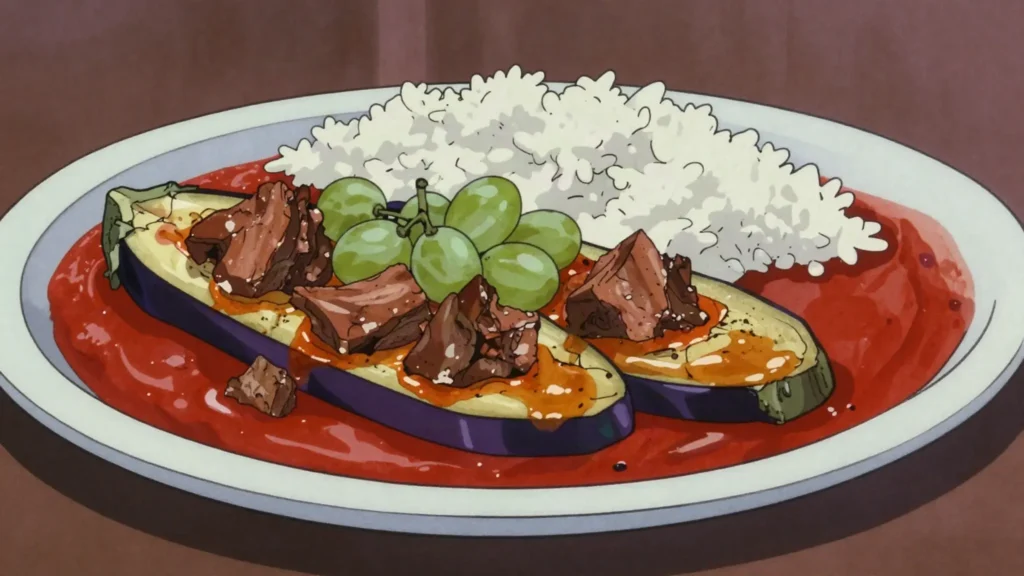
- Lay the fried slabs on top of the stew rather than stirring them in, and do not stir again from this point.
- Stirred in, the aubergine collapses into a purée within minutes. Laid on top it stays in recognisable pieces, which is how the dish is meant to look.
- Add the ghooreh and the halved tomatoes on top, cover, and cook gently for a further 20 to 30 minutes.
- Ghooreh, small hard unripe grapes, are the traditional sourness and they are sharper and fruitier than lemon.
- Trickle the steeped saffron over the surface in the last 5 minutes.
- Taste for salt and sourness, which should be pronounced.
- Serve with chelow, the steamed Persian rice, spooned alongside rather than over it.
Technique
- It is a khoresh, a stew served beside rice rather than poured onto it.
- Ghooreh are sold fresh in season, and in jars in brine or dried the rest of the year.
- It is better the next day and reheats without harm if you are careful not to stir.
Substitutions
- Lemon juice or verjuice in place of ghooreh.
- Beef, or a meatless version with more aubergine.
Variations
- With a layer of fried aubergine on top and yellow split peas in the stew.
- Meatless, for fasting.
- With sour plums instead of unripe grapes.
History
An aubergine stew, cooked with tomato, split peas and meat, and finished with a distinctive sour note from dried lime or lemon juice, developed within the wider Persian khoresh tradition of slow-cooked stews served over rice, in which a specific vegetable, in this case aubergine, forms the dish’s central defining ingredient. Aubergine is traditionally fried before being added to the stew, a step that both develops flavour through caramelisation and reflects a technique found across several other classic Persian and wider Middle Eastern aubergine preparations. Khoresh bademjan remains one of the most widely recognized and commonly prepared dishes within the broader Persian khoresh family, considered a defining example of everyday Iranian home cooking built around slow-simmered vegetable-and-meat stews served with rice.
Frequently asked questions
What is Khoresh bademjan?
Khoresh bademjan is a soup & stew from Iran: lamb and aubergine stew soured with unripe grapes or lemon. An aubergine stew, cooked with tomato, split peas and meat, and finished with a distinctive sour note from dried lime or lemon juice, developed within the wider Persian khoresh tradition of slow-cooked stews served over rice, in which a specific vegetable, in this case aubergine, forms the dish’s central defining ingredient. Aubergine is traditionally fried before being added to the stew, a step that both develops flavour through caramelisation and reflects a technique found across several other classic Persian and wider Middle Eastern aubergine preparations. Khoresh bademjan remains one of the most widely recognized and commonly prepared dishes within the broader Persian khoresh family, considered a defining example of everyday Iranian home cooking built around slow-simmered vegetable-and-meat stews served with rice.
How long does Khoresh bademjan take to make?
Khoresh bademjan takes 30 min of preparation and 2 hr of cooking. The recipe makes 6 servings. It is rated medium to make.
What can I substitute in Khoresh bademjan?
Yes, within limits. Lemon juice or verjuice in place of ghooreh. Beef, or a meatless version with more aubergine.
What is the most important thing to get right in Khoresh bademjan?
Salting and drying properly is what stops them drinking the entire bottle of oil, which is the usual complaint about this dish.