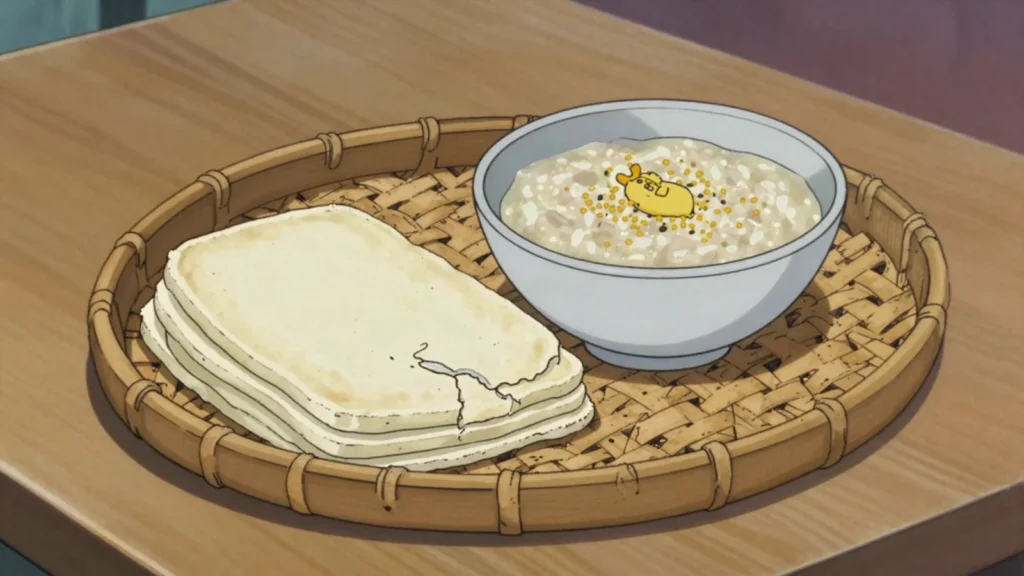

Fulani and Tuareg dried cheese sheets sold along the desert routes. Herders press and dry cheese into hard discs that survive Saharan heat, and the discs travel the caravan roads to be shaved or soaked.
It depends on Saharan sun and humidity to dry a thin curd sheet through before anything can grow in it, and on a traditional coagulant that varies by herding group.
What goes into it
- cow, goat or camel milk
- a plant or stomach coagulant
- sun
How it is made
Milk is curdled with a traditional coagulant, the curd drained and pressed thin between mats, and the sheets laid out in full Saharan sun until they are hard, translucent and almost weightless. The extreme dryness is the entire preservation — there is very little salt and no ripening.
How long it takes: one to three days of drying in Saharan sun
How it is eaten
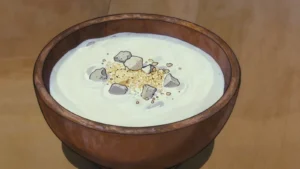
Shaved dry as a snack on the road, or soaked and crumbled into millet porridge and sauces.
History
Fulani and Tuareg herders press and dry cheese into hard discs that survive Saharan heat; the discs travel the caravan routes and are shaved or soaked.
Frequently asked questions
What is Tchoukou?
Tchoukou is a cheese & dairy from Niger: fulani and Tuareg dried cheese sheets sold along desert routes. Fulani and Tuareg herders press and dry cheese into hard discs that survive Saharan heat; the discs travel the caravan routes and are shaved or soaked.
How is Tchoukou made?
Milk is curdled with a traditional coagulant, the curd drained and pressed thin between mats, and the sheets laid out in full Saharan sun until they are hard, translucent and almost weightless. The extreme dryness is the entire preservation — there is very little salt and no ripening. It takes one to three days of drying in Saharan sun.
Can I make Tchoukou at home?
No, and the atlas gives no method for it. It depends on Saharan sun and humidity to dry a thin curd sheet through before anything can grow in it, and on a traditional coagulant that varies by herding group.
What goes into Tchoukou?
Cow, goat or camel milk, a plant or stomach coagulant, sun.
How is Tchoukou eaten?
Shaved dry as a snack on the road, or soaked and crumbled into millet porridge and sauces.