
Ingredients
Dough
- 600 gplain flour
- or half wholemeal
- 1 teaspoonsalt
- about 360 ml warm water
- 2 tablespoonsoil
Meat
- 1 kglamb on the bone
- in large pieces
- 3 tablespoonsghee
- 2onions, chopped
- 6garlic cloves, crushed
The pot
- 4tomatoes, chopped
- 3 tablespoonstomato purée
- 2 tablespoonsbaharat
- 1 teaspoonground turmeric
- 2dried limes, pierced
- 3carrots, in chunks
- 1small pumpkin, in chunks
- 2courgettes, in chunks
- 2potatoes, in chunks
- about 2 litres water
- salt and black pepper
To serve
- in one wide dish
- eaten with the hands
- a chopped salad
Directions
- Put the flour and salt in a large bowl. Make a well in the middle of it. Add warm water gradually as you work. Bring it together into a soft dough. This dough is softer than for thin sheets. Knead it for a good ten minutes. It should become smooth and elastic.
- Wrap the dough and let it rest. Give it at least thirty minutes. Heat the ghee in a very large pot. Add the lamb pieces in batches. Brown them well on all of their sides. Do not crowd the pot at any point. Add the chopped onions to the pot. Cook them for a good ten minutes. Add the crushed garlic to them.
- Cook it for two more full minutes. Add the baharat and the turmeric. Fry them for about thirty seconds. Add the chopped tomatoes to the pot.
- Add the tomato purée along with them. Cook them down for about eight minutes. Put the browned lamb back in the pot. Add the pierced dried limes to it. Add the water and a little salt. Bring it up to a gentle simmer. Cover the pot and let it cook on. Give it at least ninety full minutes.
- Cook it on if it still resists. Divide the rested dough into balls. Make them about the size of an egg. They should all be roughly even. Oil both of your palms lightly. Press a ball flat between your palms. Turn it as you press it all out. Press from the centre outwards.
- Turn the disc a little with each press. That keeps it round rather than oval. Work it until it is thin at the edges. Aim for about half a centimetre. Make them smaller for a narrow pot. Add the carrots and the potatoes first. Give them about eight minutes.
- Lay a few discs on top of the stew. The discs should be submerged in broth. Add some of the pumpkin and courgette. Lay more discs over the top of them. Continue until everything is in the pot. There must be enough to cover everything. Add hot water if it looks short. Cooking them takes about twenty-five minutes. Cover the pot and simmer it gently. Give the dough about twenty-five minutes.
- Check one before taking it off. Do not stir the pot hard at all. Shake the whole pot gently instead. Judging the dough takes a taste. Lift a disc out and cut into it. It should be soft right through. Taste it and adjust the salt as needed.
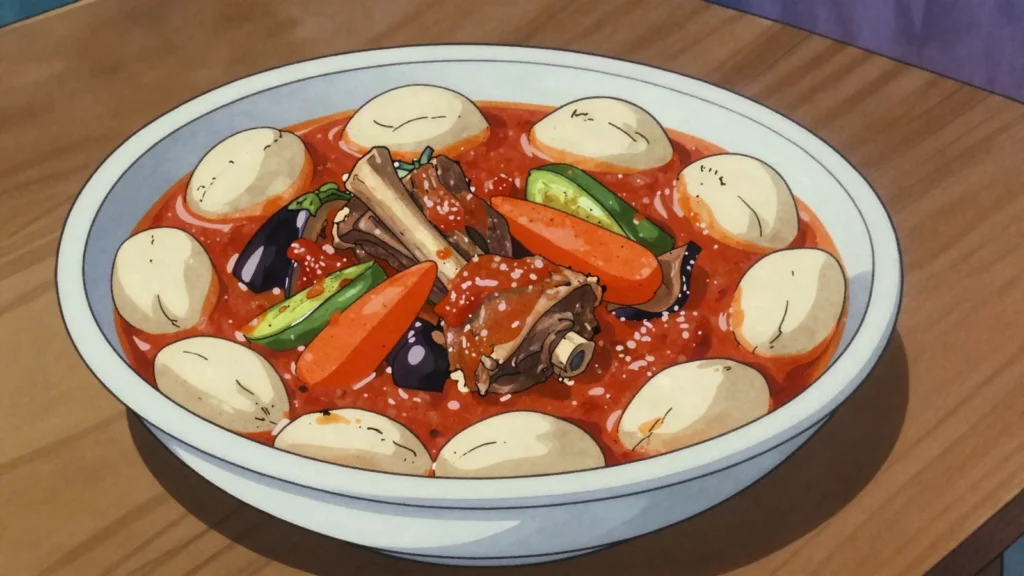
- Add plenty of black pepper as well. They turn bitter if left too long. Remove them once they have given their flavour. Serving it is done in one wide dish. Lift the discs out onto a wide platter. Lay the meat and vegetables over them. Pour the thick broth over everything. Add a chopped salad on the table. It keeps two days refrigerated.
Technique
- The atlas also carries margoog from Saudi Arabia and marqooqa from Qatar, and all three are dough simmered in a meat stew — genuinely close relatives. The real difference is the dough: margoog and marqooqa use very thin sheets torn or cut small, which dissolve into the broth, while mataziz uses thicker hand-pressed discs laid in whole, which stay as distinct pieces. That is a real difference in the eating rather than only a name.
- The discs are pressed out between oiled palms rather than rolled, turning them as you press so they stay round; hand pressing gives uneven thickness, and that unevenness is wanted — thicker parts stay chewy while thinner parts soften right through.
- Push each layer of discs down into the broth before adding more, since dry discs sitting on top stay raw; and do not stir the pot, which breaks them into pieces — shake it or turn it over with a wide spoon.
Substitutions
- Half wholemeal flour gives a nuttier dough and is used in some households.
- The vegetables vary with the season, with pumpkin, courgette, carrot and potato usual.
Variations
- Najd is the high inland plateau of central Saudi Arabia, where winters are genuinely cold.
- It is served in one wide dish that everyone eats from with the right hand.
- Thicker discs need about twenty-five minutes, longer than the thin sheets of margoog.
History
Najdi winter dish in which hand-shaped dough discs are dropped into the pot in layers.
Frequently asked questions
What is Mataziz?
Mataziz is a main from Saudi Arabia: discs of dough simmered in meat and vegetable stew until soft. Najdi winter dish in which hand-shaped dough discs are dropped into the pot in layers.
How long does Mataziz take to make?
Mataziz takes 40 minutes plus resting of preparation and 2 hours of cooking. The recipe makes serves 8. It is rated hard to make.
What can I substitute in Mataziz?
Yes, within limits. Half wholemeal flour gives a nuttier dough and is used in some households. The vegetables vary with the season, with pumpkin, courgette, carrot and potato usual.
What is the most important thing to get right in Mataziz?
Wrap the dough and let it rest. Give it at least thirty minutes. Heat the ghee in a very large pot. Add the lamb pieces in batches. Brown them well on all of their sides. Do not crowd the pot at any point. Add the chopped onions to the pot. Cook them for a good ten minutes. Add the crushed garlic to them.