
Ingredients
Pulses
- 100 gdried chickpeas, soaked overnight
- 100 gdried red kidney beans, soaked overnight
- 80 gmung beans
- 80 gbrown lentils
- 50 gshort grain rice
Kofta (tiny meatballs)
- 300 gminced lamb or beef
- ½onion, grated and squeezed dry
- ½ tspground coriander
- ½ tspblack pepper
- ½ tspsalt
Base
- 2onions, finely chopped
- 3 tbspvegetable oil
- 3garlic cloves, crushed
- 2 tbsptomato puree
- 2tomatoes, chopped
- 1 tspturmeric
- 1 tspground coriander
- ½ tspcinnamon
- 2 tspsalt
- 2.5 litreswater
To finish
- 250 gchaka or thick strained yoghurt beaten with 1 crushed garlic clove
- 2 tbspdried mint, crushed
- 1 tspchilli flakes
Directions
- Boil the soaked chickpeas and kidney beans in plenty of fresh water for 10 minutes at a hard boil, then simmer 50 minutes until tender; drain and set aside.
- Mix the mince with the grated onion and seasoning and roll it into marble-sized meatballs, no larger than 2 cm, which is what makes this mashawa rather than a stew.
- Fry the chopped onion in the oil in a large pot over medium heat for 10 to 12 minutes until deep gold, then add the garlic, turmeric, coriander and cinnamon for 1 minute.
- Stir in the tomato puree and chopped tomatoes and cook 5 minutes until the mixture darkens and the oil separates at the edges.
- Slide the meatballs in and turn them gently for 4 minutes until they firm up and colour lightly; do not stir hard or they break.
- Add the water and salt, bring to a simmer and add the mung beans, lentils and rice.
- Simmer uncovered for 40 to 45 minutes, stirring occasionally, until the lentils and mung have collapsed, the rice has burst and the soup has thickened to a spoon-coating consistency.
- Return the cooked chickpeas and kidney beans for the last 10 minutes so they warm through without turning to mush, and check the salt.
- Ladle into bowls, swirl a large spoonful of chaka into each, crush dried mint over the top and add chilli flakes.
- Serve very hot with naan; it thickens as it stands, so keep a jug of hot water beside the pot to loosen it.
Technique
- Mashawa means mixed, and the point is the range of pulses at different stages of collapse: some whole and firm, some dissolved into the broth. Cooking them all together turns it into a uniform mush.
- The meatballs must be tiny. In Afghanistan they are rolled between fingertips, and their job is to season the soup rather than to be the centre of it.
- Add the yoghurt only at the table. Stirred into a boiling pot it will curdle immediately.
- This is winter food from the north and the central highlands, made in a big pot and eaten for two or three days, improving each time it is reheated.
Substitutions
- Tinned chickpeas and kidney beans cut an hour off the recipe and are widely used. A vegetarian mashawa, common in fasting weeks, replaces the meatballs with extra pulses and a spoonful of fried onion.
Variations
- Some Herati cooks add a handful of chopped spinach or dill in the last 10 minutes.
- A soupier version, thinned with more water and served over torn bread, is called mashawa shorba.
History
A winter dish of the Afghan north built on stored pulses, brightened with dried mint and sometimes orange peel.
Frequently asked questions
What is Mashawa?
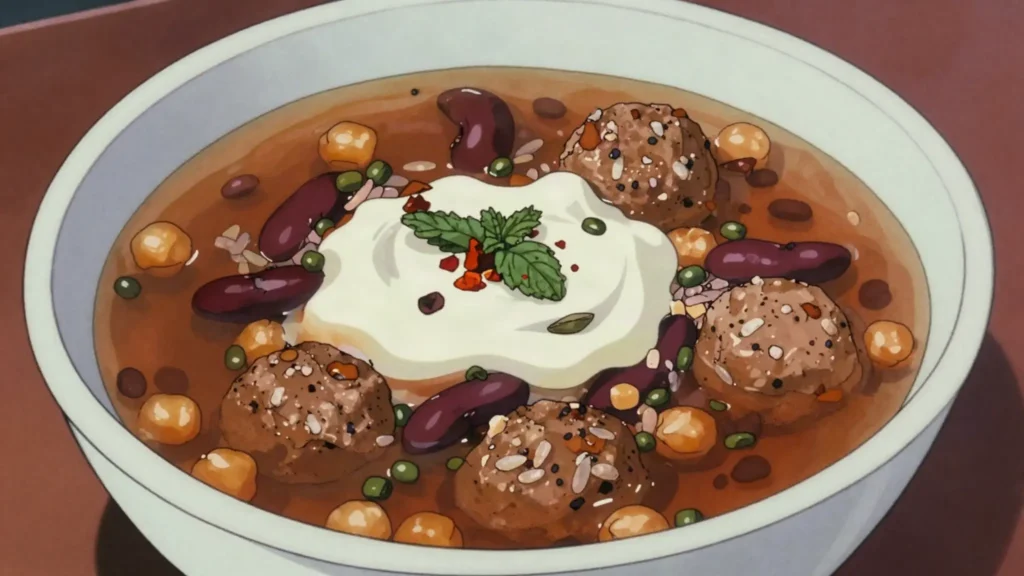
Mashawa is a soup & stew from Afghanistan: thick soup of mixed beans and chickpeas with tiny meatballs, finished with yoghurt. A winter dish of the Afghan north built on stored pulses, brightened with dried mint and sometimes orange peel.
How long does Mashawa take to make?
Mashawa takes 30 min plus overnight bean soak of preparation and 1 hr 45 min of cooking. The recipe makes 6 servings. It is rated medium to make.
What can I substitute in Mashawa?
Yes, within limits. Tinned chickpeas and kidney beans cut an hour off the recipe and are widely used. A vegetarian mashawa, common in fasting weeks, replaces the meatballs with extra pulses and a spoonful of fried onion.
What is the most important thing to get right in Mashawa?
Mix the mince with the grated onion and seasoning and roll it into marble-sized meatballs, no larger than 2 cm, which is what makes this mashawa rather than a stew.