
Ingredients
Dough
- 400 gplain flour
- 50 gsugar
- 7 gdried yeast
- 1/2 teaspoonsalt
- 150 mlwarm milk
- 1egg
- 75 gbutter, softened
- grated zest of 1 lemon
Fruit filling
- 800 gcherries
- stoned, or plums or apricots
- 100 gsugar
- or to taste
- 3 tablespoonscornflour
- a little water
- 1 teaspoonground cinnamon, optional
To finish
- 1beaten egg, to glaze
- a little sugar, to dust
To serve
- in wedges
- coffee
- at a church fair
- or a birthday
Directions
- Butter, egg and milk go into the dough. That makes it soft and slow to rise. Allow more time than for a plain bread. Warm the milk to blood temperature. Stir the yeast and a spoon of sugar in. Let it stand until it foams up. Give it about ten minutes to foam. Put the flour, sugar and salt in a bowl. Add the lemon zest to it as well. Make a well in the middle of it.
- Beat the egg and add it in too. Pour in the foaming yeast milk. Bring it together into a soft dough. Adding the butter is done separately. Knead the dough for about five minutes first. Add it in small pieces at a time. Butter added at the start slows gluten forming. Keep working and it comes back together. Kneading it takes real patience.
- Knead it for a further eight minutes. It should become smooth and elastic. Put the dough in an oiled bowl. Cover it and leave it somewhere warm. Let it roughly double in size. Give it an hour and a half there. Stone the cherries and put them in a pan. Add all of the sugar to them now. Warm them gently over a low heat.
- Let them release all their juice. Give them about eight minutes. Mix the cornflour with a little cold water. Whisk it into a smooth thin paste. Dry cornflour tipped into hot juice lumps at once. Pour the paste into the simmering fruit. Stir it constantly as you pour. Bring it back to a bare simmer. Let it thicken for two minutes. Cornflour must reach a simmer to thicken fully.
- Let the filling cool completely. Warm filling melts the dough underneath. Let it cool right down before assembling. Keep back about a quarter for the lattice. Roll the rest out into a wide round. Roll it thin, about half a centimetre. A thick base gives a bready tart. Butter a wide shallow tart tin. Lay the rolled dough down into it.
- Press it into the corners gently. Trim the edges of it all neatly. The sides of it should be low. Spread the cooled filling over the base. Leave a small border at the edge. Roll the reserved dough out thin.
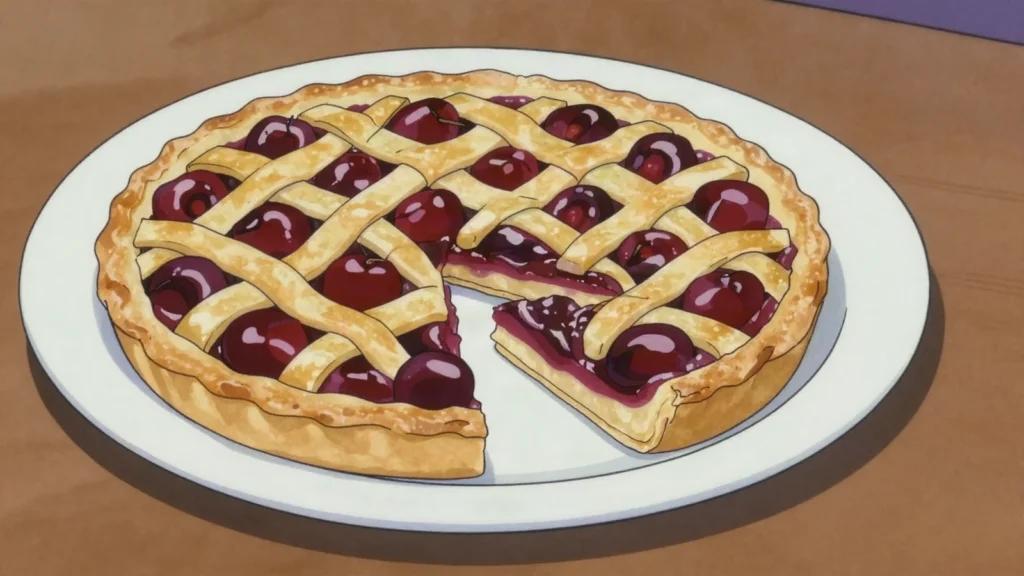
- Cut it into strips about a centimetre wide. Lay half of them across the tart. Weaving it takes only a moment. Fold back the alternate strips. Lay a cross strip over the others. Fold back the opposite alternates. Repeat that across the whole tart. Press the strip ends onto the border.
- Trim off any of the overhanging dough. Cover the tart loosely with a cloth. Let it prove for about thirty minutes. The dough should look visibly puffed. Brush the lattice with beaten egg. Do not brush the exposed filling.
- Dust a little sugar over it too. Heat the oven to one hundred and ninety degrees. Bake it for about thirty minutes. Judging it takes a careful look. Lift an edge with a knife to check. It should be browned rather than pale.
- Let it cool in the tin for twenty minutes. Let it cool completely before cutting. Cutting it warm makes it run out. Cut it into generous thick wedges. Serve strong coffee alongside it. It keeps two days in a sealed tin.
Technique
- The base is a yeast dough rather than a pastry, and that is what makes it a vlaai; the yeast base is softer, lighter and more absorbent, taking up juice from the fruit, and shortcrust or puff would make it a different tart entirely.
- Fresh fruit releases a great deal of juice that would soak the base, so the filling is thickened with cornflour mixed to a cold paste first, brought to a simmer to thicken fully and then cooled completely before it goes onto the dough.
- A vlaai is wide and shallow, around thirty centimetres across and only a few deep, and bakeries sell it whole rather than by the slice, since it is bought for an occasion — church fairs, birthdays and in Limburg tradition funerals too.
Substitutions
- Apricot, plum, gooseberry or a rice pudding filling all make standard varieties.
- Simply crossing the lattice strips works where a true weave is fiddly, and many bakeries do it.
Variations
- Rijstevlaai with a rice pudding filling is a distinct and well-known variety.
- Some fillings are covered with a crumble topping rather than a lattice.
- The tart is bought whole and brought to gatherings, often several at once.
History
Baked in Limburg for church fairs and birthdays; local bakeries sell it by the whole tart.
Frequently asked questions
What is Limburgse vlaai?
Limburgse vlaai is a dessert from Netherlands: wide yeast-dough tart with fruit filling and a lattice top. Baked in Limburg for church fairs and birthdays; local bakeries sell it by the whole tart.
How long does Limburgse vlaai take to make?
Limburgse vlaai takes 45 minutes plus rising of preparation and 35 minutes of cooking. The recipe makes one tart, serves 10. It is rated medium to make.
What can I substitute in Limburgse vlaai?
Yes, within limits. Apricot, plum, gooseberry or a rice pudding filling all make standard varieties. Simply crossing the lattice strips works where a true weave is fiddly, and many bakeries do it.
What is the most important thing to get right in Limburgse vlaai?
Let them release all their juice. Give them about eight minutes. Mix the cornflour with a little cold water. Whisk it into a smooth thin paste. Dry cornflour tipped into hot juice lumps at once. Pour the paste into the simmering fruit. Stir it constantly as you pour. Bring it back to a bare simmer. Let it thicken for two minutes. Cornflour must reach a simmer to thicken fully.